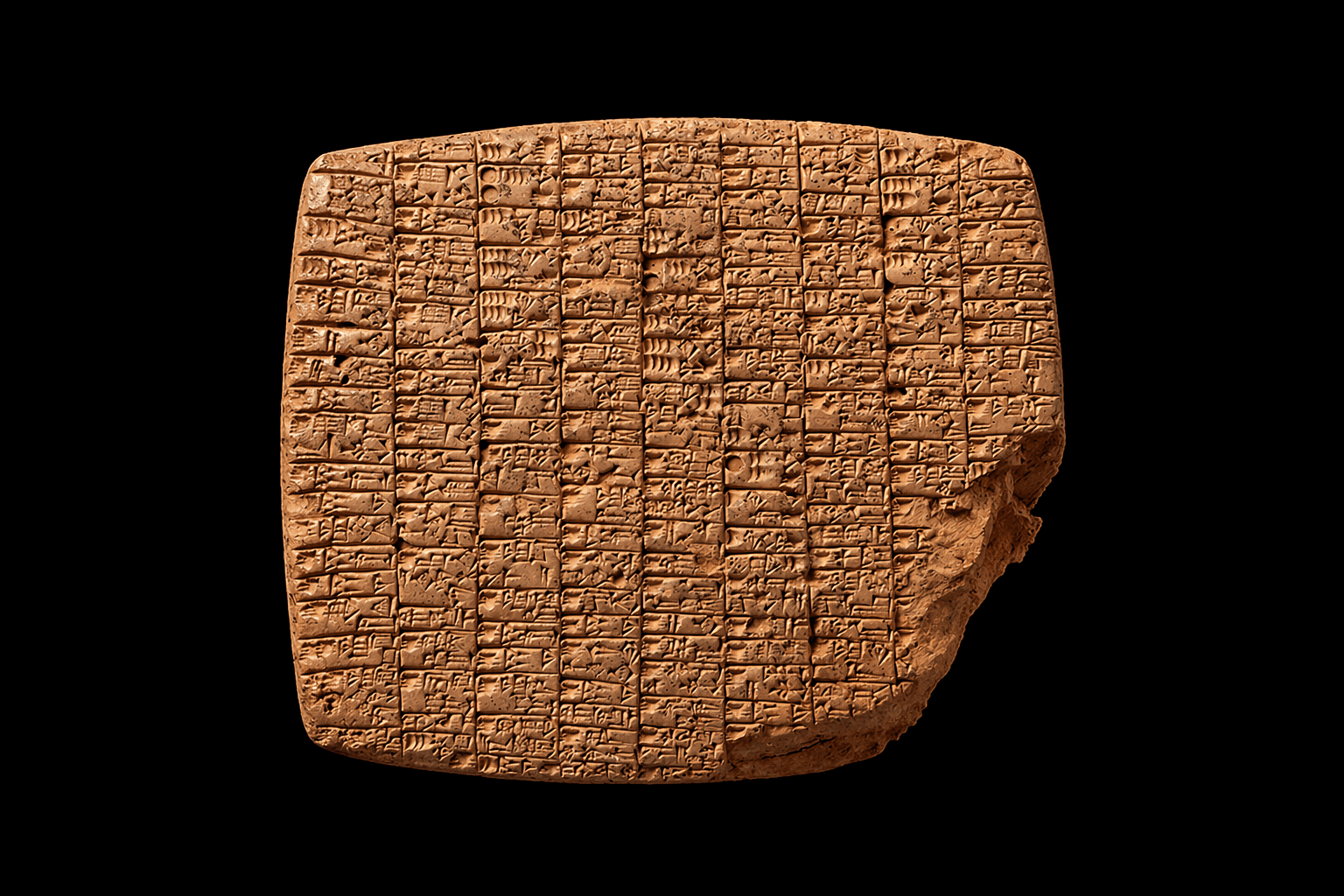
A vast archive of 4,000-year-old cuneiform tablets is offering a rare, layered view into how ancient Mesopotamian societies understood power. The newly analyzed collection shows that governance was never purely administrative. It was ritual, belief, and control of the unseen—woven together into a single system.
Researchers from University of Copenhagen and National Museum of Denmark have completed the first full-scale study and digitization of a long-overlooked group of clay tablets. What emerges is not just a collection of texts, but an intellectual landscape where magic, medicine, and political authority operated side by side.
Magic Was Not Peripheral. It Functioned as Policy
One of the clearest conclusions is also the most striking: magic in Mesopotamia was not superstition at the margins. It was structured, repeatable, and institutional.
Among the tablets is an anti-witchcraft ritual from the ancient city of Hama. The text describes a carefully choreographed ceremony carried out overnight, designed to shield rulers from invisible threats. Wax and clay figurines representing enemies were burned, while an exorcist recited fixed incantations. Nothing was improvised. Every step followed a defined sequence.
This was not symbolic theater. It was governance.
In a worldview where cosmic balance and political stability were inseparable, unseen forces posed real risks to authority. Neutralizing them was part of ruling. Protection rituals functioned as extensions of statecraft.

Knowledge Beyond the Core Centers
Hama itself complicates older assumptions.
It was not Babylon or Assur. It was not considered a primary intellectual hub. Yet the presence of advanced ritual texts there suggests something broader at play: knowledge moved. It circulated across regions.
The city was destroyed in 720 BC by Assyrian forces, and much of its archive was likely removed. What survived appears to come from a temple library left behind. That accident of history now provides a rare snapshot of intellectual life on the empire’s margins.
This is a quiet but important shift. It suggests that the intellectual world of Mesopotamia was less centralized, more networked, and more dynamic than earlier models allowed.
Gilgamesh Between Myth and Memory
Not all the tablets deal with ritual.
Among the collection is a regnal list—a document that blends historical kings with figures that later became mythological. These lists trace rulership back to a time before a great flood.
Crucially, similar lists include the name of Gilgamesh.
The newly identified tablet appears to be a school copy, likely used in scribal training. But its importance lies elsewhere. It confirms that these king lists were actively copied, studied, and transmitted.
For ancient scholars, figures like Gilgamesh were not simply stories. They existed within a continuous historical narrative. The boundary between myth and history was not fixed. It was negotiated through writing.
Writing as Control, Not Just Communication
The broader archive reveals something equally important about cuneiform itself.
Developed more than 5,000 years ago, writing in Mesopotamia was never limited to storytelling or record-keeping. It was infrastructure.
Within the same collection, researchers identified administrative records, letters between officials, and medical prescriptions that combine empirical treatments with ritual elements. One tablet even records what appears to be a beer transaction—an early form of receipt.
At first glance, these everyday texts seem disconnected from royal rituals. They are not.
They reflect the same system: a society where writing organized both the visible and the invisible world.
Reconstructing an Ancient Intellectual World
Taken together, the tablets describe a world that does not separate religion, politics, and knowledge into neat categories.
Magic stabilizes power. Writing legitimizes memory. Ritual manages uncertainty.
And figures like Gilgamesh move between legend and history without contradiction.
What these texts ultimately reveal is not just how ancient societies functioned, but how they thought. Power was not only exercised—it was interpreted, protected, and continuously reinforced through belief.
Cover Image Credit: The Project Hidden Treasures