A temple in the ancient Near East was never just a place of worship.
It was a statement—of divine presence, political authority, and collective identity. Every stone mattered. Damage to a sacred block could mean death. Even removing a tool from a temple workshop was believed to risk divine punishment.
And yet, behind these imposing sanctuaries stood human hands.
Builders, sculptors, architects—highly skilled professionals whose names survive today only through fragmented inscriptions.
Reading the Builders Through Stone
That silence is now beginning to lift.
Dr. Aleksandra Kubiak-Schneider of the University of Wrocław has assembled around 120 inscriptions linked to temple construction and decoration. Her focus lies on sanctuaries dedicated to the Arabian goddess Allat and the Syrian goddess Atargatis, spanning the Roman and Parthian Near East between the 1st century BC and the 3rd century AD.
Individually modest, these texts become—when read together—a rare archive of sacred labor: who built, who supervised, who paid, and who carried responsibility.
Cities Where Gods Lived
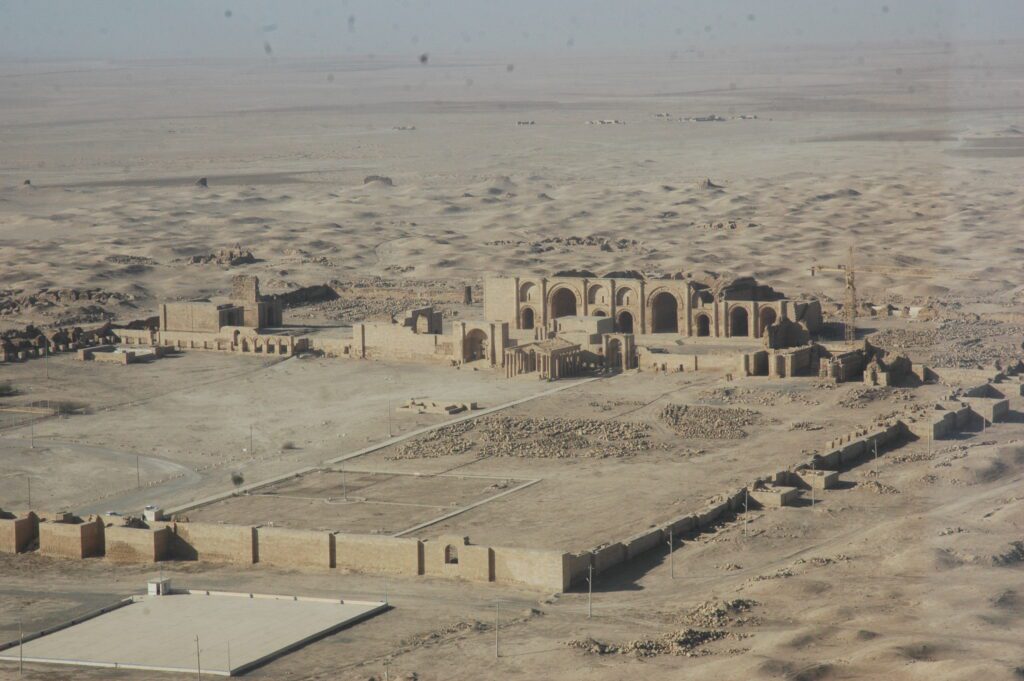
In northern Mesopotamia, Hatra functioned as a religious capital. Its temples rose at the city’s core, under the protection of the sun god Shamash.
Here, sacred law was absolute: even chipping a stone block within the inner sanctuary carried the death penalty.
Further west, Palmyra transformed the desert into a monumental sacred landscape. Temples dedicated to Bel, Baalshamin, Nabu, and Allat were built not only for ritual, but to dominate the urban skyline—architecture as public theology.
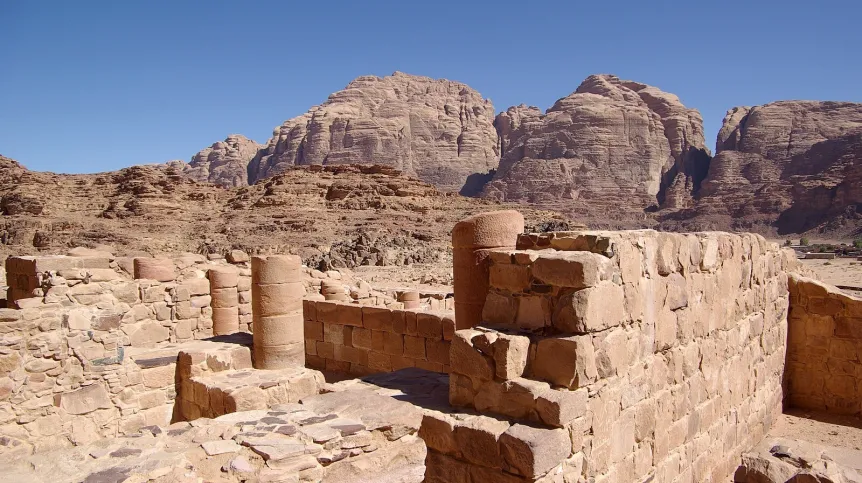
To the south, in the harsh terrain of Wadi Rum, sanctuaries marked caravan routes linking Arabia to the Red Sea. At places like Ain esh-Shallalah, sacred space emerged from the dialogue between rock, water, and human design.
A Dangerous Profession
Temple life was governed by strict and explicit rules.
Graffiti, surprisingly, was often tolerated—as long as it was dedicatory rather than blasphemous. Tools, however, were untouchable.
Hammers, chisels, and axes stored within temple precincts were considered sacred property. Their theft could lead to execution—sometimes imagined as punishment delivered directly by the gods, through fire or drowning.
Working for the gods was prestigious, but never safe.
Master Builders and Controlled Vision
At the top of the hierarchy stood the chief builders—the real architectural masterminds. They were responsible not only for structural solutions, but for the entire visual and symbolic program of a sanctuary.
Yet creative freedom was limited.
In Wadi Rum, royal authority oversaw sacred projects. In Hatra, temple officials and rulers acted as patrons. In Palmyra, powerful priestly families controlled commissions and dictated what imagery was acceptable. Innovation existed—but only within sacred boundaries.
Workshops, Guilds, and Inherited Skill

Temple construction relied on multi-generational family workshops. Inscriptions from Hatra trace careers that began with stone carving and advanced to senior architectural roles. Fathers trained sons; authority and expertise accumulated slowly.
Below them worked layers of laborers—masons, bricklayers, mortar preparers—forming a rigid hierarchy. Some belonged to guilds; one inscription suggests a single guild could include around ten craftsmen. Numbers remain uncertain, but the structure is clear.
Building for Eternity
Temples were conceived as eternal dwellings for gods. That belief shaped every decision—from material choice to artistic restraint.
For the people who built them, temple construction offered status and income, but also absolute accountability.
Through inscriptions and careful reconstruction, Dr. Kubiak-Schneider’s research restores these builders to view—not as anonymous laborers, but as professionals operating at the intersection of craft, power, and belief.
Cover Image: Nabataean sanctuary dedicated to the goddess Allat in Wadi Rum, Ancient Near East. Photo: press materials.