
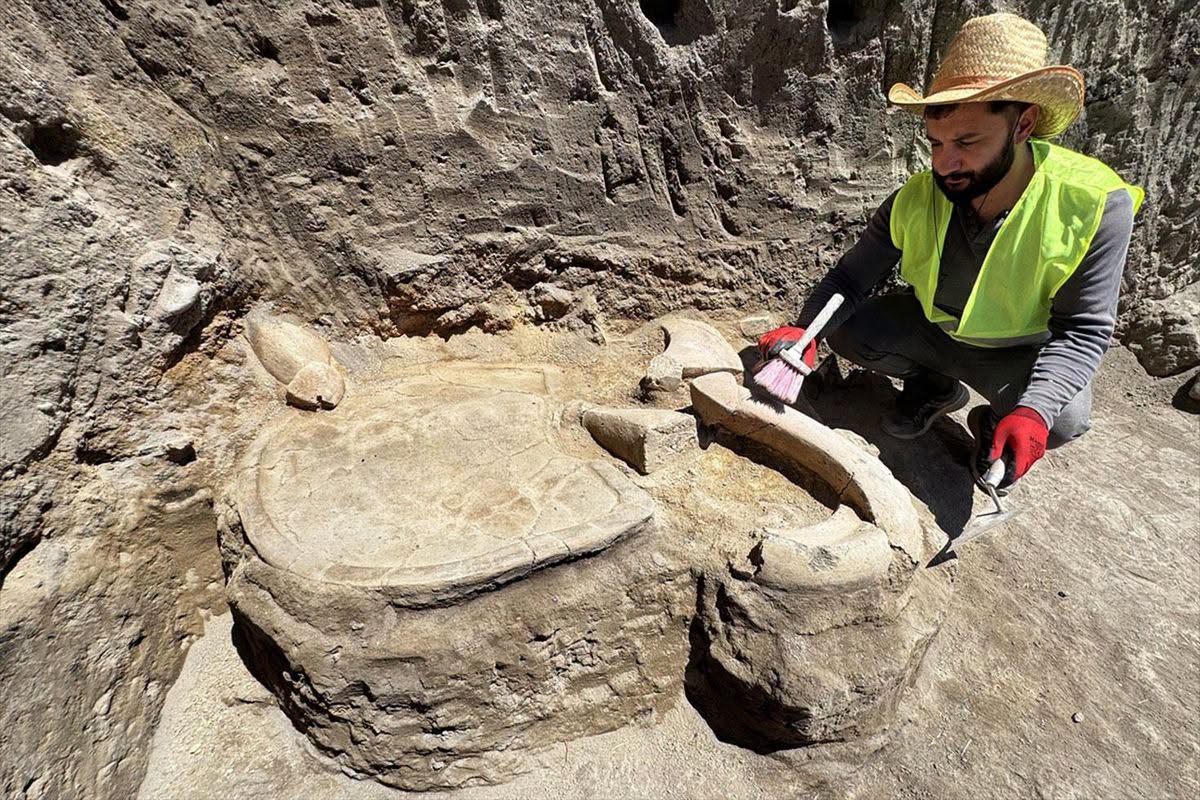
Archaeologists have uncovered a 5,000-year-old temple area containing two altars and three sacred hearths at Tadım Castle and Mound in eastern Turkey.
The ritual complex, dated to around 3000 BC, was discovered during ongoing excavations in Tadım village, near Elazığ. Researchers believe the structures were used for religious ceremonies during the Bronze Age.
The discovery offers new evidence of how communities in eastern Anatolia organized sacred spaces and performed rituals involving fire, offerings and worship five millennia ago.
A Bronze Age Temple Complex
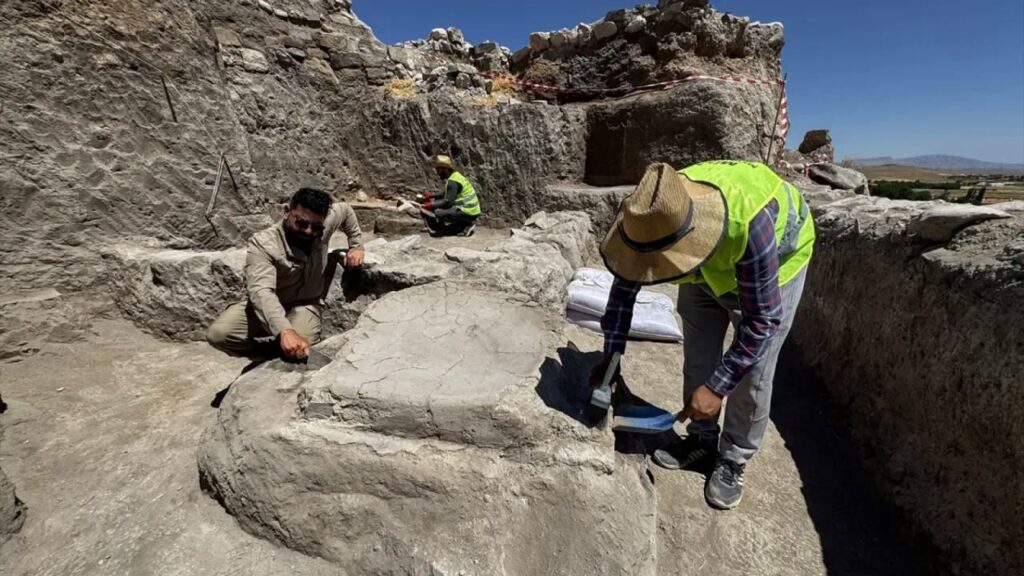
The newly exposed section has been identified as a cult area, or place of worship. Within the space, archaeologists documented two altars and three hearths believed to have held a sacred function.
Unlike ordinary domestic fireplaces, these hearths were found inside a clearly defined ritual area. Their position alongside the altars suggests that fire played an important role in ceremonies carried out at the site.
Emre Çayır, the archaeologist responsible for the excavation area, said the temple and its installations provide valuable information about belief systems in the Elazığ region during the Bronze Age.
According to Çayır, the altars, offering areas and sacred hearths may help researchers understand how religious practices were shaped and organized around 5,000 years ago.
Although the exact nature of the ceremonies remains unknown, the combination of altars and ritual hearths points to repeated and structured religious activity rather than occasional use.
A Settlement with Deep Historical Layers
Tadım Castle and Mound contains archaeological remains from several major periods of Anatolian history.
Excavations have revealed a long sequence extending from the Neolithic and Chalcolithic periods through the Bronze and Iron Ages. Later layers preserve traces connected with the Eastern Roman, Seljuk and Ottoman periods.
The current excavation work is focused on the Bronze Age levels, where the temple complex was uncovered.
This deep stratigraphy shows that Tadım remained an important settlement for thousands of years. Each archaeological layer records a different stage in the region’s social, cultural and religious development.
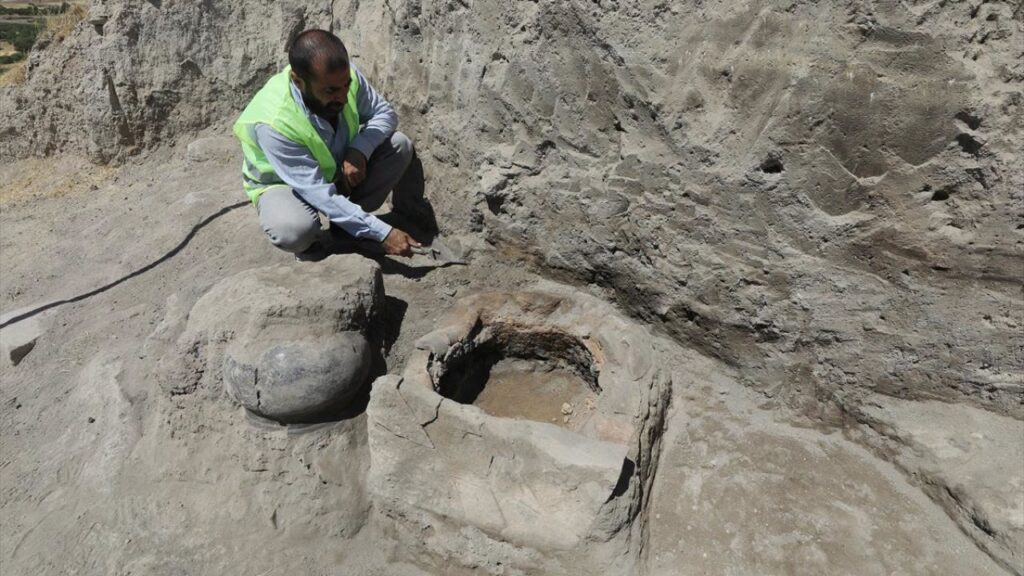
Excavations at the site began in 2025 and are now continuing in their third season. The project is coordinated by the Elazığ Museum Directorate and the Provincial Directorate of Culture and Tourism, with support from Turkey’s Ministry of Culture and Tourism, the Elazığ Governor’s Office and the Provincial Special Administration.
Researchers will continue examining the temple area to determine how the altars and hearths were used and whether any traces of offerings, burning or ceremonial activity survive within the structures.
The discovery is expected to contribute to a clearer understanding of Bronze Age religion in eastern Anatolia and the role sacred architecture played in the lives of early communities around Elazığ.