
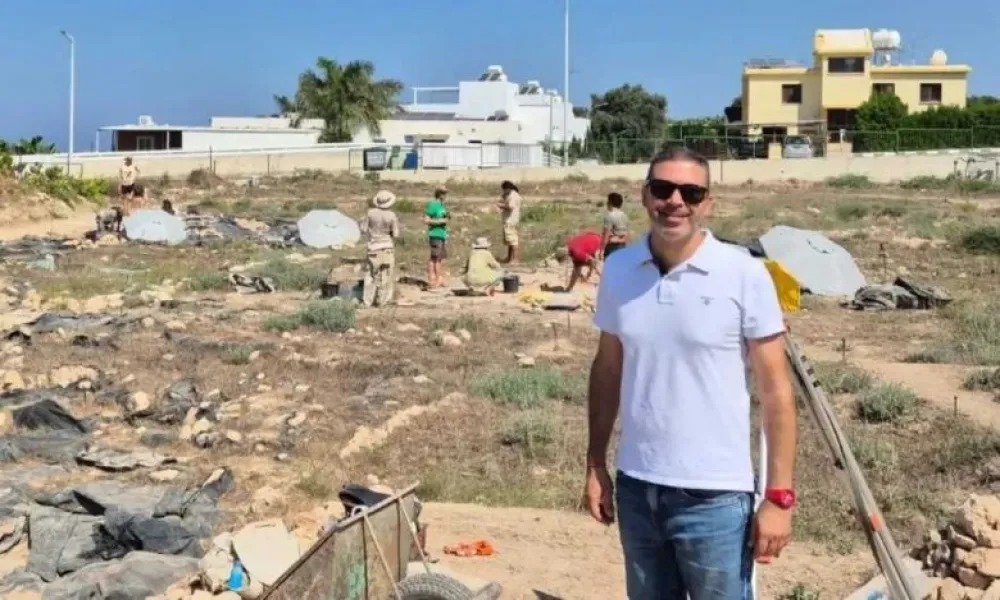
A new excavation season at Kissonerga-Skalia in western Cyprus has provided further evidence for the development of a Bronze Age community that remained occupied for centuries before undergoing a dramatic transformation into a center of specialized production.
The four-week 2026 campaign was conducted by the Cyprus American Archaeological Research Institute, or CAARI, in association with HARP Archaeology. The project is directed by Dr. Lindy Crewe, who has led excavations at the site since 2007.
Akamas Municipality announced that archaeologists had made additional significant finds during the latest season. The brief statement did not identify the newly uncovered objects or structures, but said the results offered more evidence for the settlement’s long development and supported previous interpretations of beer production at the site.
Kissonerga-Skalia is not a newly discovered settlement. Rather, the 2026 work forms part of a long-running investigation into one of the most substantial Bronze Age occupation sequences known from western Cyprus.
A Coastal Settlement Occupied for Centuries
The settlement lies on Cyprus’ western coastal plain, approximately 300 meters from the Mediterranean Sea and near the modern village of Kissonerga, north of Paphos.
Excavations indicate that people began occupying the site around 2500 BC, at the beginning of the Early Bronze Age. The settlement continued into the transition to the Late Bronze Age before being abandoned around 1650–1600 BC.
Generations of inhabitants repeatedly rebuilt the settlement. Its archaeological remains include overlapping phases of rectangular buildings, floors, courtyards and installations constructed above earlier structures.
This long sequence allows archaeologists to examine how a relatively modest village changed as Cyprus entered a period of growing economic and social complexity.
Earlier excavations have recovered beads, pendants and copper fragments, as well as spindle whorls and loom weights connected with textile production. Grinding stones and other agricultural tools point to the processing of crops, while animal bones and marine remains show that residents used cattle, pigs, deer, sheep, goats, crabs and shellfish. Preserved botanical material includes lentils and grapes.
These finds come from multiple excavation seasons and should not be treated as discoveries made exclusively in 2026.
Homes Replaced by an Industrial Complex
The most striking change at Kissonerga-Skalia occurred near the end of the Middle Bronze Age, around 1750 BC.
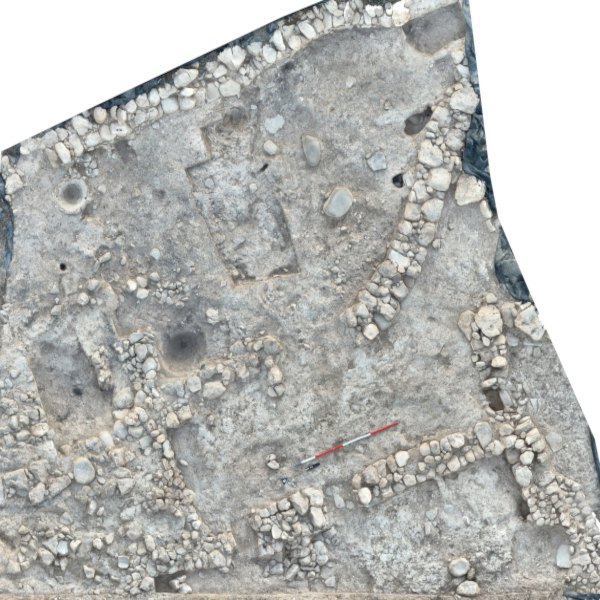
Earlier domestic buildings were covered or replaced by a much larger architectural complex. Archaeologists found little evidence that this final phase was used as an ordinary residential quarter. Instead, it contained working areas associated with grinding, heating, processing and storing materials.
The complex included plastered open spaces, fire-related installations, grinding equipment and pits that once held large storage vessels. Its scale suggests that some activities previously carried out within individual households had been brought together in a more organized working area.
The 2026 excavation was designed to expose more of this final complex and clarify how it functioned shortly before the settlement was abandoned.
The development is important because it occurred during a broader period of change on Cyprus. Within the following centuries, new settlements emerged in locations connected to maritime trade, while the island became increasingly involved in eastern Mediterranean exchange networks.
Kissonerga-Skalia preserves an earlier stage in that process, when communities were beginning to construct larger buildings and concentrate production within shared spaces.
The Evidence for Bronze Age Beer
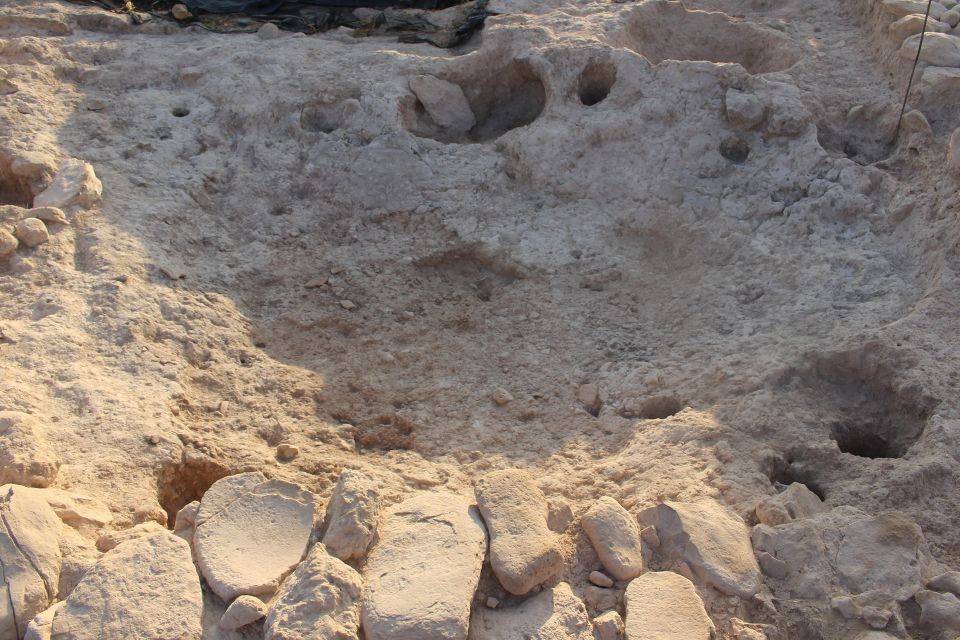
Kissonerga-Skalia is widely known for an oven-like installation previously interpreted as part of a beer-making process.
The structure was not discovered during the 2026 season. Archaeologists Lindy Crewe and Ian Hill presented the brewing interpretation in a study published in the journal Levant in 2012.
They argued that the installation may have served as a kiln for drying malt or curing malt cakes. The interpretation was based on the combined evidence of the architecture, heating facility, grinding equipment, pottery and surrounding working area rather than on a single conclusive trace of beer.
Identifying alcoholic drinks archaeologically is difficult because the liquids themselves rarely survive. Researchers must instead reconstruct the production process from installations, plant remains, vessels and patterns of use.
The evidence at Kissonerga therefore supports a carefully framed interpretation of beer production, not the discovery of a recognizable brewery in the modern sense.
Akamas Municipality described the site as containing one of the world’s oldest known brewing installations and linked beer with the community’s social and ritual life. While communal food and drink may have played a role in gatherings at the settlement, the precise meaning of those activities remains open to interpretation.
A Settlement Defined by Change
The value of Kissonerga-Skalia lies less in a single spectacular object than in the changes recorded across its long occupation.
The site shows houses being rebuilt, working areas expanding and domestic spaces eventually giving way to a large production complex. It also records the abandonment of the settlement as new economic and settlement patterns began to reshape Bronze Age Cyprus.
A detailed scientific report from the 2026 campaign has not yet been released. Until the newly excavated structures and artifacts are formally published, the latest results are best understood as an extension of the site’s established archaeological sequence rather than the discovery of an entirely unknown settlement.
Even so, every newly exposed wall, floor and installation adds to an unusually detailed record of how one Cypriot community lived, worked and reorganized itself over many generations.