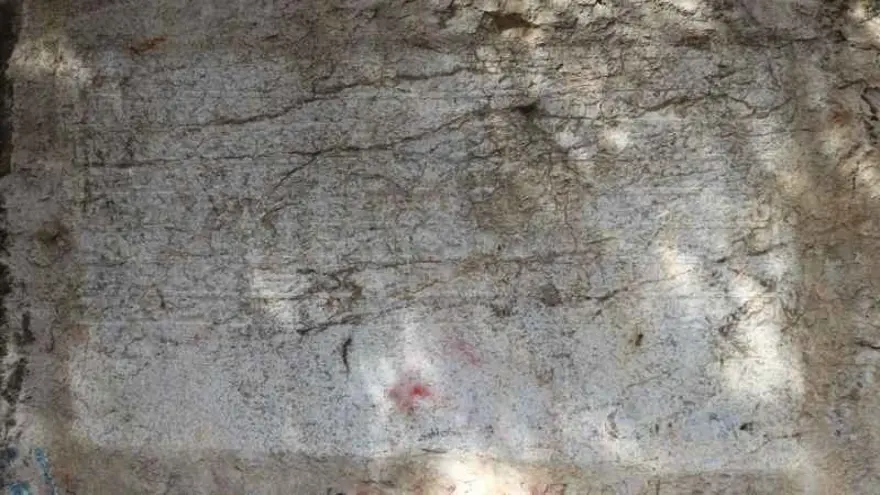
For centuries, it remained exposed to the elements—and to human damage. Now, a 600-year-old Ottoman inscription carved directly into bedrock in northern Turkey has been restored, revealing what experts believe may be a one-of-a-kind example of a rock-cut endowment inscription.
Dating to 1418, the text is associated with Grand Vizier Bayezid Pasha and is located along the Yeşilırmak River in Amasya, near the Leğenkaya Waterfall. Unlike most Ottoman inscriptions, which were written on stone slabs or preserved in manuscripts, this one was carved directly into natural rock.
A document embedded in the landscape
The inscription records the terms of a waqf—an endowment that funded religious and social institutions in the Ottoman world. Such documents were central to the functioning of mosques, charitable kitchens, and public services.
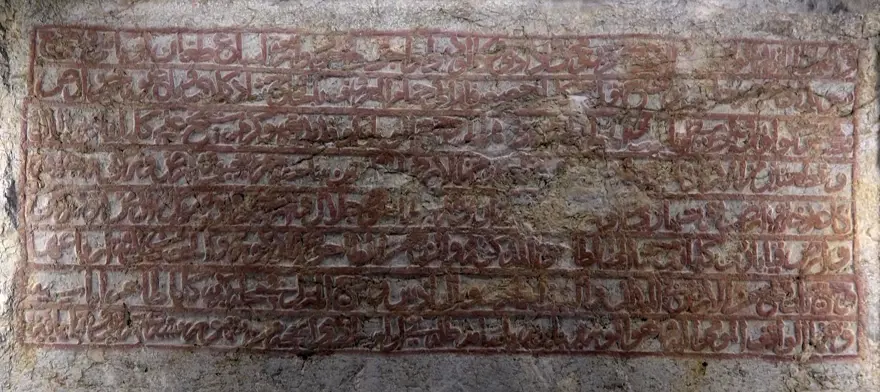
What sets this example apart is its medium. Before the text was carved, the natural rock surface was carefully leveled to create a smooth plane. The inscription was then executed in relief, forming a permanent and highly visible record.
Measuring approximately 3 meters in width and 110 centimeters in height, the text consists of eight lines written in Arabic script, containing around 125 words. Its scale and structure suggest it was designed not only to record information, but to assert presence—fixed within the physical environment.
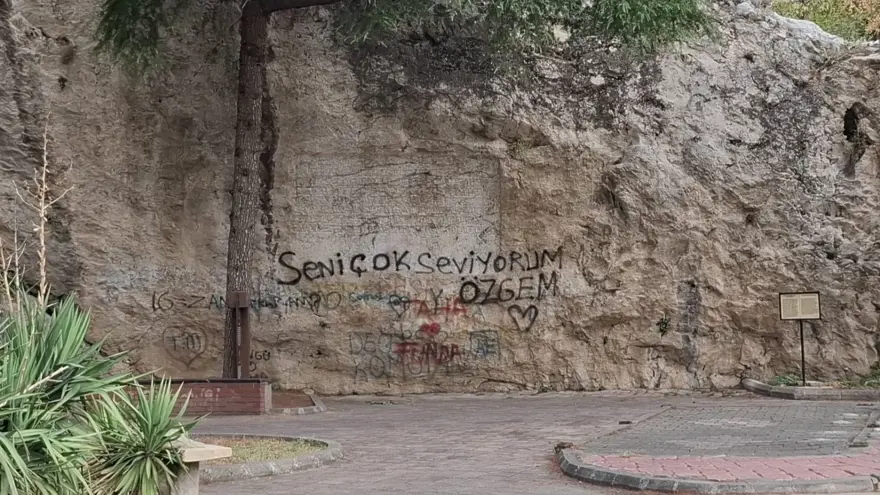
From damage to recovery
Over time, the surface suffered extensive damage. Graffiti, spray paint, and informal markings had obscured much of the inscription, leaving it difficult to read and easy to overlook.
The recent restoration reversed that process.
Specialists removed paint residues using a controlled micro-abrasion method with travertine powder, allowing the surface to be cleaned without harming the original carving. Areas weakened by environmental exposure were stabilized with compatible conservation materials.
To improve legibility, conservators applied subtle shading, enhancing the contrast of the carved letters without altering their original form. The result is a text that can once again be read with clarity.
Protection and visibility
The work extended beyond cleaning. A protective system was installed to shield the inscription from further damage, including structural reinforcement and a transparent barrier over the carved surface.
Lighting was also added, making the inscription visible after dark while maintaining controlled preservation conditions. The site has effectively transitioned from a neglected surface into a managed cultural landmark.
A rare form of Ottoman record
Waqf inscriptions are not uncommon in the Ottoman world, but they are typically associated with architecture—carved onto building façades or preserved in written archives.
This example breaks that pattern.
By engraving the text directly into bedrock, its creators ensured a level of permanence that goes beyond conventional documentation. It transforms a legal record into something closer to a fixed statement within the landscape itself.
Regional heritage officials have described the inscription as possibly the only known example of its kind worldwide. If confirmed, it would place the Amasya inscription in a unique position within both Ottoman history and the broader study of epigraphy.