
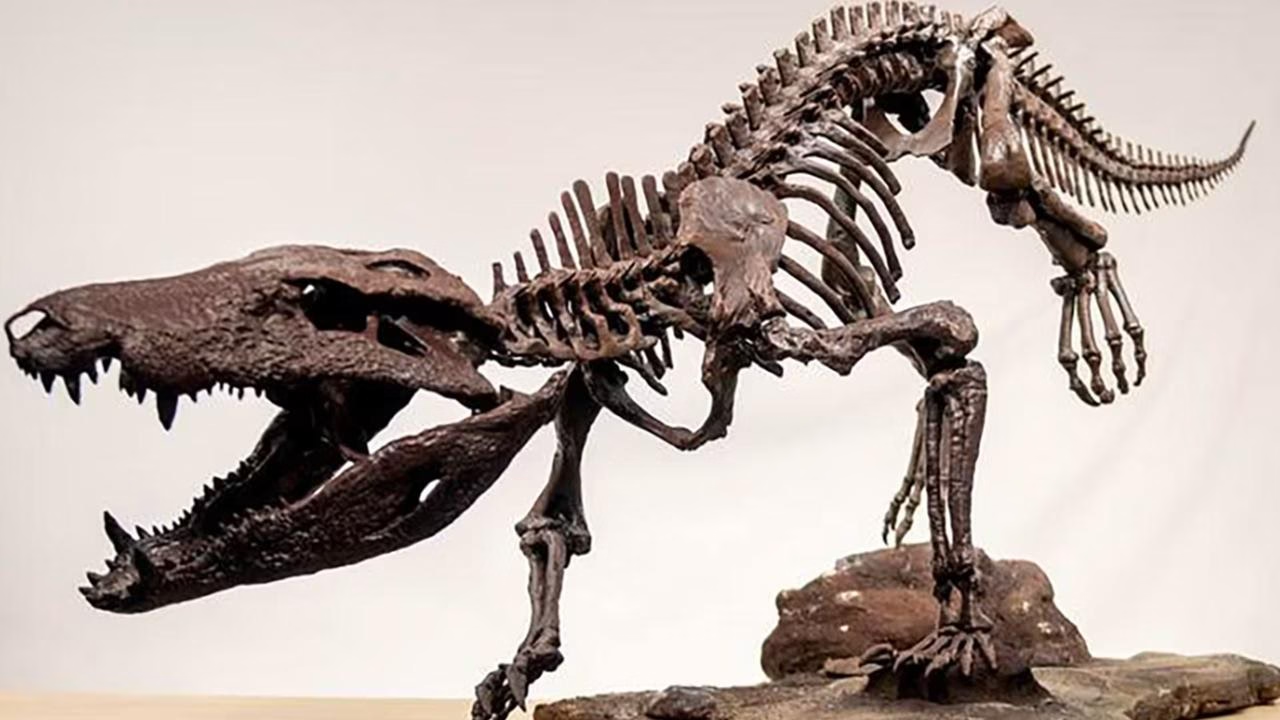
In southern Argentina’s Patagonia region, paleontologists have unearthed an exceptionally well-preserved fossil of a giant predator closely related to modern crocodiles. The newly identified species, Kostensuchus atrox, lived around 70 million years ago and likely preyed on dinosaurs.
Archaeologists in Patagonia have uncovered the fossilized remains of Kostensuchus atrox, a peirosaurid crocodyliform estimated to have been 3.5 meters long and weighing around 250 kilograms. The creature roamed the Earth during the late Cretaceous period, coexisting with dinosaurs and preying on large herbivores, according to researchers.
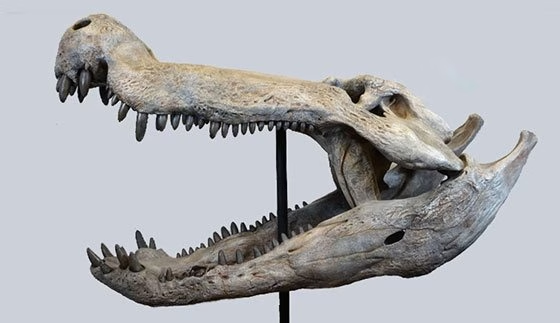
The specimen, discovered in March 2020 during a dinosaur excavation, is one of the most complete fossils of its kind ever found in the region, with nearly the entire skeleton preserved except for parts of the tail and limbs. Notably, the skull still retains enamel on its serrated teeth, indicating exceptional preservation.
Shedding Light on Crocodile Evolution
Experts say that while K. atrox resembled modern crocodiles in posture, it displayed distinct features. Its nostrils faced forward, and its eyes were positioned on the sides of its skull, unlike today’s crocodiles, whose upward-facing snouts and eyes help them ambush prey from the water.
Researchers consider this an example of convergent evolution, where unrelated species develop similar traits in response to comparable environmental pressures.
Extinction Tied to Hypercarnivory
Large carnivorous species like K. atrox disappeared during the mass extinction at the end of the Cretaceous. Scientists believe their hypercarnivorous diet—an exclusive reliance on meat—may have contributed to their inability to survive. Smaller, more adaptable crocodile relatives were better suited to withstand environmental changes and persist to the present day.
Unlocking Ancient Secrets
Paleontologists plan to analyze isotopes from the fossil’s teeth to gain insights into its diet and habitat. Further studies of its bone structure could reveal details about its growth rate, lifespan, and possible diseases.
This extraordinary discovery not only enriches our understanding of crocodilian evolution but also offers a rare glimpse into predator-prey dynamics in the Cretaceous ecosystems of Patagonia.