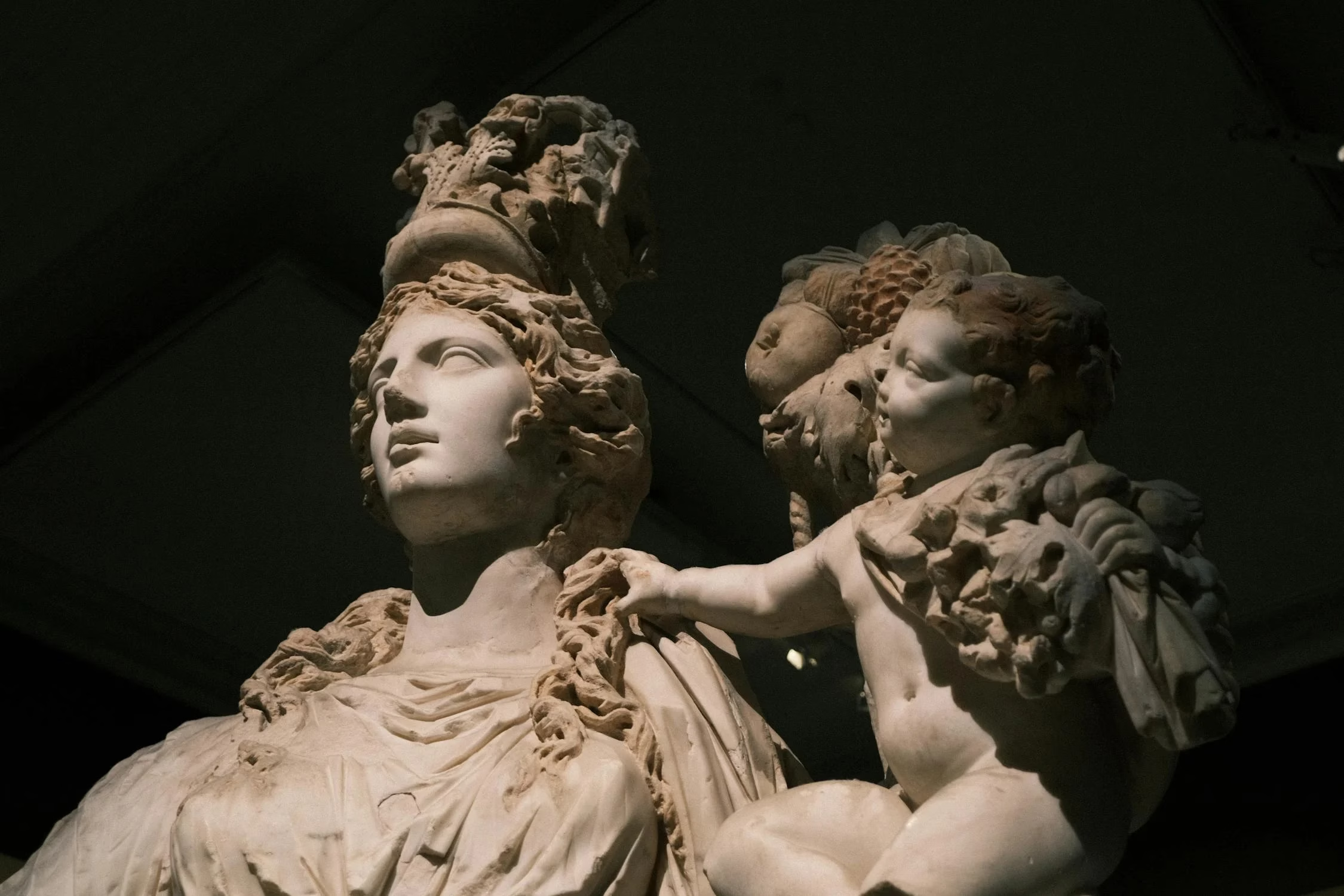
In the ancient Greek imagination, fortune was not a number or a roll of dice—it was a goddess with a city crown, a cornucopia, and a child named Ploutos.
Mythic Profile
Tyche (Tykhē) embodies fortune, chance, and the unforeseen success that turns lives around. Though not a core Olympian, she rose to civic prominence as the protective spirit of cities. In art and literature she stands at the intersection of personal luck and collective destiny—an authority over what mortals cannot plan.
Classical authors treat her with a mix of awe and realism. Tyche is absent from Homer, but appears vividly in Pindar, where good fortune is invoked as a living force rather than an abstraction. Greeks wishing someone luck would say Agathē Tychē—“with good Tyche”—a linguistic tell that fortune was imagined as the favor of a deity, not a statistical event.
Some traditions call Tyche a daughter of Okeanos; others associate her closely with Zeus. In later retellings, Zeus entrusts her with distributing the share of good fortune and wealth allotted to each mortal. The message is blunt: talent and effort matter, but the last word often belongs to Tyche.
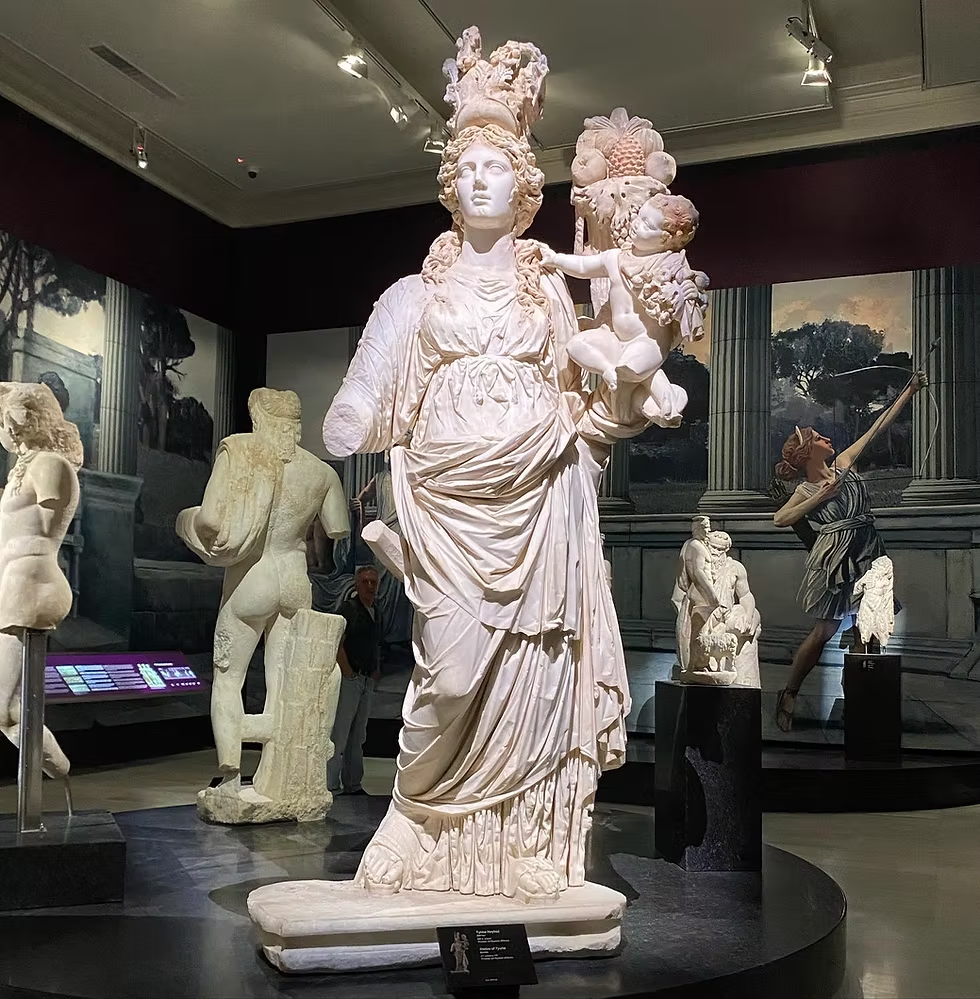
Symbols and What They Mean
Ancient images of Tyche are not decorative flourishes; they are a visual brief on how the Greeks thought fortune works.
- Mural crown (city-wall crown): Tyche’s turreted crown marks her as the guardian spirit of a city. Fortune is not only private; it shapes the fate of whole communities.
- Cornucopia (horn of plenty): Overflowing fruit signals prosperity, abundance, and the tangible rewards people actually feel when luck turns.
- Ploutos (Plutus), the child: Wealth personified. By cradling Ploutos, Tyche claims custody over material well-being.
- The ball or sphere: A reminder that her gifts are not doled out by moral calculus. Fortune moves; recipients change.
Together these attributes frame an ancient thesis: prosperity is contingent. It can arrive, depart, and tilt—regardless of merit.
Fortune—and the Bill That Follows
Greek religion rarely leaves raw chance unchallenged. Tyche’s largesse has a counterweight: Nemesis, the corrector of hubris. When mortals mistake good luck for entitlement—neglecting piety or the needy—Nemesis enters. In Attic cult, she is portrayed with a wheel or measuring tools, enforcing limits. The pair creates a moral economy around chance: Tyche may elevate; Nemesis ensures the elevated remember why they stand.
How Tyche Became Urban
From the Hellenistic age onward, nearly every major city fostered its own Tyche. The civic crown is not metaphor alone—cities minted coins with their Tyche, staged images in public spaces, and treated her as a patron whose mood tracked the city’s fortunes. Political stability, trade winds, and bumper harvests were all, in effect, read through Tyche’s favor.
Why She Still Matters
Tyche speaks to a permanent human discomfort: the gap between effort and outcome. Modern life dresses chance in probability and risk models; the ancients gave it a face and a temper. The iconography is durable because the experience is: sudden success, abrupt loss, undeserved windfalls, and reversals that no plan predicted.