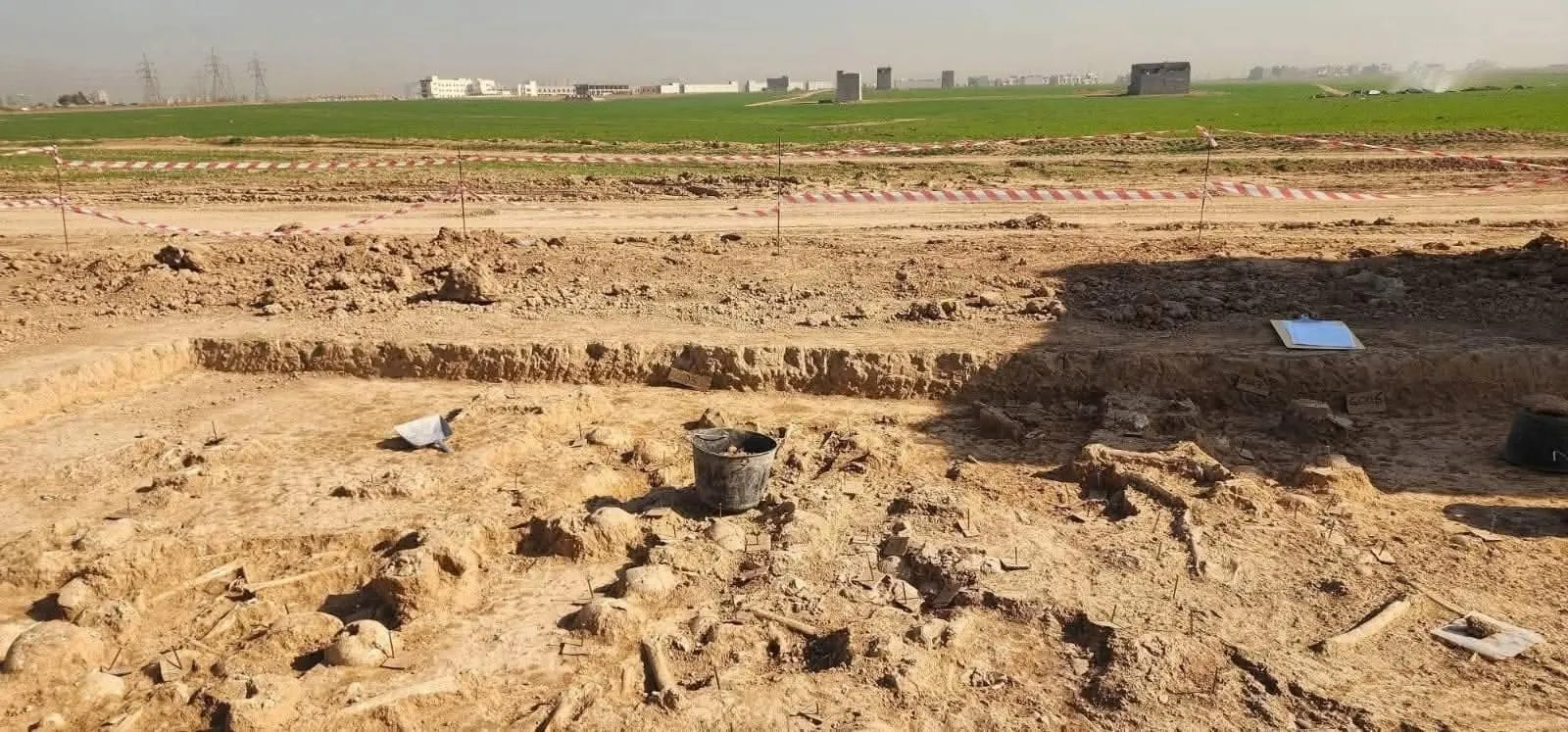
Archaeologists in the Kurdistan Region of Iraq have uncovered a 7th-century cemetery beneath a modern neighborhood in Erbil, revealing more than 100 human skulls and a small assemblage of grave goods that may shed new light on the region’s late antique past.
The discovery was made in the Baghlou Minara district of Erbil after construction crews encountered human remains during routine public works. Work was immediately halted, and heritage authorities initiated an emergency excavation.
A Rescue Excavation in the Heart of the City
According to the Directorate of Antiquities and Heritage, the excavation was conducted jointly by the General Directorate of Antiquities and the Erbil Directorate. What began as a construction interruption quickly evolved into a significant archaeological investigation.
Preliminary assessments date the cemetery to the 7th century CE—a transformative period in Mesopotamian history marked by the final phase of the Sasanian Empire and the early expansion of Islamic rule. Establishing a precise cultural and historical framework for the burials will require further laboratory and comparative analysis.
Human Remains and Burial Goods
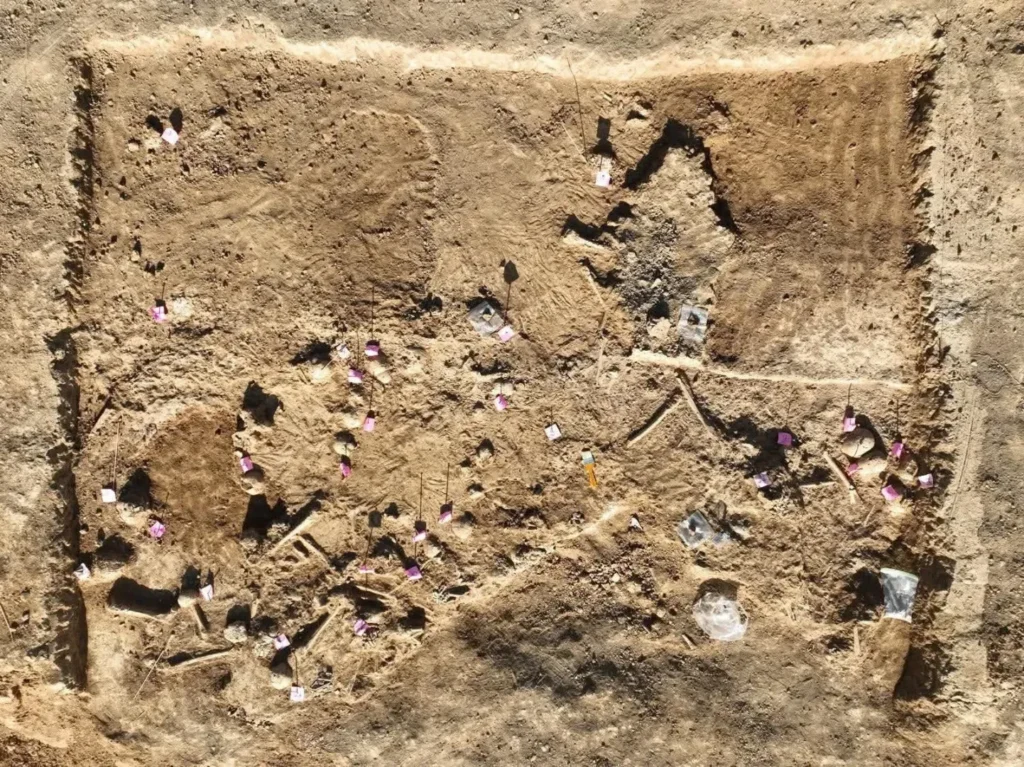
Excavators documented more than 100 skulls, suggesting either a densely used burial ground or a site that may have served a specific community over time. Alongside the human remains, archaeologists recovered several objects deposited with the dead:
Silver coins, two bronze anklets, two pearl beads—likely once part of necklaces—an iron bracelet, and four pottery vessels were found within the burial context.
Such grave goods are crucial for dating and interpreting cemeteries. Coins can provide chronological anchors, while personal ornaments like anklets and beads offer clues about identity, social status, and regional artistic traditions. Pottery forms may also help refine the dating, depending on typology and manufacturing techniques.
DNA Analysis Underway
Authorities confirmed that DNA samples have been collected and sent to the Interior Ministry’s laboratory for analysis. Bioarchaeological study could clarify whether the individuals belonged to a single kin group, a broader urban population, or a community shaped by migration.
Genetic data may also help researchers explore diet, health conditions, and possible ancestral links to modern populations in the region. If preservation conditions prove favorable, isotopic and genomic studies could significantly deepen understanding of Erbil’s demographic landscape during the 7th century.
Erbil’s Deep Historical Layers
The discovery adds another layer to the long and complex history of Erbil, one of the world’s oldest continuously inhabited cities. The nearby Erbil Citadel—a UNESCO World Heritage Site—testifies to millennia of settlement stretching back to the ancient city of Arbela.
While the newly uncovered cemetery lies outside the citadel mound, its existence underscores how densely layered Erbil’s urban fabric remains. Modern infrastructure projects frequently intersect with archaeological deposits, making rescue excavations a vital component of heritage management in the region.