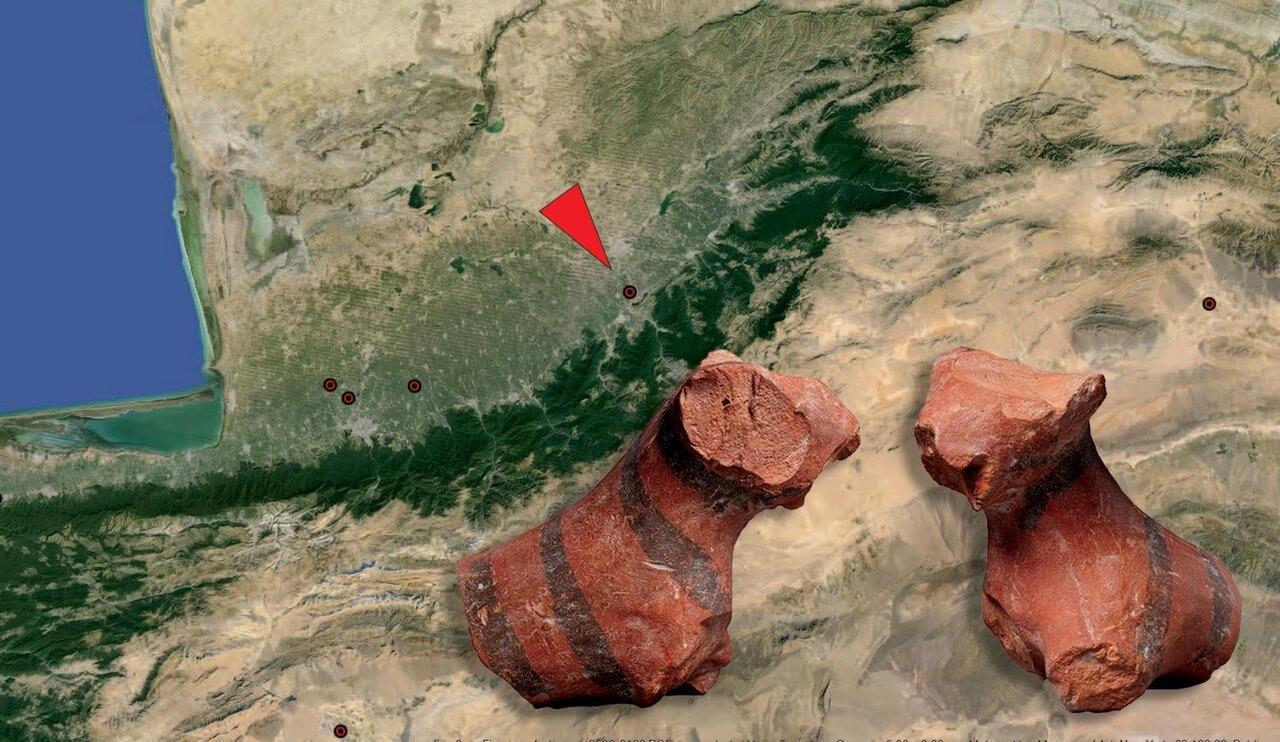
Archaeologists have redefined the origins of tiger imagery in Iranian art. A newly analyzed 5,000-year-old ceramic figurine from Yarim Tepe in northern Iran may represent the earliest known depiction of a tiger anywhere outside the Indian subcontinent — predating all previous examples by nearly three millennia.
The small reddish-brown figurine, measuring just over eight centimeters, was first unearthed in 1960 during excavations at Yarim Tepe, a prehistoric mound near modern-day Gonbad-e Kavus in Iran’s Golestan Province. Once part of the ancient region of Hyrcania — a lush landscape between the Alborz Mountains and the Caspian Sea — the area was home to the now-extinct Caspian tiger (Panthera tigris virgata).
In his recent study published in Anthropozoologica, archaeologist Henry P. Colburn of Bryn Mawr College re-examined the figurine, now housed in the Metropolitan Museum of Art. Despite its fragmentary state, the piece preserves two distinct, carefully painted stripes across the chest and neck — a defining trait Colburn identifies as deliberate and diagnostic of a tiger.
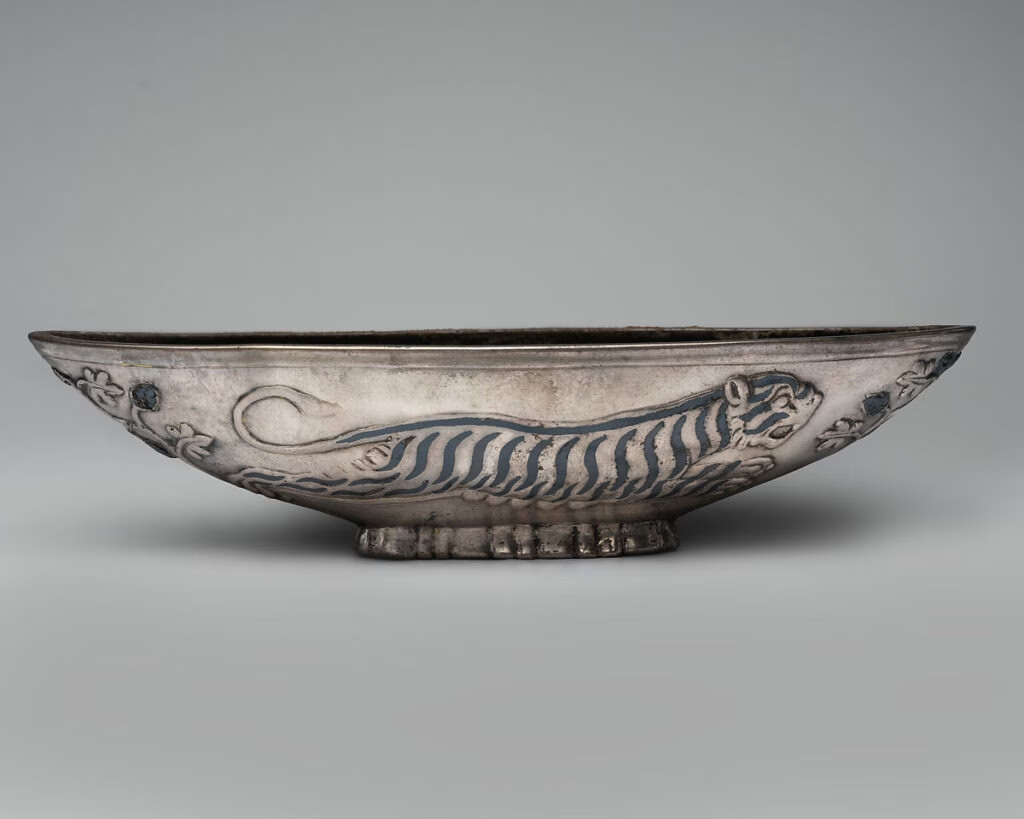
Typological analysis places the figurine within the Caspian Black-on-Red Ware tradition, dating between 3500 and 3100 BCE — the Late Chalcolithic period. If correct, this discovery dramatically extends the timeline of tiger symbolism in Iran, predating Sasanian art (3rd–7th centuries CE), where tigers appeared as emblems of royal strength and cosmic power.
Colburn suggests that the figurine’s maker likely had direct contact with the animal, given the naturalistic rendering of its stripes and body form. This points to local observation rather than the transmission of exotic imagery from neighboring civilizations. “Although its exact purpose remains unclear,” Colburn writes, “the figurine must have contributed to the construction of local identity at Yarim Tepe.”
Comparable Chalcolithic sites in northeastern Iran — such as Shah Tepe, Tureng Tepe, and Tepe Hissar — have yielded similar ceramic traditions but no comparable animal representations, underscoring the uniqueness of the Yarim Tepe find.
Beyond its archaeological significance, the figurine resonates with Iran’s enduring cultural memory. In later Persian literature, especially in Ferdowsi’s Shahnameh, the tiger becomes a potent symbol of heroism — the legendary warrior Rustam dons a tiger-skin cloak known as the babr-e bayān. Colburn proposes that this humble clay tiger may represent the earliest material echo of that long-lived mythological association.
The study also challenges long-held assumptions that tiger iconography in Iran derived from Bactrian or Indus Valley influence. Instead, the evidence from Hyrcania suggests an indigenous origin for this powerful motif — one that bridges prehistory, imperial art, and epic poetry.
From a small Chalcolithic village overlooking the Caspian forests to the opulent courts of the Sasanian Empire, the tiger endured as a symbol of awe and authority — its lineage now traced back five millennia to a single striped figurine shaped in clay.
Colburn, H. P. (2025). The first Hyrcanian tiger? A unique figurine from Yarim Tepe, Iran. Anthropozoologica, 60(10), 131–142. https://doi.org/10.5252/anthropozoologica2025v60a10
Cover Image Credit: Tehran Times