
Mexico has announced what officials describe as the country’s most important archaeological discovery in more than ten years: an exceptionally well-preserved Zapotec tomb dating to around AD 600, uncovered in the Central Valleys of Oaxaca. The find is already being hailed as a landmark for understanding the social structure, funerary beliefs, and symbolic world of one of Mesoamerica’s most influential civilizations.
The discovery was made public during a national briefing by Mexican President Claudia Sheinbaum Pardo, who emphasized that the tomb’s state of preservation and the richness of information it contains set it apart from recent archaeological finds. According to the president, the site offers an unusually complete snapshot of Zapotec elite culture at its height.
A Tomb That Preserves Zapotec Worldviews
Located in Oaxaca’s Central Valleys, the tomb stands out for both its architectural complexity and its pictorial program. Together, these elements provide rare, first-hand evidence of how the Zapotecs understood power, ancestry, death, and the afterlife. Stone friezes and carved slabs bearing calendrical names link the monument directly to Zapotec concepts of time, lineage, and ritual memory.
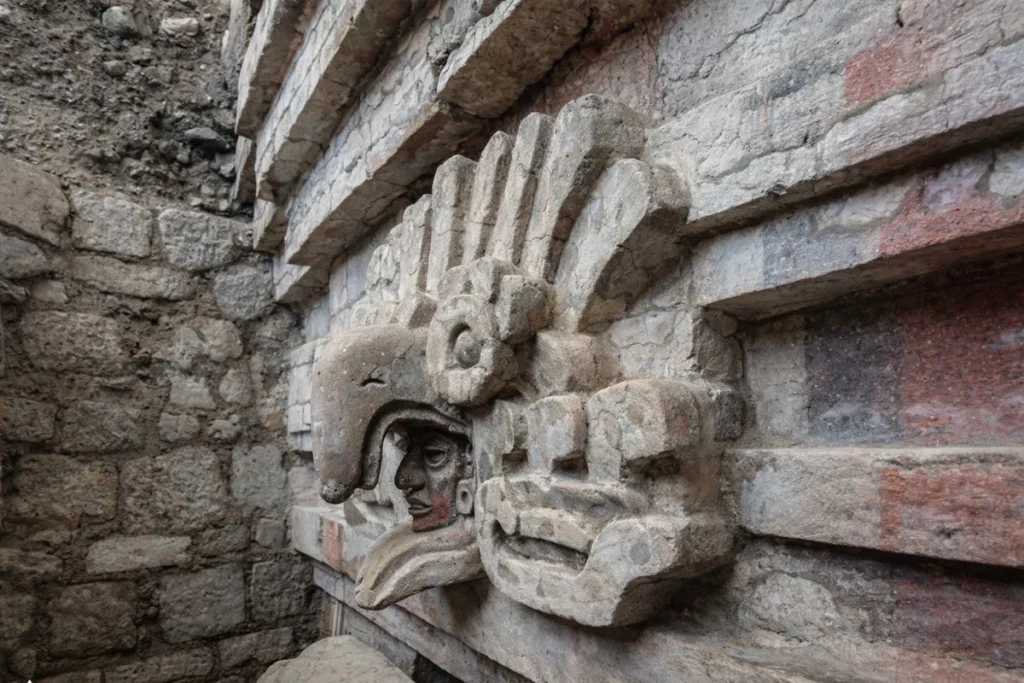
At the entrance to the antechamber, archaeologists documented a striking sculptural scene: a stone owl, an animal associated in Zapotec belief with night and death. Its beak covers the face of a stuccoed and painted Zapotec lord, interpreted as an ancestral figure to whom the tomb was dedicated. Researchers believe descendants may have invoked this ancestor as an intermediary between the living world and the divine.
Guardians, Symbols, and the Threshold of the Dead
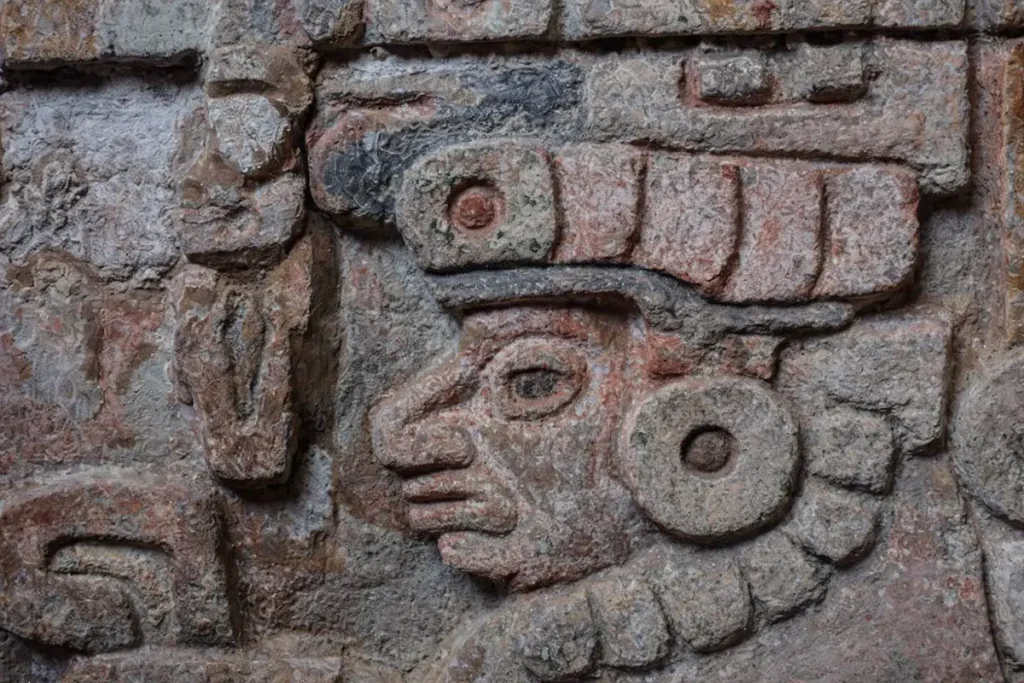
The tomb’s threshold is framed by a carved lintel topped with a frieze of stone slabs engraved with calendrical names. On either side of the doorway, the jambs are decorated with figures of a man and a woman, both richly adorned with headdresses and objects held in their hands. These figures are thought to represent guardians of the funerary space, reinforcing the ritual separation between the worlds of the living and the dead.
Inside the burial chamber, sections of an extraordinary mural painting survive in situ. Executed in ochre, white, green, red, and blue, the mural depicts a procession of figures carrying bags of copal, a sacred incense widely used in Mesoamerican rituals. The figures advance toward the entrance, suggesting a ceremonial offering connected to funerary rites and ancestor veneration.
Conservation and Scientific Research Underway
An interdisciplinary team from the Oaxaca center of the Instituto Nacional de Antropología e Historia is currently responsible for the site’s protection, conservation, and study. One of the most urgent tasks is stabilizing the mural paintings, which are vulnerable due to root intrusion, insect activity, and sudden environmental changes.
Alongside conservation work, specialists are carrying out ceramic, iconographic, and epigraphic analyses, as well as physical anthropology studies. Together, these investigations aim to deepen scholarly understanding of Zapotec funerary customs, symbolic systems, and social hierarchies.
Mexico’s Secretary of Culture, Claudia Curiel de Icaza, has described the tomb as an exceptional discovery that vividly documents Zapotec society through its architecture and mural art. She also stressed the importance of ensuring that the site is carefully studied and responsibly shared with the public.
A Key Reference for Zapotec Archaeology
Because of its construction quality and decorative richness, the newly uncovered tomb is already being compared with the most important Zapotec funerary complexes previously known from the region. These comparisons confirm its value as a reference point for interpreting the artistic sophistication and symbolic depth of Zapotec civilization.
The discovery not only reinforces the global archaeological significance of Oaxaca, but also opens a new window onto the cultural and spiritual universe of the Zapotec civilization—one of ancient Mexico’s most enduring and complex societies.