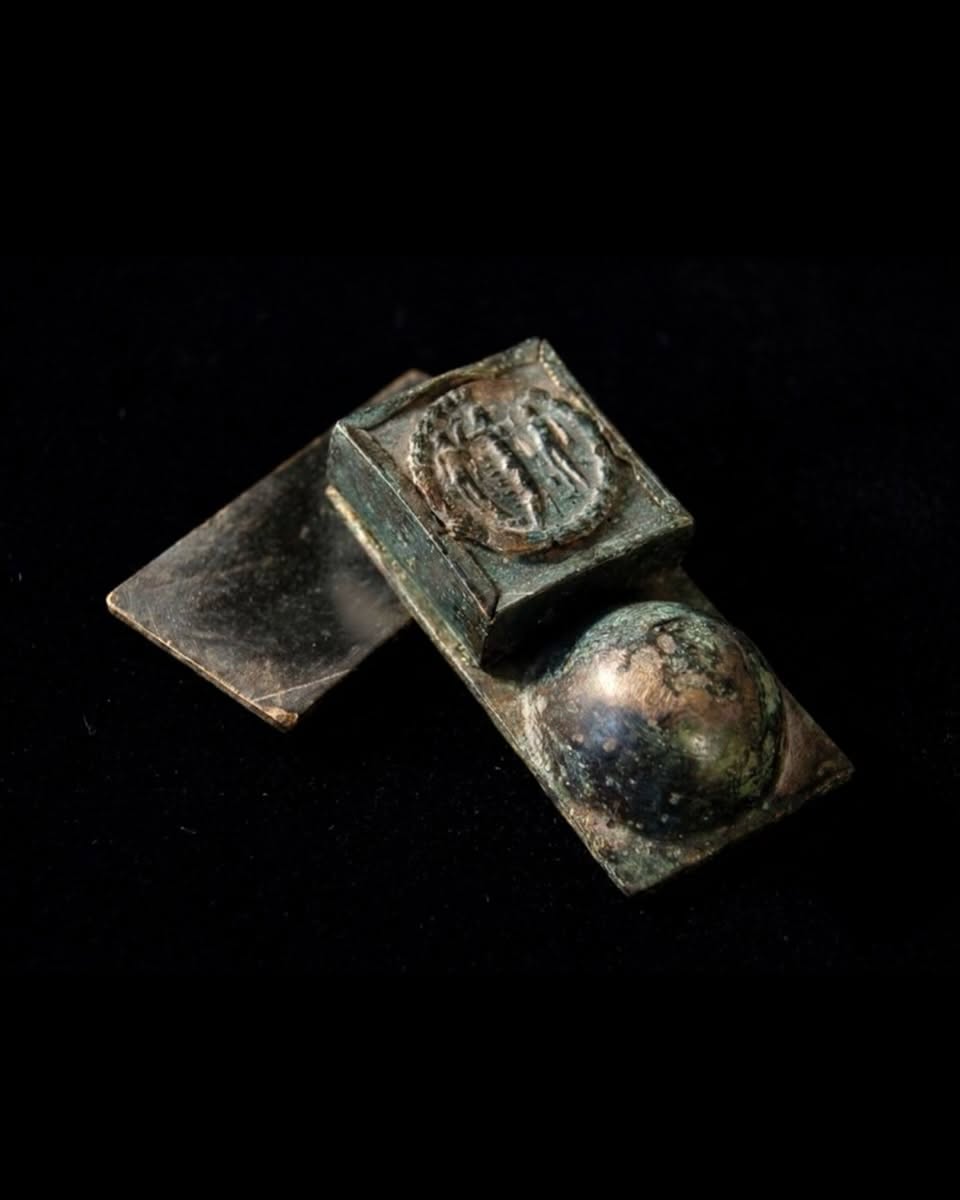
A small bronze makeup box from the Roman city of Munigua in southern Spain brings an unusually intimate detail into view: the daily act of preparing the face, and the decision to carry that personal world into the grave.
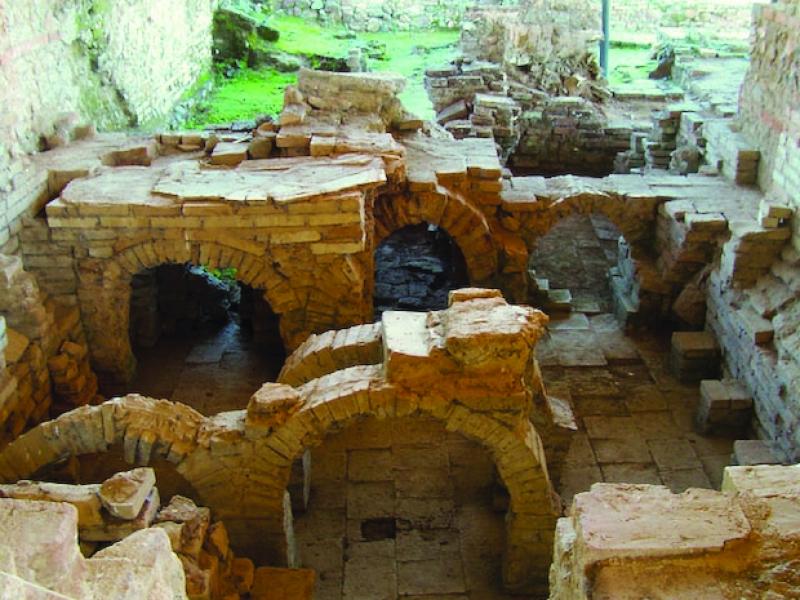
The object comes from ancient Mulva-Munigua, near modern Villanueva del Río y Minas in Seville. In Roman times, the settlement was known as Municipium Flavium Muniguense, a town shaped by mining traditions and the public architecture of Roman Baetica.
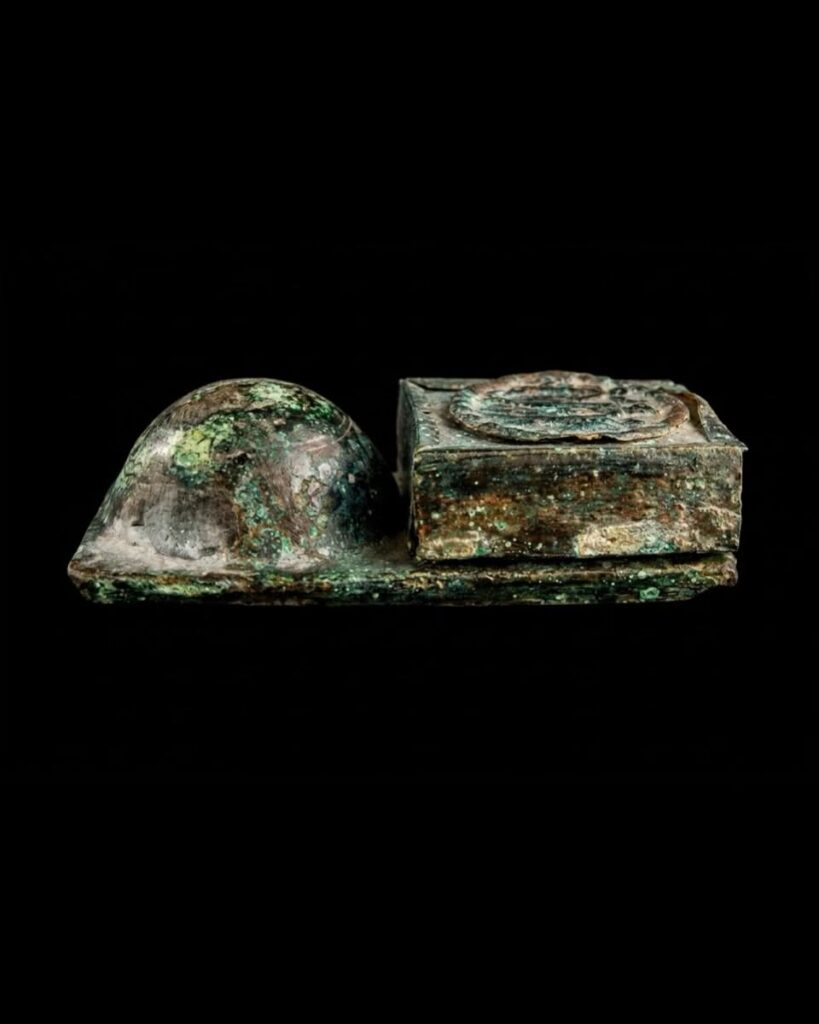
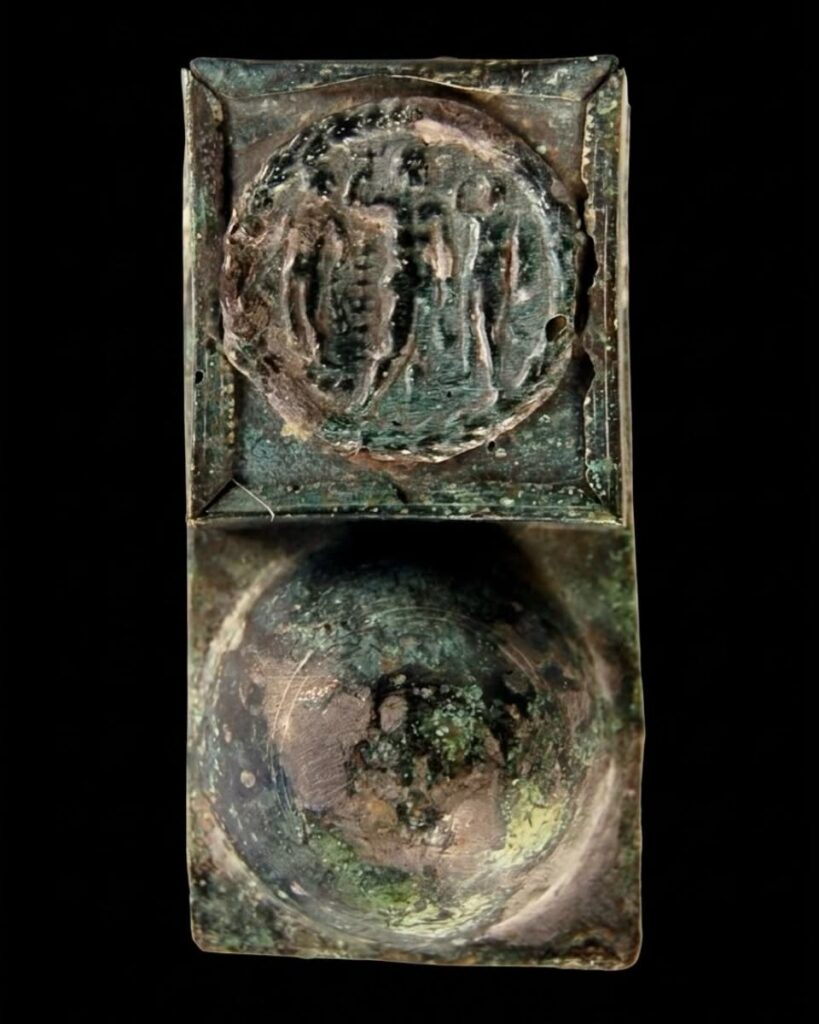
Now kept in the collection of the Museo Arqueológico de Sevilla, the piece is catalogued as an estuche de tocador, or dressing case. It is dated to the 2nd century AD and was made of bronze, accompanied by a rectangular slate palette.
A private object from Roman daily life
The case was not a decorative trinket without function. It belonged to the small toolkit of personal care. Pigments, powders and oily substances could be preserved, crushed and mixed before being applied as cosmetics.
That detail matters because Roman beauty practices were closely tied to social life. Hair, scent, skin treatment and facial color all formed part of how the body appeared in public. A small object like this could move between the hand, the face, the dressing space and, eventually, the tomb.
Its slate palette is especially telling. It was not merely an accessory. It worked as a surface for grinding and blending colors, powders and greasy materials used in makeup.
Gods on a makeup box
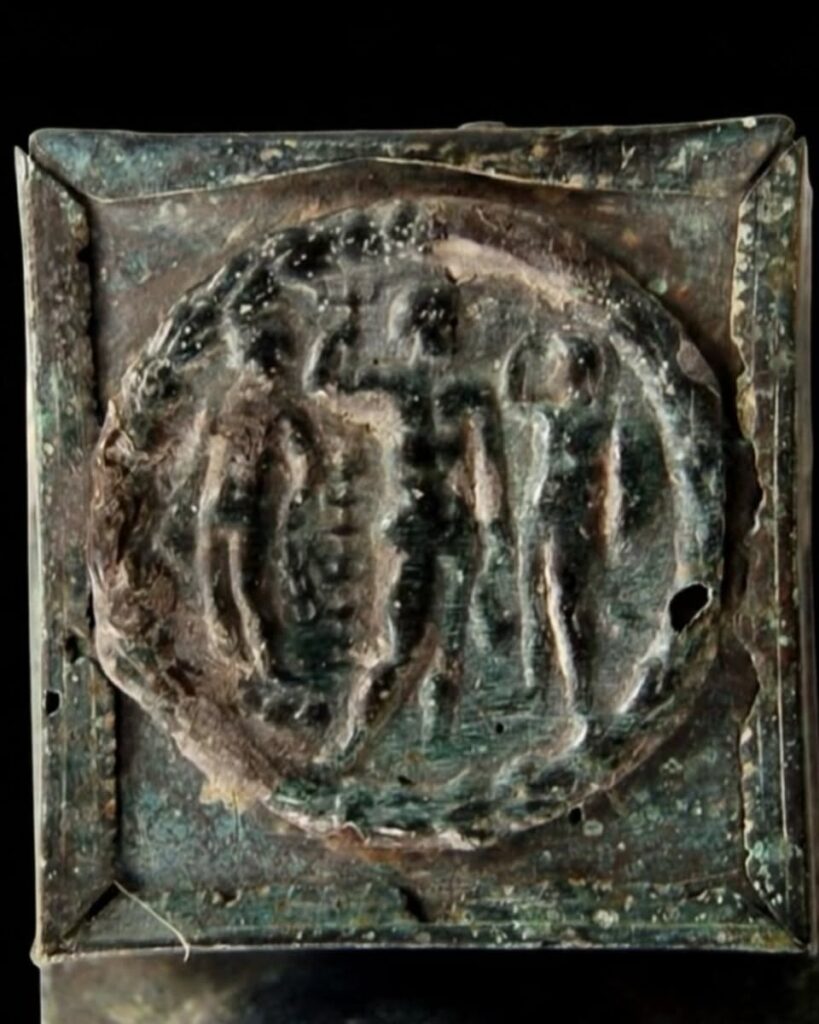
What makes the Munigua case more striking is its decoration. The bronze surface carries figures of Mercury, Neptune and Mars, turning a personal object into something richer than a practical container.
In Roman visual culture, gods could appear on objects that moved through ordinary life, not only on temples or monumental sculpture. Their presence here gives the box a more charged character. It was a tool for beauty, but it also carried imagery tied to protection, power, movement and identity.
One detail stands out: Mars appears with a duck-like or water-bird figure, a motif described as uncommon and linked to bronze-working traditions of the northern Roman Empire. That small image changes the way the object reads. It suggests a wider craft vocabulary, not just a local cosmetic tool.
Taken to the grave
The most human part of the story is its funerary use. The case was deposited as a grave offering, a choice that gives the object a second life beyond the dressing table.
Roman graves often held things that spoke about the person buried there. Some were markers of status. Others were practical objects, familiar possessions or intimate items that kept a link with the body and memory of the dead.
The Munigua makeup box belongs to that more personal category. It was connected to touch, routine and appearance. Someone once used it to prepare substances for the face. Later, it was placed in a burial, where it stopped being only a cosmetic tool and became part of a final act of remembrance.
Munigua’s more intimate history
Munigua is often remembered for its hilltop sanctuary, public buildings and unusual urban layout in the Sevillian highlands. Its Roman phase reflects a town shaped by mining, local elites and religious architecture.
Yet this small bronze case points to another side of the city. It brings the scale down from temples and civic spaces to the personal objects of daily life.
A makeup box is easy to overlook beside inscriptions, statues and architecture. But this one preserves something those larger monuments rarely capture: the private gestures of a Roman life, the materials used to shape appearance, and the memory carried into death.