Archaeologists working beneath the murky waters of Lake Mezzano have uncovered collapsed wooden structures surrounded by pottery and bronze objects, opening a new window onto a village occupied in Italy more than 3,000 years ago. The position of the finds at different depths may now help researchers separate centuries of activity along the changing lakeshore.
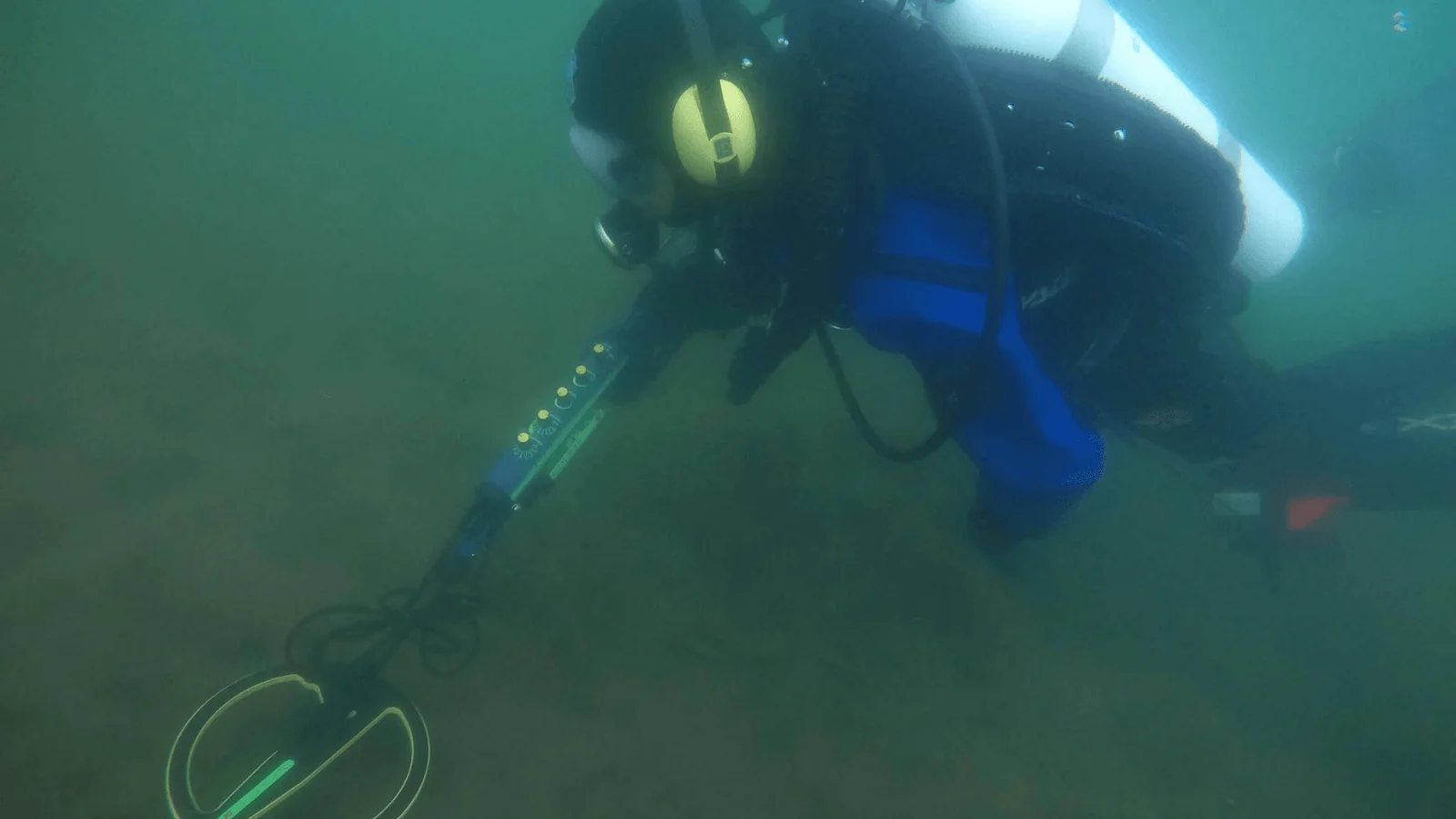
The latest campaign has completed its third week under the direction of the Superintendency of Archaeology, Fine Arts and Landscape for the Province of Viterbo and Southern Etruria. Its Underwater Archaeology Service is mapping the settlement despite cold water and visibility so poor that divers can see only a short distance across the lake bed.
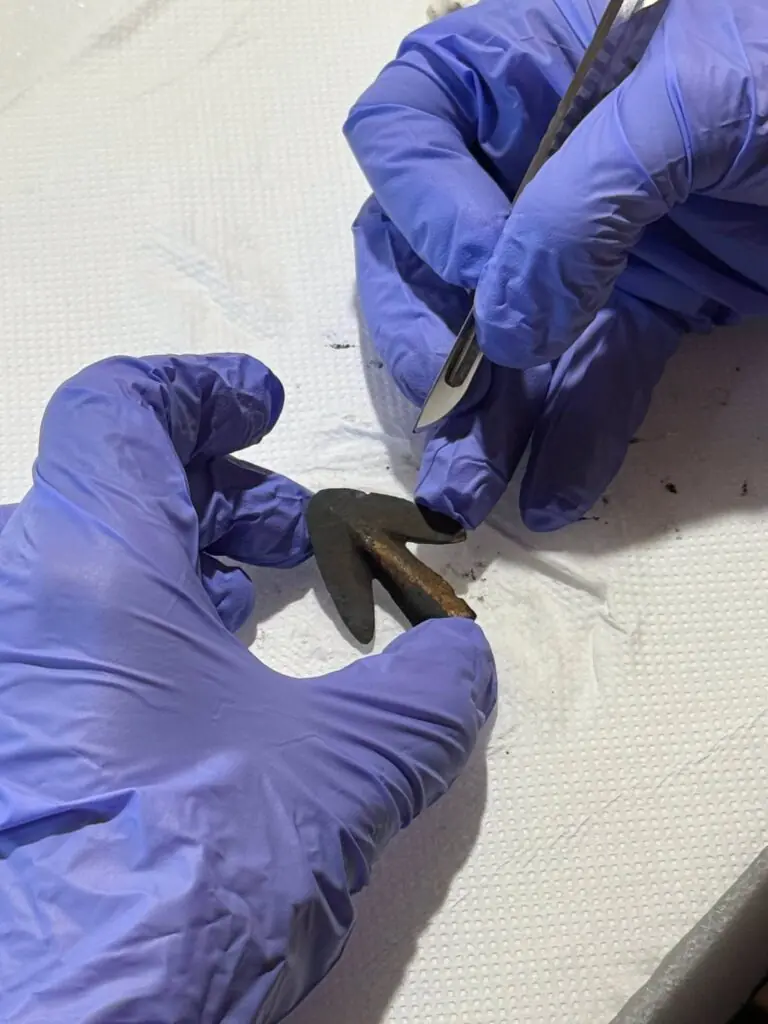
Photographs released by the Superintendency show divers searching the sediment, measuring exposed timbers and recording finds before they are removed. Other images follow bronze objects into conservation, where deposits are carefully cleaned away almost immediately after the artifacts leave the water.
Bronze Objects Found at Different Depths
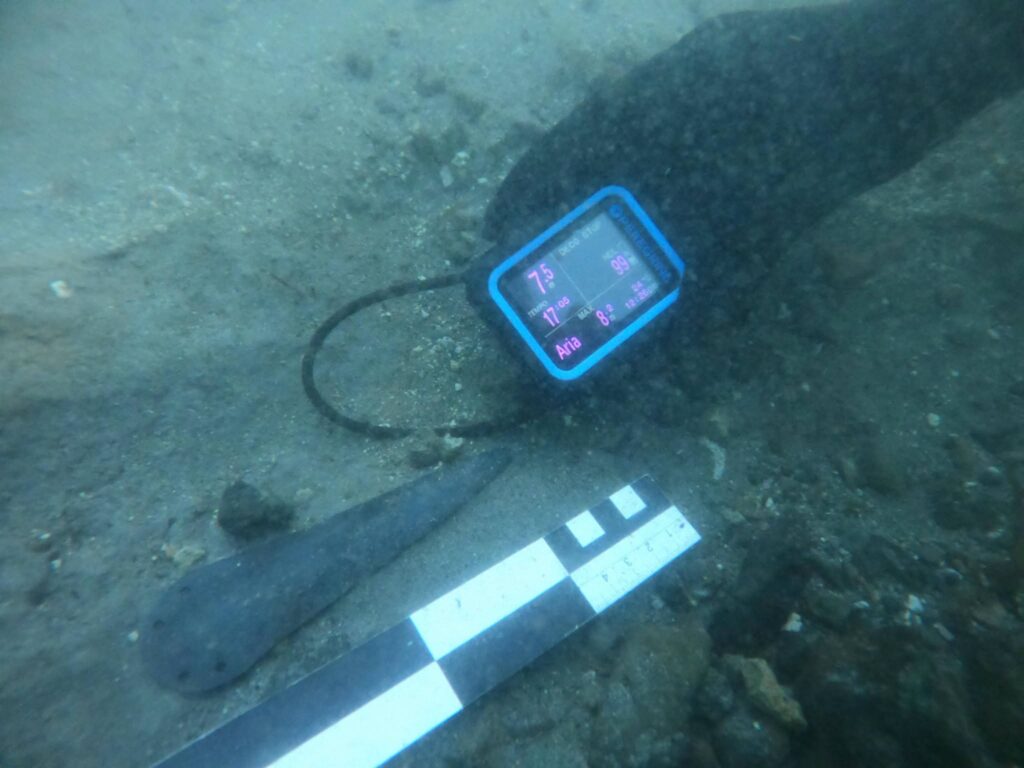
The excavation area currently open beneath the lake has revealed collapsed and distorted wooden structures in direct association with pottery and bronze artifacts. Rather than lying randomly across the bottom, many of the metal objects appear to follow a distinct distribution across different isobaths, or depth contours.
That pattern could help archaeologists distinguish separate phases in the settlement’s history. Objects concentrated at particular depths and beside specific groups of timbers may show when different parts of the lakeshore were occupied, rebuilt or abandoned.
The discovery is especially valuable because the water has preserved more than durable metal and pottery. Timbers that would normally have decayed have survived in the waterlogged, oxygen-poor sediment, allowing researchers to examine the relationship between buildings and the objects once used around them.
The Superintendency has not yet released a complete catalogue or identified every artifact recovered during the current campaign. The objects visible in the newly published photographs therefore cannot be securely described as particular types of tools or weapons until specialists complete their assessment.
More Than 600 Timbers Beneath the Lake
Lake Mezzano is a volcanic crater lake near Valentano in northern Lazio, about 100 kilometers northwest of Rome. Archaeological material has been known beneath its waters since underwater exploration began in the 1970s, but renewed investigations have revealed that the submerged settlement is far more extensive than early surveys could demonstrate.
During the 2025 campaign, underwater mapping documented more than 600 wooden piles projecting from the clay lake bed. They covered only about one-third of the known archaeological area, leaving much of the village still to be recorded.
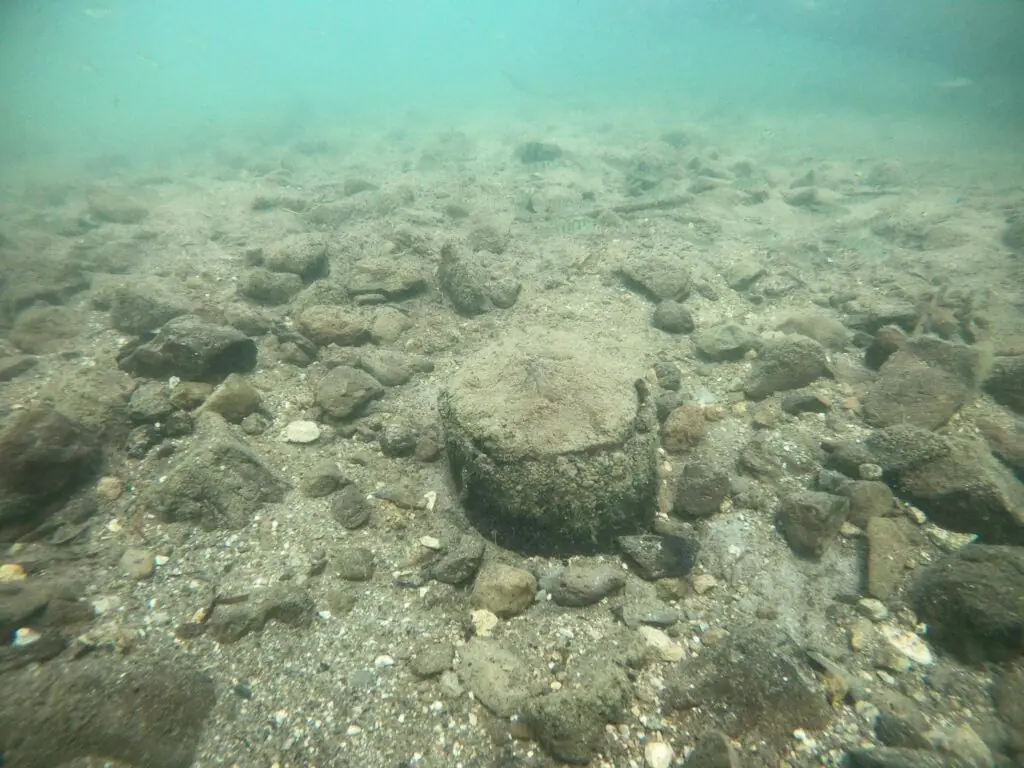
The arrangement of the timbers points to buildings once supported or reinforced with wood, although Lake Mezzano was not necessarily a single village constructed in one episode. Archaeological deposits indicate repeated activity extending through parts of the second millennium BC, including phases attributed to the Early and Recent Bronze Age.
More than 25 bronze objects were recovered during the previous campaign. They included winged axes, spearheads, brooches, rings, a long pin and a remarkably well-preserved sickle, as well as metal intended for casting.
Casting material suggests that bronze may have been worked within the settlement rather than brought there only as finished goods. Together, the tools, weapons, personal ornaments and production remains offer a rare glimpse of both everyday life and specialized craftsmanship beside the lake.
Some previously recovered objects also showed signs of exposure to heat. This raised the possibility that buildings had been damaged by fire, although archaeologists have not established whether the traces resulted from one destructive event, several smaller fires or another process affecting the settlement over time.
Conservation Begins as Soon as the Finds Surface
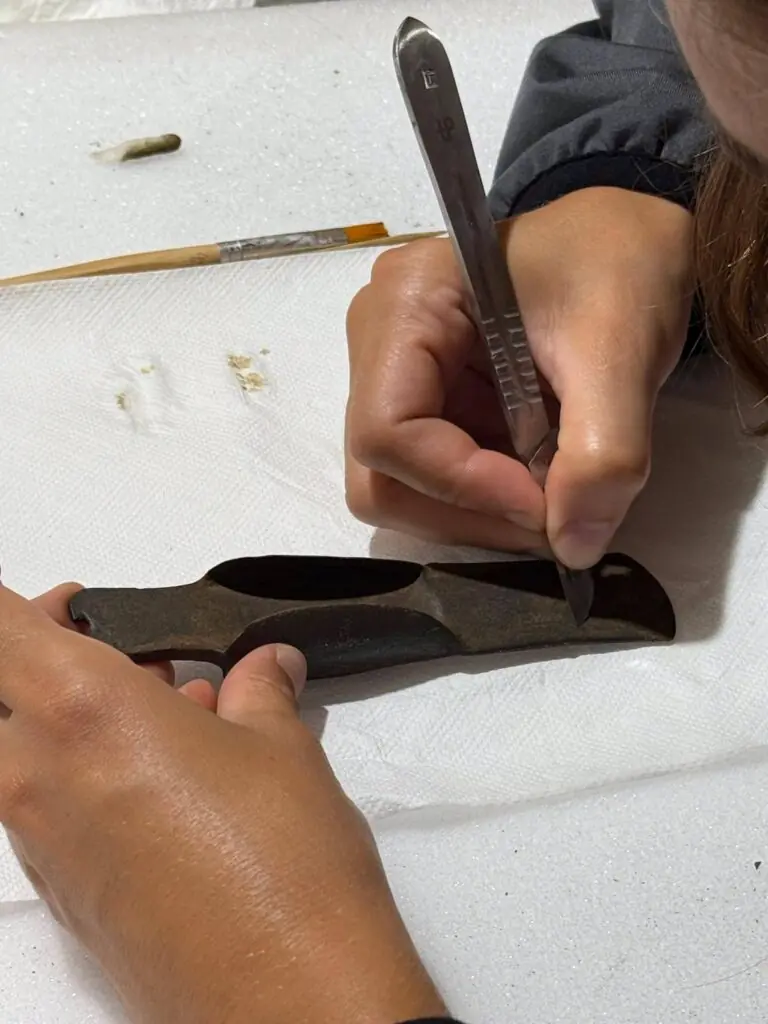
Recovering an object from the lake is only the beginning of the process. Materials that have remained stable underwater for thousands of years can deteriorate rapidly after exposure to air, so every artifact is transferred to conservators shortly after reaching the surface.
Underwater and surface specialists from CSR Restauro Beni Culturali are responsible for stabilizing and cleaning the finds. Images from the campaign show conservators working under magnification and carefully removing sediment from bronze surfaces without disturbing the material beneath.
The Rome Underwater Carabinieri Unit is assisting the archaeologists both in the water and at the surface. It has also provided a remotely operated vehicle to explore deeper parts of the lake that are difficult or unsafe for divers to reach.
The distribution of the latest finds may eventually show whether Lake Mezzano’s buildings collapsed during a fire, deteriorated after abandonment or were gradually overtaken by a shifting shoreline. Beneath the lake, the remains of the village are still preserving that sequence, layer by layer.
Cover Image: An underwater archaeologist surveys the lake bed at the submerged Bronze Age settlement in Lake Mezzano, Italy. Credit: Soprintendenza ABAP for the Province of Viterbo and Southern Etruria