Perched on a windswept ridge 611 meters above sea level, a massive Bronze Age stronghold has emerged from the summit of Papuk Mountain in northeastern Croatia—forcing archaeologists to rethink what Late Bronze Age societies in the Balkans were capable of. The site, known as Gradina, reveals an unexpectedly sophisticated fortification system and a settlement layout far beyond what scholars previously assumed for this region. A Fortress Engineered for Power The excavation team, led by Professor Hrvoje Potrebica of the University of Zagreb, uncovered a three-tiered defensive structure that shows deliberate, high-level engineering: a compact inner core of tamped earth, a robust shell of large stone blocks, and an exterior layer of compressed soil reinforcing the mass. Where the slope plunges away from the summit, the exterior wall reaches seven to eight meters in height, while the inner face still stands roughly two meters tall. This is not the work of a small hilltop refuge—it is architecture built to intimidate. Inside this perimeter, researchers made an even stranger find: a second, independent wall constructed using dry-stone masonry more than 1.5 meters thick. Stone-built defenses of this scale are virtually unheard of in the prehistoric Balkans, where timber-and-earth constructions were the norm. The builders of Gradina were clearly operating with unusual resources, manpower, and intent. A Four-Hectare Settlement, Not a Simple Outpost Covering nearly four hectares, the site contains traces of domestic architecture and everyday pottery, demonstrating that the fortress was a lived-in settlement, not just a lookout. The ceramics recovered from its foundational layers date to 1200–1000 BCE, placing the site firmly in the Late Bronze Age. Prior to excavation, some scholars suspected a Celtic La Tène phase because silver Celtic coins were once illegally removed from the area. Systematic research has now demolished that assumption entirely. The new evidence pushes the origins of the settlement 800 years earlier and positions Papuk as a center of organized Bronze Age life—not a later Celtic foothold. Implications for the Bronze Age Balkans The discovery forces a recalibration of regional prehistory. Gradina demonstrates that communities here were: highly organized, capable of monumental construction, and deeply invested in long-term strategic control. Its scale rivals fortified centers of the same period in Central Europe and the Near East, suggesting the Balkans were connected to broader cultural and political networks rather than existing on the periphery. The site’s permanence—expressed through stone, not timber—may indicate political authority or a need to project stability during turbulent centuries. Professor Potrebica’s team, armed with multi-season fieldwork and modern analytical methods, continues to peel back the layers of this mountain. As investigations progress, researchers expect new insights into the settlement’s hierarchy, its economic networks, and its possible role as a regional stronghold during the Late Bronze Age. A Hidden Stronghold Steps Into the Light For more than three millennia, the Gradina fortress lay concealed under forest soil and mountain weathering. Now, after careful excavation, it stands as one of the most imposing prehistoric strongholds ever identified in southeastern Europe—an architectural and social achievement that had effectively slipped out of the archaeological narrative. Papuk’s summit has begun to speak, and its message is blunt: the Bronze Age Balkans were far more complex, more connected, and more ambitious than the textbooks allowed.

A 3,200-Year-Old Mountain Fortress in Croatia Rewrites the Bronze Age Map

Perched on a windswept ridge 611 meters above sea level, a massive Bronze Age stronghold has emerged from the summit of Papuk Mountain in northeastern Croatia—forcing archaeologists to rethink what Late Bronze Age societies in the Balkans were capable of. The site, known as Gradina, reveals an unexpectedly sophisticated fortification system and a settlement layout far beyond what scholars previously assumed for this region.
A 3,200-Year-Old Mountain Fortress in Croatia Rewrites the Bronze Age Map
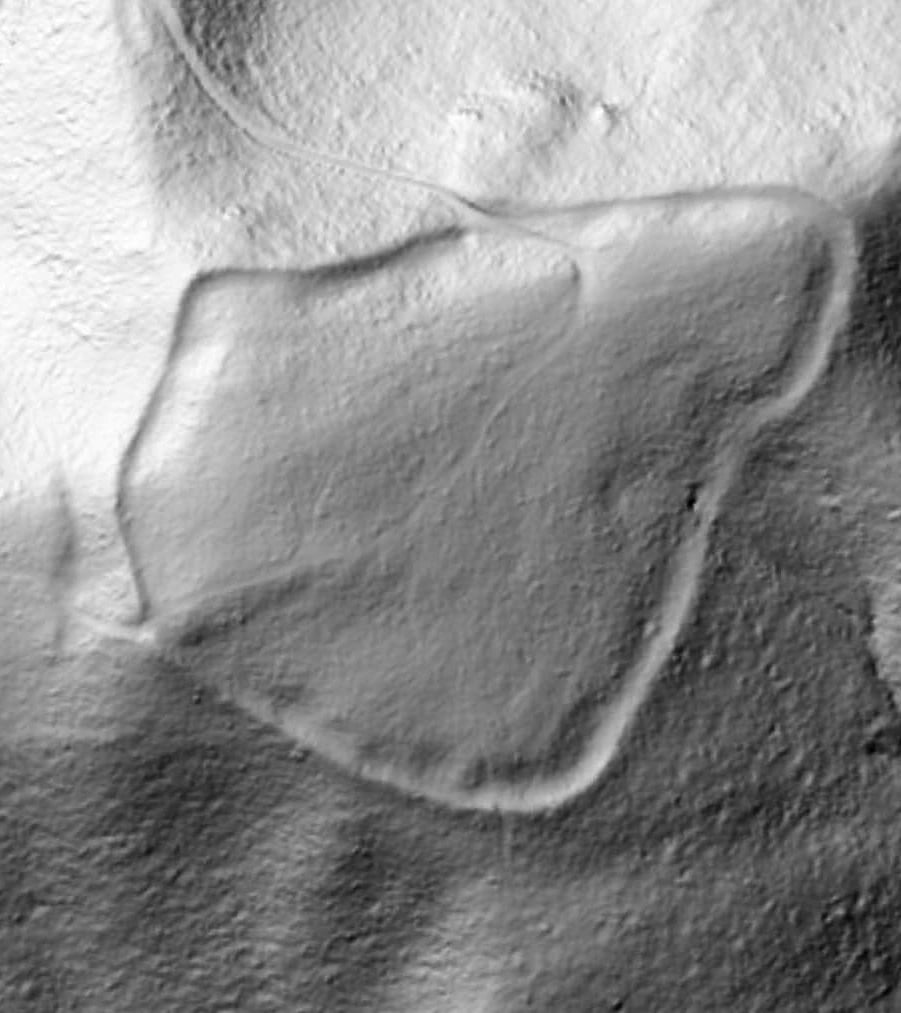
Lidar scan of the Gradina hilltop on Papuk Mountain, clearly revealing the sweeping outline of the 611-meter-high Bronze Age fortification and its massive outer rampart. Credit: Kristijan Toplak / Virovitičko-podravska županija

A Fortress Engineered for Power

The excavation team, led by Professor Hrvoje Potrebica of the University of Zagreb, uncovered a three-tiered defensive structure that shows deliberate, high-level engineering:

  • a compact inner core of tamped earth,
  • a robust shell of large stone blocks,
  • and an exterior layer of compressed soil reinforcing the mass.
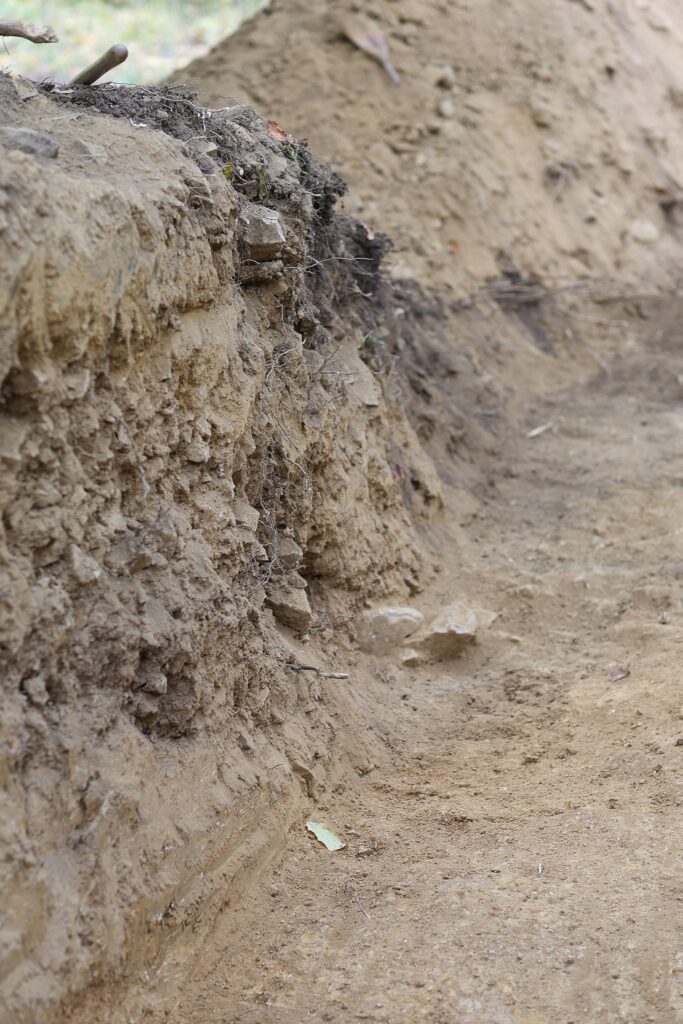
A stratigraphic cut showing the multi-layered defensive system, with compacted soil, stone-block cores, and construction phases preserved within the rampart. Credit: Kristijan Toplak / Virovitičko-podravska županija

Where the slope plunges away from the summit, the exterior wall reaches seven to eight meters in height, while the inner face still stands roughly two meters tall. This is not the work of a small hilltop refuge—it is architecture built to intimidate.

Inside this perimeter, researchers made an even stranger find: a second, independent wall constructed using dry-stone masonry more than 1.5 meters thick. Stone-built defenses of this scale are virtually unheard of in the prehistoric Balkans, where timber-and-earth constructions were the norm. The builders of Gradina were clearly operating with unusual resources, manpower, and intent.

A Four-Hectare Settlement, Not a Simple Outpost

Covering nearly four hectares, the site contains traces of domestic architecture and everyday pottery, demonstrating that the fortress was a lived-in settlement, not just a lookout. The ceramics recovered from its foundational layers date to 1200–1000 BCE, placing the site firmly in the Late Bronze Age.

Prior to excavation, some scholars suspected a Celtic La Tène phase because silver Celtic coins were once illegally removed from the area. Systematic research has now demolished that assumption entirely. The new evidence pushes the origins of the settlement 800 years earlier and positions Papuk as a center of organized Bronze Age life—not a later Celtic foothold.
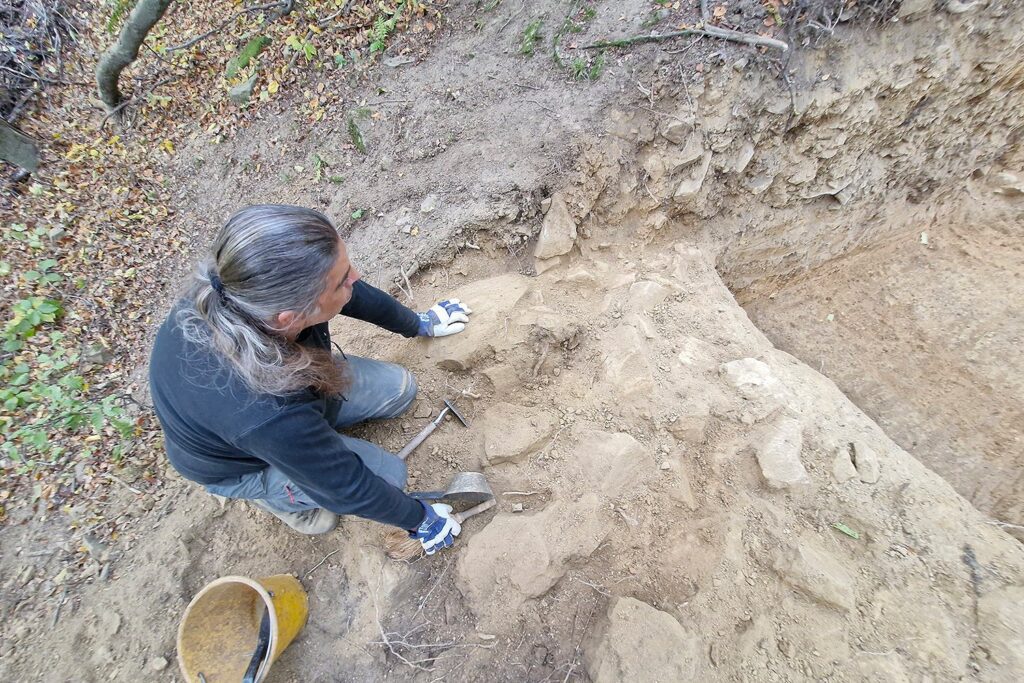
An archaeologist carefully exposing dry-stone masonry blocks that form part of the inner defensive wall of the Late Bronze Age fortress at Gradina. Credit: Kristijan Toplak / Virovitičko-podravska županija

Implications for the Bronze Age Balkans

The discovery forces a recalibration of regional prehistory. Gradina demonstrates that communities here were:

  • highly organized,
  • capable of monumental construction,
  • and deeply invested in long-term strategic control.

Its scale rivals fortified centers of the same period in Central Europe and the Near East, suggesting the Balkans were connected to broader cultural and political networks rather than existing on the periphery. The site’s permanence—expressed through stone, not timber—may indicate political authority or a need to project stability during turbulent centuries.

Professor Potrebica’s team, armed with multi-season fieldwork and modern analytical methods, continues to peel back the layers of this mountain. As investigations progress, researchers expect new insights into the settlement’s hierarchy, its economic networks, and its possible role as a regional stronghold during the Late Bronze Age.

A Hidden Stronghold Steps Into the Light

For more than three millennia, the Gradina fortress lay concealed under forest soil and mountain weathering. Now, after careful excavation, it stands as one of the most imposing prehistoric strongholds ever identified in southeastern Europe—an architectural and social achievement that had effectively slipped out of the archaeological narrative.

Papuk’s summit has begun to speak, and its message is blunt: the Bronze Age Balkans were far more complex, more connected, and more ambitious than the textbooks allowed.

Virovitica-Podravina County (Virovitičko-podravska županija)

Cover Image Credit: Kristijan Toplak / Virovitičko-podravska županija