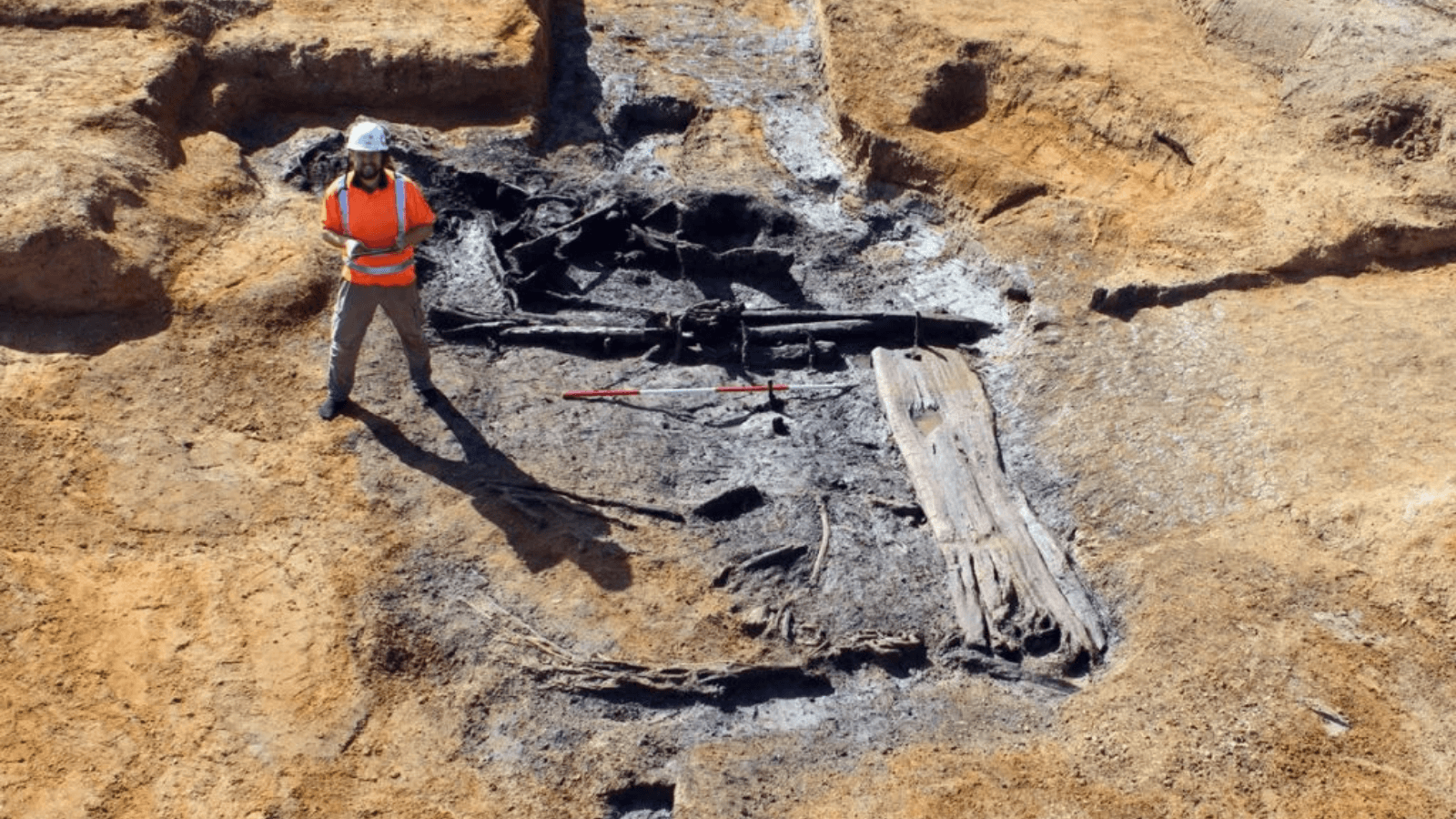
A wooden ladder driven into the earth nearly 3,500 years ago has been discovered at the bottom of a Bronze Age waterhole in England. Found south of Gloucester, the remarkably preserved structure also contained a timber platform, woven walls and around 150 pieces of waterlogged wood.
Radiocarbon dating places the structure in the Middle Bronze Age, between 1500 and 1100 BC. Because prehistoric wood usually decays unless it remains sealed in wet, oxygen-poor ground, finding so many structural elements in their original positions gives archaeologists a rare opportunity to examine Bronze Age woodworking and water management.
A carefully engineered descent
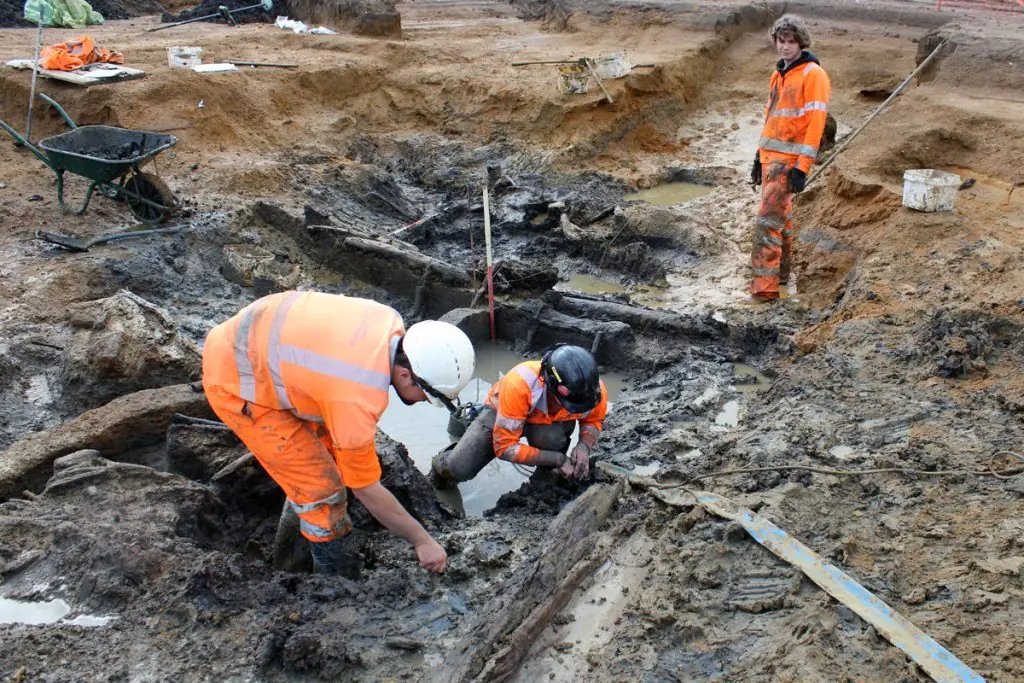
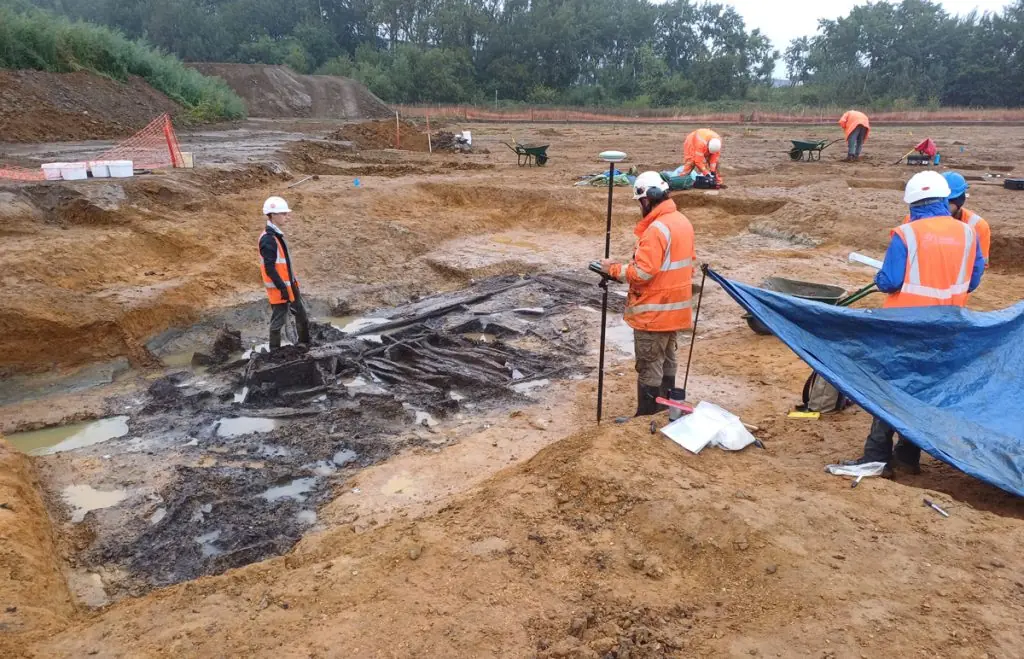
The waterhole reached a depth of approximately two metres. At its base, its builders had created a wooden platform supported and bordered by a series of log planks.
A log ladder provided access to the platform. Its lower end had been shaped into a point and driven into the natural soil, anchoring it beside the deepest part of the waterhole.
At least two sections of woven wattle were also installed along the sides. These acted as retaining walls, helping to prevent the surrounding ground from eroding or collapsing into the opening.
The combination of a ladder, platform and protective lining shows that this was more than a roughly excavated pit. Its builders understood how to work in unstable, waterlogged ground and invested considerable effort in keeping the feature accessible.
The surviving elements were made from oak, possible ash, other hardwoods and smaller roundwood. Fifty-five pieces bear direct evidence of woodworking, including split surfaces and marks left by axes. Their analysis could reveal how the timbers were prepared, assembled and altered during different phases of the structure’s life.
A wooden trough was built into the structure
Among the timbers, archaeologists identified a wooden trough wedged between the planks and the north-western edge of the waterhole. The object appears to have served another purpose before being reused as part of the structure.
Wooden troughs from the Bronze Age are rare, although similar examples have been associated with burnt mounds and possible food-processing sites. Comparable objects were also preserved at the Late Bronze Age settlement of Must Farm in Cambridgeshire.
Evidence indicates that the Gloucester waterhole went through two or possibly three phases of use. Some activity occurred before the wooden features were installed, while later changes may have altered how people entered or maintained it.
Waterholes of this period are often assumed to have supplied livestock. That explanation is not entirely convincing here, however, because a brook lay nearby and the builders devoted unusual care to constructing a stable route down to the water. Archaeologists therefore believe it may have served another purpose, although its precise function remains unknown.
Insects and plants reveal the surrounding landscape
The wet conditions preserved more than the wooden structure. Seeds and other plant remains recovered from the deposits included nettles, thistles, docks and brambles, indicating that rough grass and scrub surrounded the waterhole.
Large quantities of insect remains were also found, including water fleas. Together, these tiny traces point to a varied local landscape containing standing water, wet ground, hedgerows and the edges of woodland.
The evidence may eventually help researchers understand whether the structure stood close to fields, grazing areas or a settlement. It also provides environmental context that would normally disappear from a dry archaeological site.
The waterhole may have remained open or at least visible during the Iron Age. Several small pits, possibly used for storage or rubbish, were later dug around it, showing that the location continued to attract activity after the original timber structure had fallen out of use.
Elsewhere on the site, archaeologists uncovered 13 un-urned cremations and the crouched burial of a child. These burials have not yet been dated, although their forms are consistent with prehistoric practices.
A second waterhole deepens the mystery
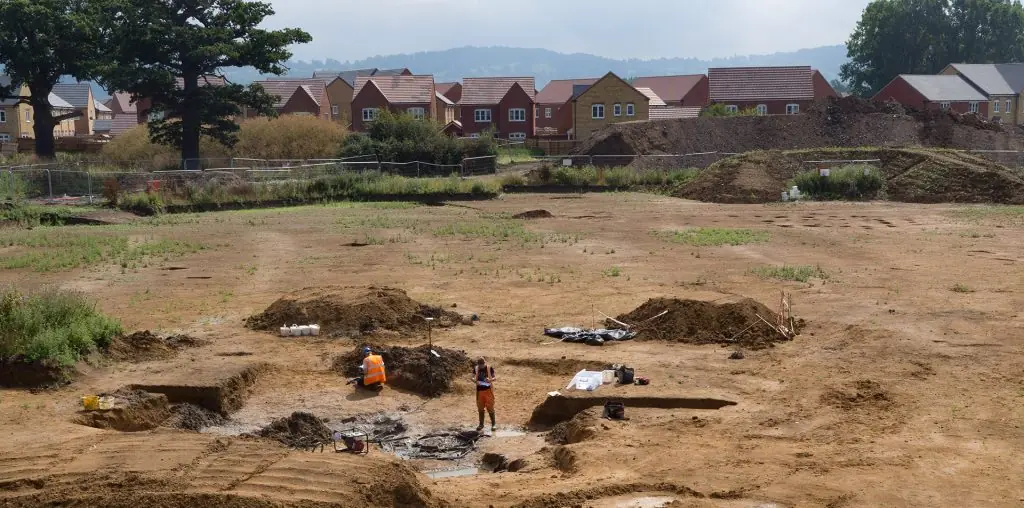
The timber-lined structure was not the first waterhole found in the immediate area. Earlier excavations approximately 20 metres to the south revealed another example containing remains of a woven lining.
Half of a wooden trough had been placed at the bottom of that feature after being broken in antiquity. Archaeologists have suggested that its deposition may have marked a deliberate “closure ritual” performed when the waterhole was abandoned.
Whether the two structures were used at the same time remains unclear. Their proximity nevertheless suggests that access to water—or the activities carried out around it—held lasting importance at the site.
Ongoing study of the timbers, tool marks and environmental remains may establish how the newly discovered waterhole changed over time. For now, its ladder and platform preserve something rarely encountered in Bronze Age archaeology: the physical route people once used to descend into a carefully constructed wooden structure hidden beneath the English landscape.
Cover Image: The fully excavated Middle Bronze Age waterhole south of Gloucester, with its waterlogged timber structure still visible. Credit: Cotswold Archaeology