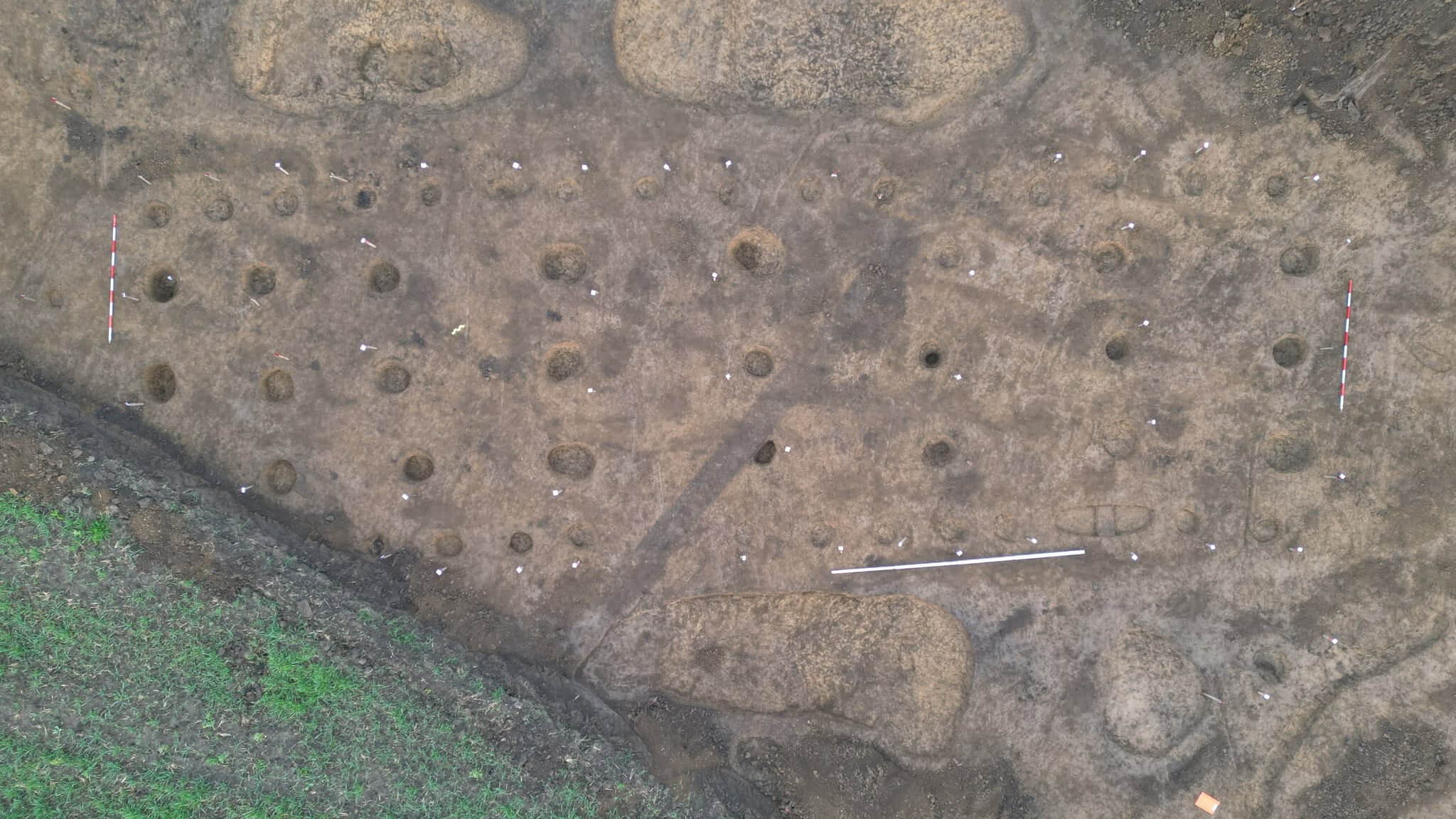
The houses are gone, but their outlines remain beneath the fields of central Moravia. Archaeologists working ahead of a highway project near Přerov have identified the plans of about 16 Neolithic longhouses, some reaching 36 meters in length.
The discovery is part of a rescue excavation along the planned D55 route between Kokory and Přerov. Over a stretch of roughly six kilometers, the team found traces of settlements and burials from the Stone Age through the Middle Ages.
The Houses Beneath the Fields
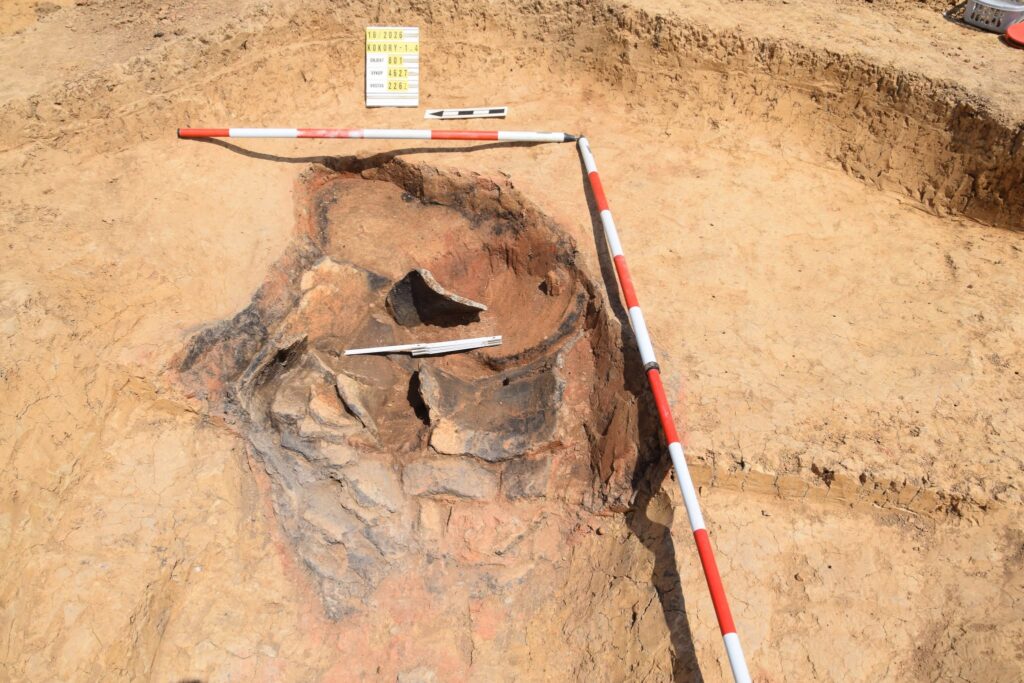
Near Kokory and Rokytnice, archaeologists identified house plans associated with the Linear Pottery culture, whose communities were among the first farmers in central Moravia. Storage pits and ovens were found nearby, adding evidence of daily life to the outlines left by the buildings.
The size of the houses is remarkable, but their arrangement may tell researchers more. The plans could show how people organized their settlements and how those settlements changed. The figure of about 16 houses is preliminary, and it does not mean every building stood at the same time.
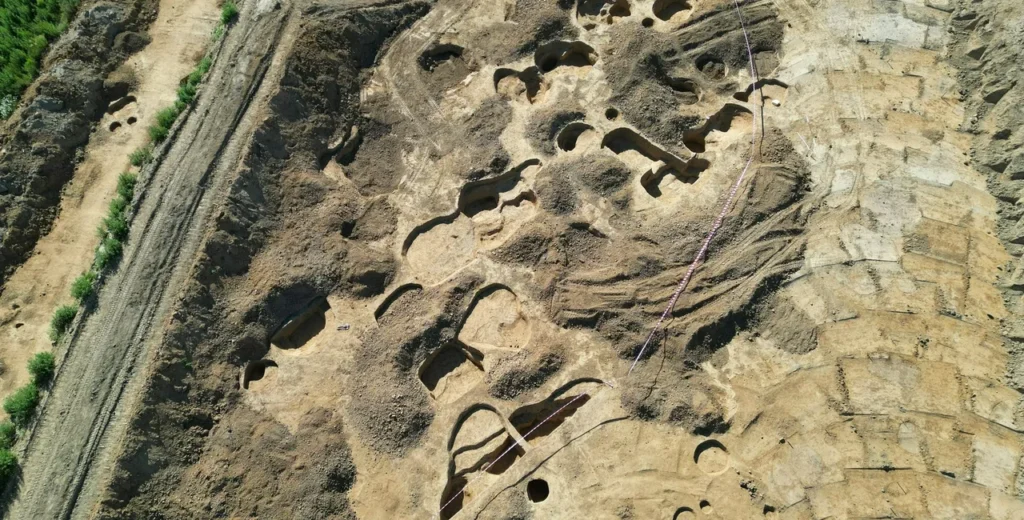
The longhouses were only part of what the excavation revealed. At Kokory–Podsedky, archaeologists encountered the greatest concentration of features along the route. In all, the team examined 1,879 settlement features and documented 65 graves, according to the Archaeological Center Olomouc.
A Landscape Used for Thousands of Years
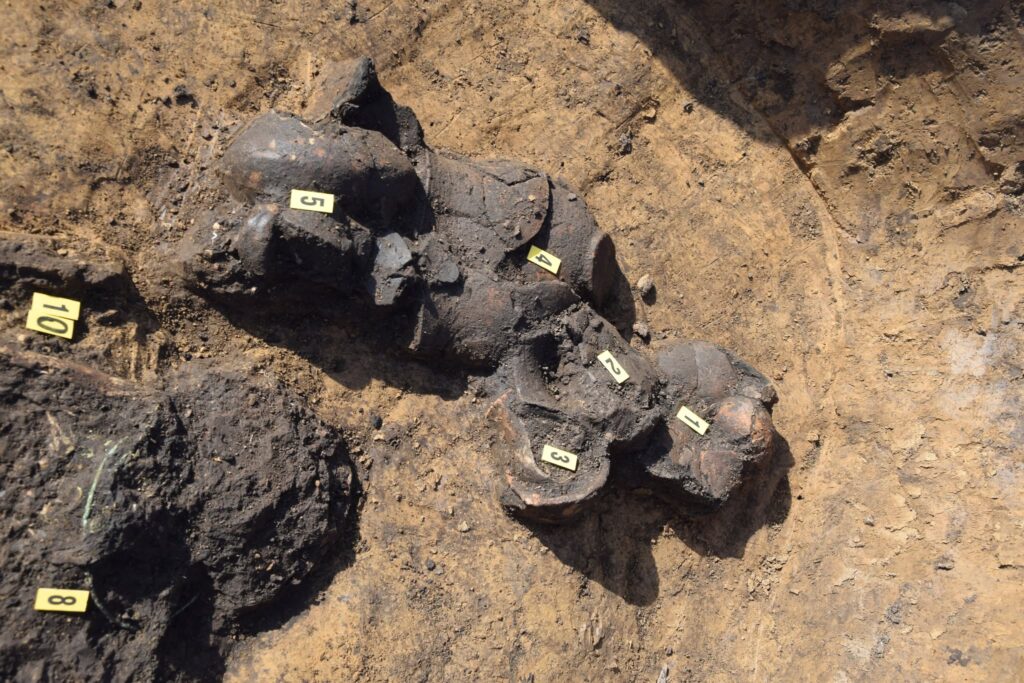
The graves belong to different periods. The team found burial grounds from the beginning of the Bronze Age as well as 18 later Bronze Age cremation graves. Objects recovered from burials across the excavation include copper ornaments, bone beads, flint arrowheads, pottery vessels, bronze pins and bracelets.
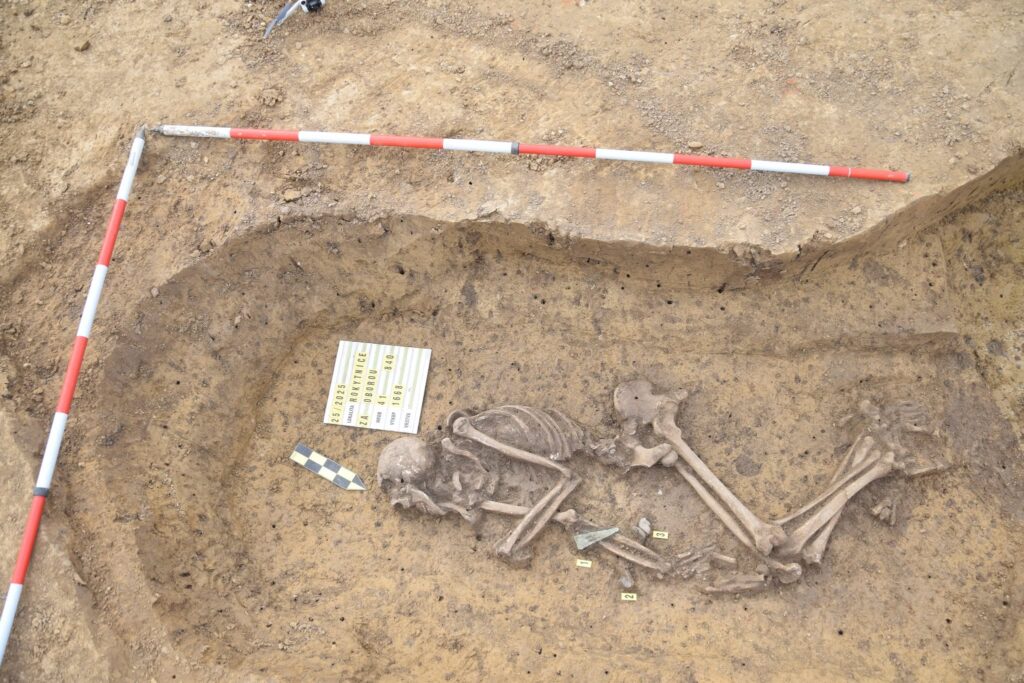
Near Dluhonice, the excavators found an archaeological site that had not previously been identified. A grave attributed to the Corded Ware culture contained pottery, a copper ornament and a stone tool. Its discovery shows why the survey mattered even though archaeologists already knew of other sites along the proposed road.
Taken together, the remains tell a longer story than the house plans alone. Early farmers built homes here; people in later periods lived in the area and buried their dead nearby. The highway excavation gives researchers a chance to examine those traces across a broad section of the landscape.
What the Excavation Can Still Reveal
The Archaeological Center Olomouc carried out the fieldwork for the Czech road authority between September 2025 and July 29, 2026. The finds now require cleaning, conservation, documentation and further study before they are transferred to the Olomouc Regional Museum’s archaeology center.
That work may sharpen the dating of individual houses and graves. It may also help researchers understand how separate communities used this part of central Moravia over thousands of years. The outlines beneath the fields are the beginning of that investigation, rather than its final picture.
Cover Image: Rows of postholes reveal the outline of a timber building along the planned D55 highway route. Photo: Archaeological Center Olomouc.