
A small object recovered during the 2024 excavation season at Pisidian Antioch in southwestern Turkey is drawing renewed attention for what it may reveal about illness, belief, and personal devotion in Late Antiquity. The artifact, a modest amulet dated to the 4th century CE, bears the image of a crab — a symbol closely associated in ancient Greek terminology with what we now call cancer.
Pisidian Antioch, located in modern Isparta province, was one of the major urban centers of Roman Anatolia. The city is known to have been visited by Saint Paul between 46 and 57 CE and preserves monumental remains including the Temple of Augustus, a theater, bath complexes, fountains, and a stadium. At the heart of its sacred landscape stood the Temple of Men, dedicated to the Anatolian lunar god Men, whose cult attracted worshippers from across the region. Crescent-shaped votive steles left in honor of the deity have long testified to the temple’s ritual significance.
A Symbol of Illness and Hope
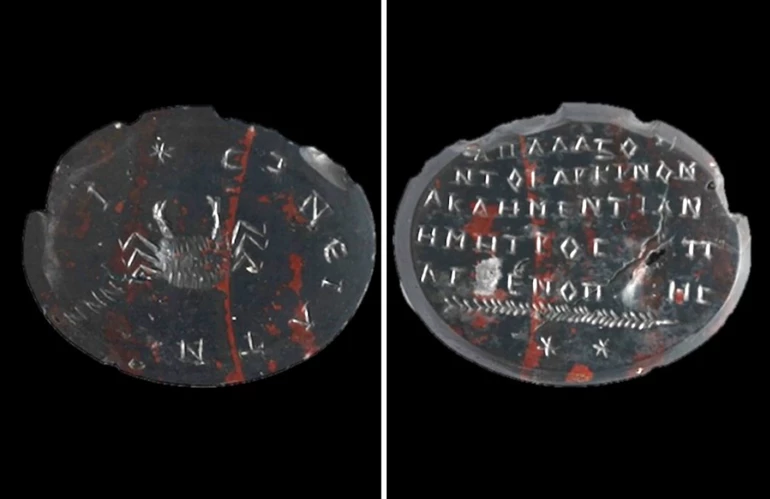
The amulet was uncovered within the sacred precinct of the Temple of Men, in architectural layers associated with the reign of the last pagan Roman emperor, Julian (361–363 CE). On its front appears a carefully rendered crab. On the reverse is a short inscription interpreted as a prayer.
In ancient Greek, the word for crab — karkinos (here referenced in variant form) — was also used to describe malignant tumors, due to the perceived resemblance between a spreading cancer and a crab’s legs. Scholars believe the imagery was deliberate. The amulet may have been commissioned for a woman suffering from cancer, possibly by a close family member seeking divine intervention. Worn around the neck, it would have functioned both as a protective charm and as a tangible expression of hope.
Excavation director Prof. Dr. Mehmet Özhanlı has previously described the Temple of Men as a religious center of exceptional importance in antiquity, emphasizing its unique place within the wider Mediterranean world.
Though small in scale, the amulet offers rare material evidence of how medical understanding and spiritual practice intersected in the late Roman period. In a city shaped by imperial power and early Christianity, it preserves a deeply personal story — one of illness, faith, and the enduring human search for healing.
Cover Image: Ancient City of Pisidian Antioch in Yalvaç, Isparta Province, Türkiye — view of the Temple of Augustus and its sacred precinct within the Roman-era urban landscape.