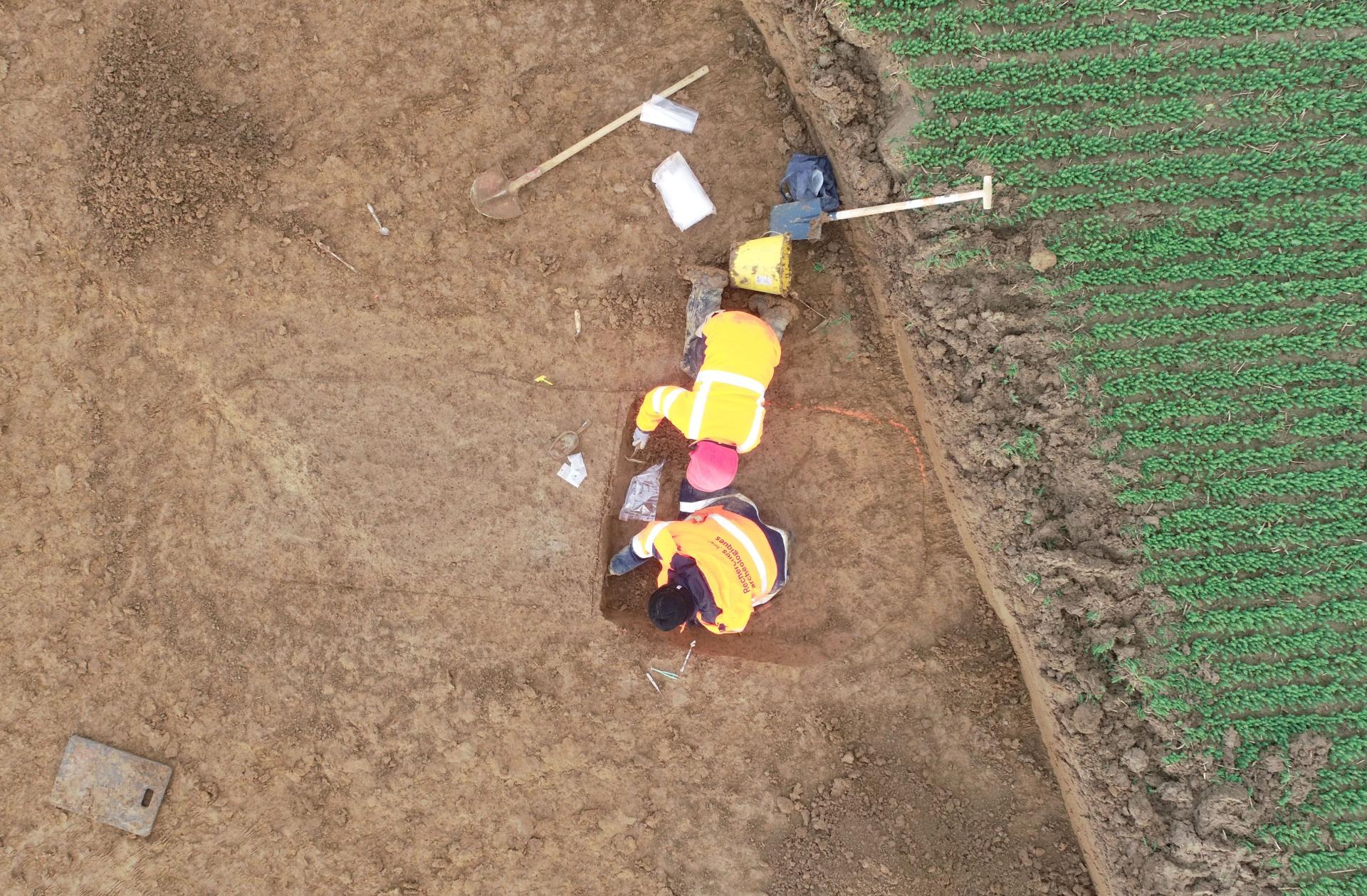
Archaeologists have uncovered a richly furnished “princely tomb” dating to around 1900–1800 BCE in Ecouché-les-Vallées, Normandy — a region where such elite burials are exceptionally rare.
A Warrior Equipped for the Afterlife
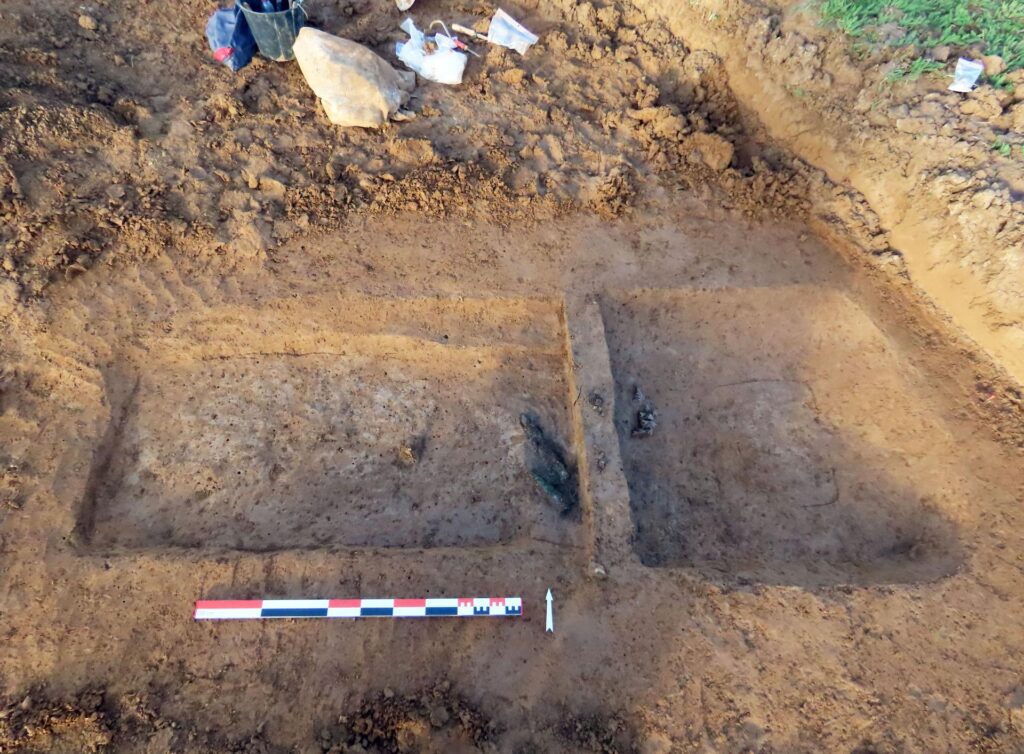
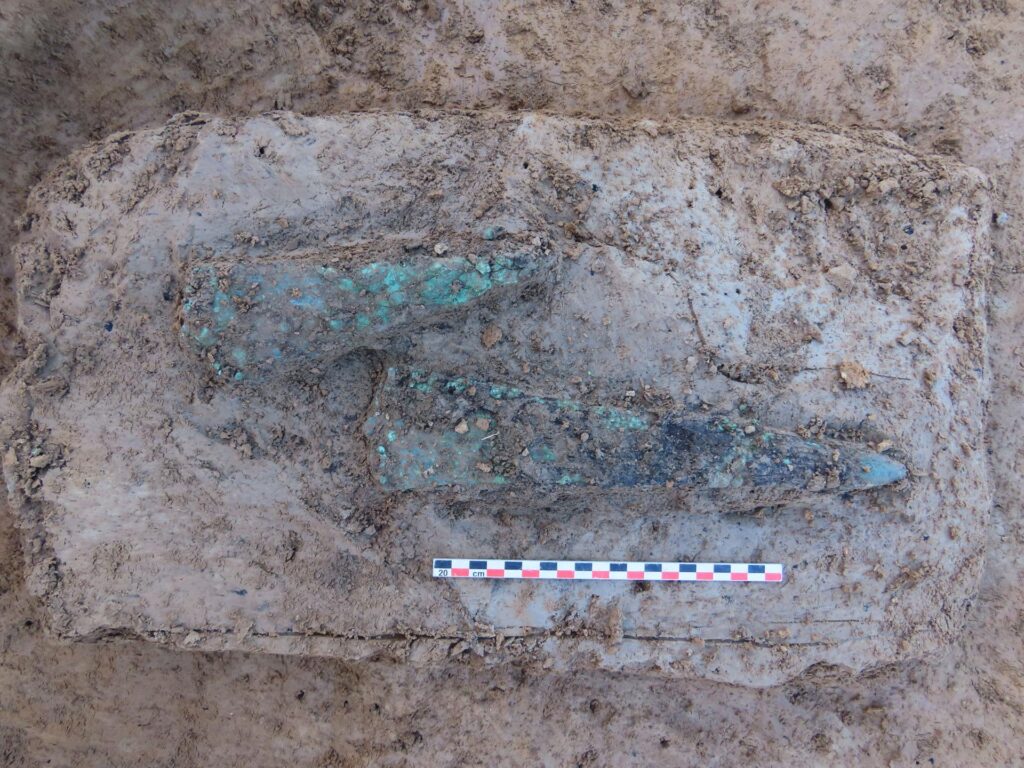
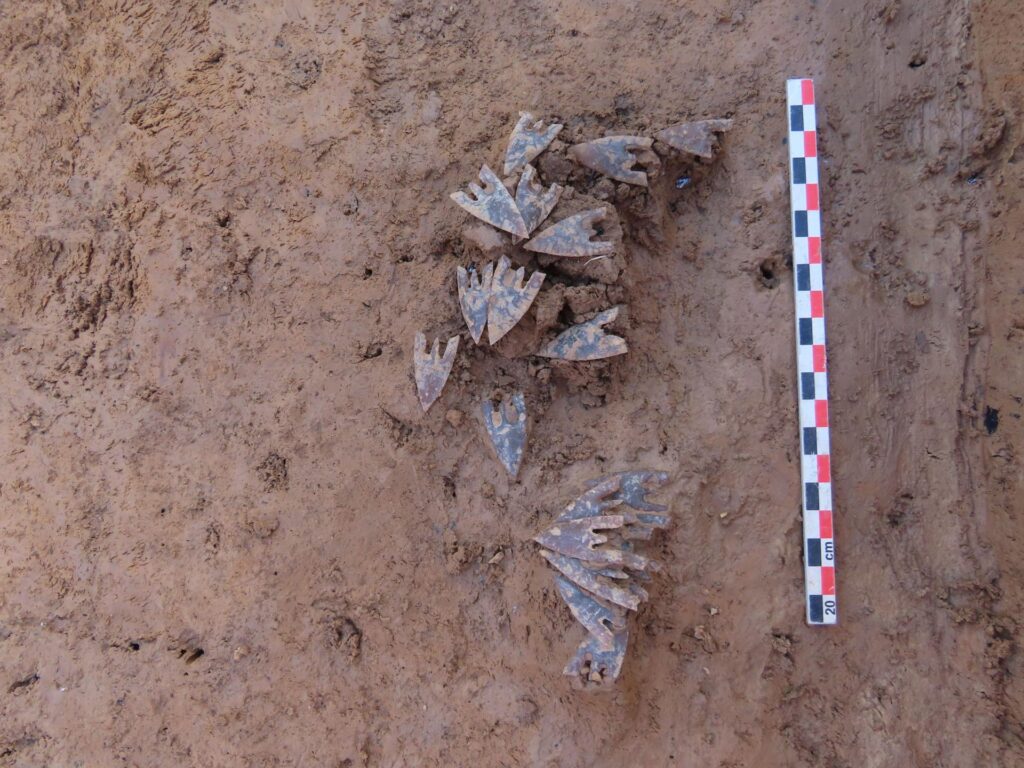
Inside the grave pit, researchers identified a remarkable assemblage of prestige objects: 31 finely crafted flint arrowheads, two bronze daggers, and a fragment of rock crystal that may have served as a pendant.
The larger dagger, measuring 30 centimeters in length, preserved traces of a leather sheath. The smaller, about 20 centimeters long, was once protected by woven casing. Both weapons belong to the distinctive “Armorican” type and still retain their rivets, though their wooden handles have long since vanished.
The arrowheads — also Armorican — are notable for their technical perfection. Their symmetry and finish suggest master craftsmanship, and such examples are found almost exclusively in funerary contexts. In early Bronze Age societies, they functioned as clear symbols of status and authority.
Although the skeleton itself has not survived due to the region’s acidic soil, the burial likely lay beneath a now-vanished tumulus mound. This architectural form is characteristic of the so-called Armorican Tumulus Culture, widely known in Brittany but rare in Normandy, where only six comparable tombs have previously been recorded.
A Territory Under Elite Control?
The Ecouché-les-Vallées discovery does not stand alone. Nearby Loucé has produced evidence of a cult enclosure from the same period, while Moulins-sur-Orne, just six kilometers away, contains a large monumental enclosure.
Taken together, these sites suggest more than scattered occupation. They point toward a structured landscape — possibly a domain controlled by a high-status lineage. Within that broader network, the Ecouché burial may represent a ruling elite figure whose authority extended across both sides of the Orne River.
Beneath the Tomb: The Oldest Neolithic Settlement in the Area
Even more striking is what lies beneath the Bronze Age grave. Excavations revealed traces of Early Neolithic occupation dating back to 4900–4800 BCE.
Large pits interpreted as grain silos and clay extraction features indicate the presence of a substantial settlement. Archaeologists identified storage ceramics decorated with cordons and knobs, flint tools, unfinished polished greenstone axe blanks, and fragments of grinding stones.
These materials belong to the late phase of the Villeneuve-Saint-Germain culture, associated with the final wave of Danubian expansion into western Europe. Though the house itself was not preserved, the lateral pits suggest a large Danubian-style longhouse comparable to one discovered nearby in 2009.
The site, therefore, captures nearly three millennia of human presence — from the earliest farming communities in Normandy to the emergence of Bronze Age elite power structures.
In Ecouché-les-Vallées, the soil tells a layered story: first farmers, then warriors, and finally a landscape shaped by authority.
Cover Image: INRAP