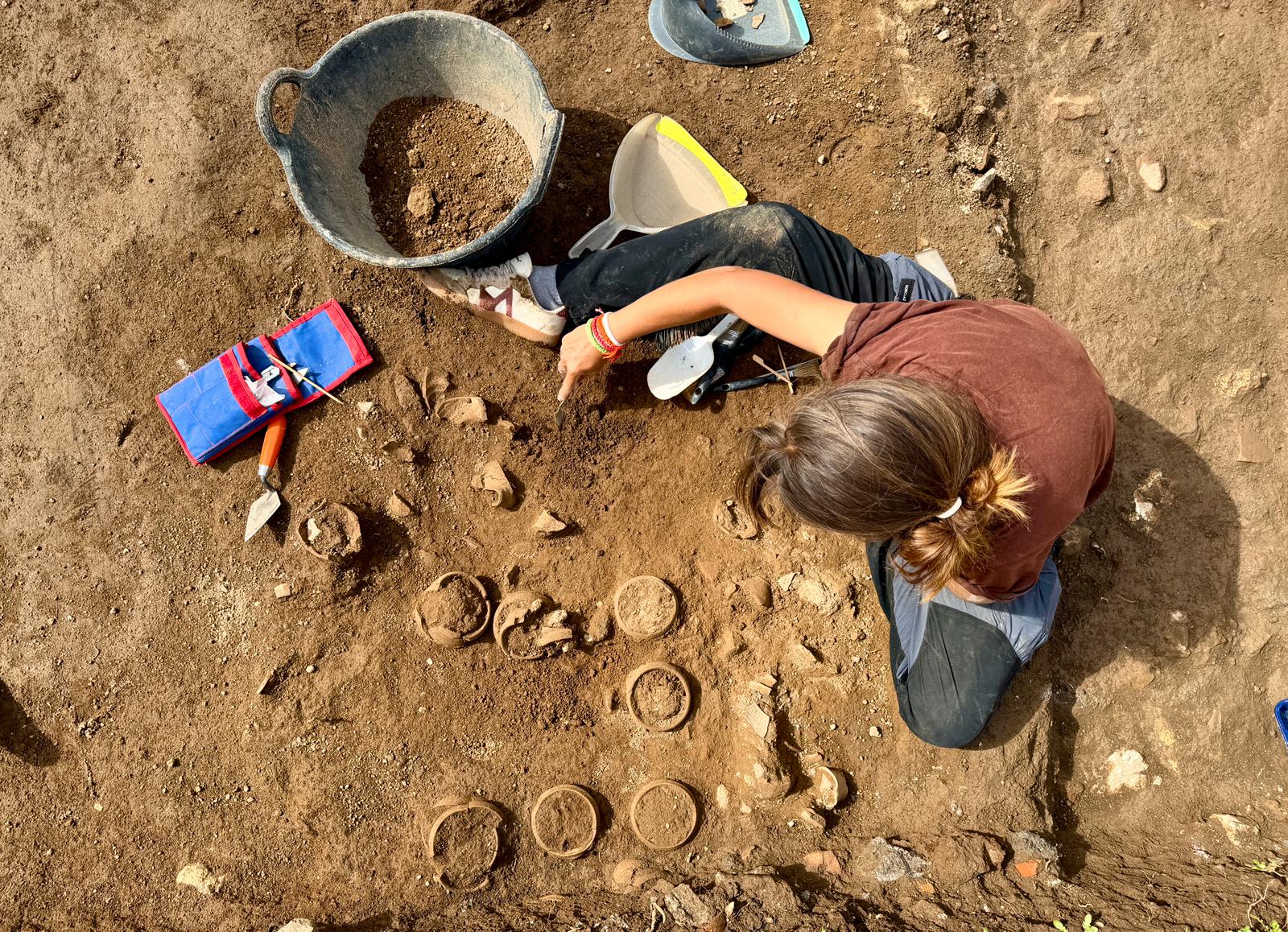
Archaeologists working at Villa Adriana have uncovered a structure that may predate one of the Roman world’s most famous imperial residences. The newly identified underground feature, found in the Palazzo area of the UNESCO World Heritage site near Tivoli, could be the oldest documented construction so far known at Hadrian’s Villa.
The discovery was made by researchers from Pablo de Olavide University during a new excavation campaign carried out between April and May in coordination with the Istituto di Villa Adriana e Villa d’Este. The Spanish team has been working at the site since 2003, building a long-term picture of how the imperial complex developed over earlier Roman remains.
A villa before Hadrian
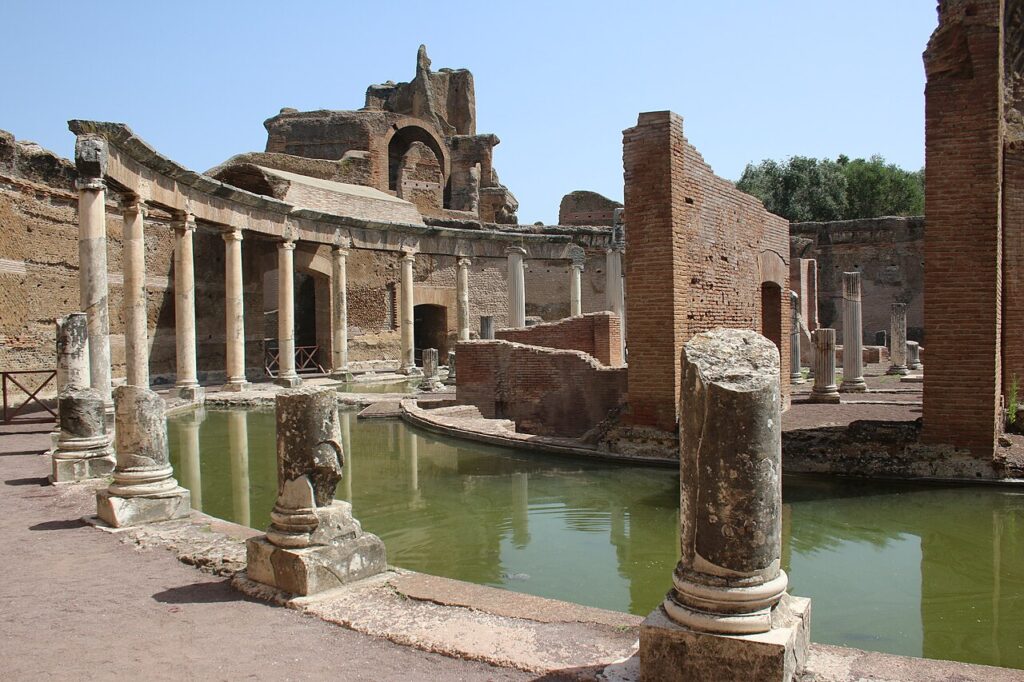
Villa Adriana is best known as the vast country residence created for Emperor Hadrian in the 2nd century AD. Its palaces, gardens, baths, courtyards, water features, and architectural experiments made it one of the most ambitious elite complexes of the Roman Empire.
The new find, however, points to an earlier chapter in the history of the site.
The excavation focused on one of the peristyles of the Palazzo, an important residential sector within Hadrian’s Villa. Beneath this area lies what researchers describe as a Republican-period villa, a pre-existing building that was partly reused when the imperial residence was constructed.
The newly discovered underground structure appears to belong to this older phase. If confirmed by the study of the recovered materials, it may represent the earliest architectural evidence yet documented at Villa Adriana.
An underground chamber with Republican material
The structure is a hypogeal chamber, meaning a subterranean room. According to the first interpretation, it may have functioned as a silo or storage space before it was abandoned and partially filled during the Roman Republican period, perhaps at an early date.
Inside the fill, archaeologists recovered construction debris, ceramics, and a group of decorated architectural terracottas showing animal figures.
These finds matter because they form what the team describes as the only Republican-period archaeological context so far identified at Villa Adriana. That makes the chamber more than a single architectural discovery. It offers a rare physical trace of the site before Hadrian transformed the area into an imperial landscape.
The discovery also strengthens the idea that Hadrian’s architects did not build on untouched ground. Instead, they appear to have absorbed, reshaped, and partly reused an older Roman villa already standing on the estate.
The imperial complex gains an older layer
Hadrian’s Villa has long been studied as a statement of imperial power, taste, and architectural imagination. Built near Tivoli, east of Rome, the complex brought together influences from across the Mediterranean world, including Roman, Greek, and Egyptian-inspired forms.
The newly found chamber adds a different kind of evidence. It does not belong to the most spectacular phase of the site. It belongs to what came before.
That earlier phase is crucial because it helps explain how the land was occupied before Hadrian’s project. The Palazzo was not simply placed on empty terrain. It was built into a place that already had a Roman history.
For archaeologists, that shift matters. It means Villa Adriana should be read not only as a 2nd-century imperial residence, but also as a site with deeper Republican-period roots.
A carefully planned garden
The campaign also brought new information about the garden that occupied the excavated peristyle. Previous work in the same sector had already revealed an exceptional group of intact ceramic pots linked to the planting design of the Palazzo.
The new excavation confirms that the garden had a perimeter bed filled with rows of densely arranged pots. These pots were placed side by side around the courtyard, forming a continuous planted border.
The system allowed plants to be replaced seasonally. When one flowering phase ended, pots could be removed and exchanged for others containing plants in bloom.
This detail gives a more practical view of Roman garden design at Villa Adriana. The gardens were not static decoration. They were maintained, renewed, and planned as living spaces within the architecture of the imperial residence.
Archaeologists also identified planting pits intended for trees and shrubs. Their ordered layout suggests that the garden was carefully organized, with vegetation integrated into the design of the surrounding monumental architecture.
New questions beneath the Palazzo
The discovery raises important questions about the early life of Villa Adriana. What kind of villa stood here before Hadrian? How much of that earlier building survived into the imperial phase? And how did Hadrian’s builders use the older structures when they reshaped the estate?
Further analysis of the recovered materials will be needed before the underground chamber can be dated more precisely. For now, the evidence already points to a significant conclusion: the history of Villa Adriana did not begin with Hadrian.
The latest campaign included professors, researchers, and students from Pablo de Olavide University, the Institute of Classical Studies at the University of London, the National University of Distance Education, the University of Córdoba, the University of Murcia, and Roma Tre University.