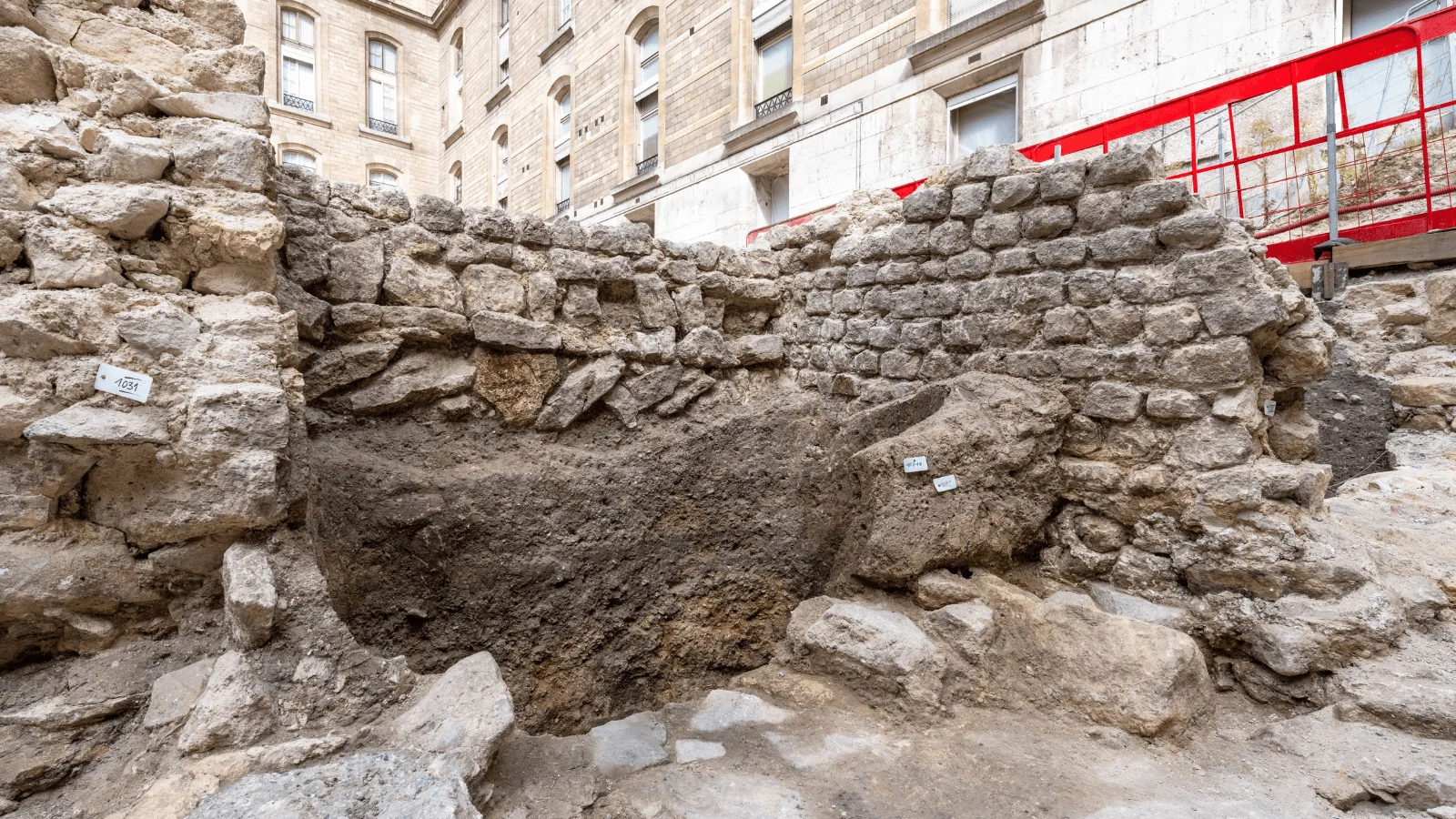
Beneath a hospital in central Paris, archaeologists have uncovered a stone and timber wall scarred by fire. It may be part of the fortified Gallic settlement that Julius Caesar described more than 2,000 years ago—a place whose exact location has remained uncertain despite centuries of study.
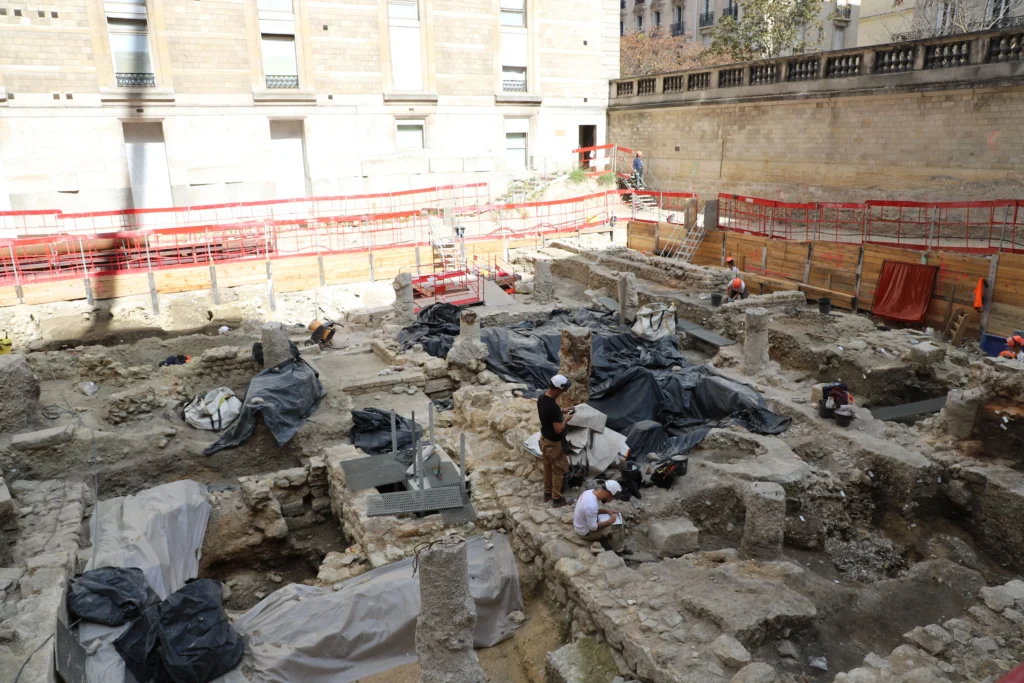
The wall runs for about 20 meters (66 feet) beneath the Hôtel-Dieu hospital on the Île de la Cité. Its construction resembles that of late Iron Age Gallic fortifications. Nearby, the excavation team found burned seeds, the remains of a charred wooden building and a Gallic spearhead at the foot of the wall. Together, the finds offer a rare opportunity to investigate what stood on the island before Roman Paris took shape.
The Gallic city beneath the modern one
Caesar knew Lutetia as a settlement of the Parisii, the Gallic people whose name survives in Paris. He visited it in 53 BC and described their oppidum, or fortified settlement, as standing on an island in the Seine. In 52 BC, his lieutenant Titus Labienus fought the Parisii. Caesar wrote that the Gauls set fire to their installations before the confrontation with Roman forces.
For generations, the Île de la Cité appeared to fit that description. Yet the archaeological evidence posed a problem: researchers had found very little there to demonstrate the presence of a substantial Gallic settlement. Some therefore proposed another location, in a bend of the Seine at Nanterre.
The wall beneath the Hôtel-Dieu makes that question newly urgent. It stands on the island Caesar described, and its stone and horizontal timber construction is characteristic of some Gallic fortifications. Behind it, archaeologists identified an artificial platform of sand and gravel preserved to a thickness of nearly two meters. The platform suggests a substantial undertaking, though its exact relationship to the wall remains under investigation.
A fire that raises more questions
The structure bears signs of intense burning. Fire affected its stone facing, while charred seeds and the remains of a burned timber building were found immediately in front of it. The evidence invites comparison with Caesar’s account, but it cannot yet show that the two describe the same fire.
Initial radiocarbon tests on the wood produced a date range of 200 to 10 BC. That places the material within a period relevant to Gallic Lutetia, but the range is too wide to tie the destruction to 52 BC. Researchers must also determine when the wall was built and whether it was primarily defensive, served as a retaining structure, or performed both roles.
A Gallic wall on the Île de la Cité would be a major discovery in its own right. Establishing that it formed part of the Parisii’s oppidum, and then linking its destruction to a particular episode in Caesar’s campaign, requires further evidence.
What happens to the wall now?
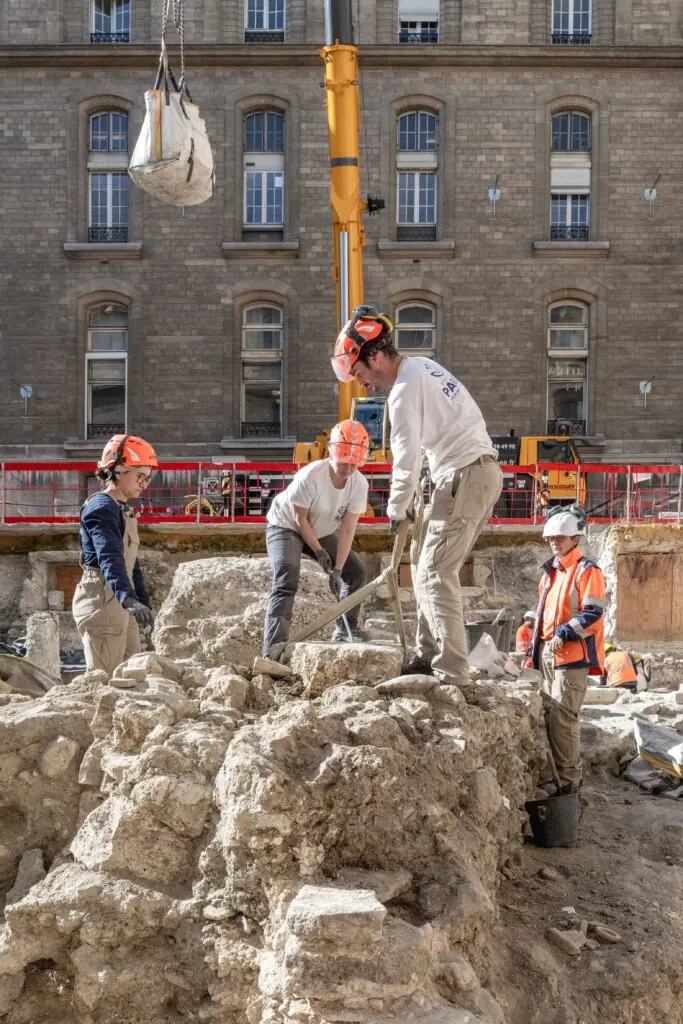
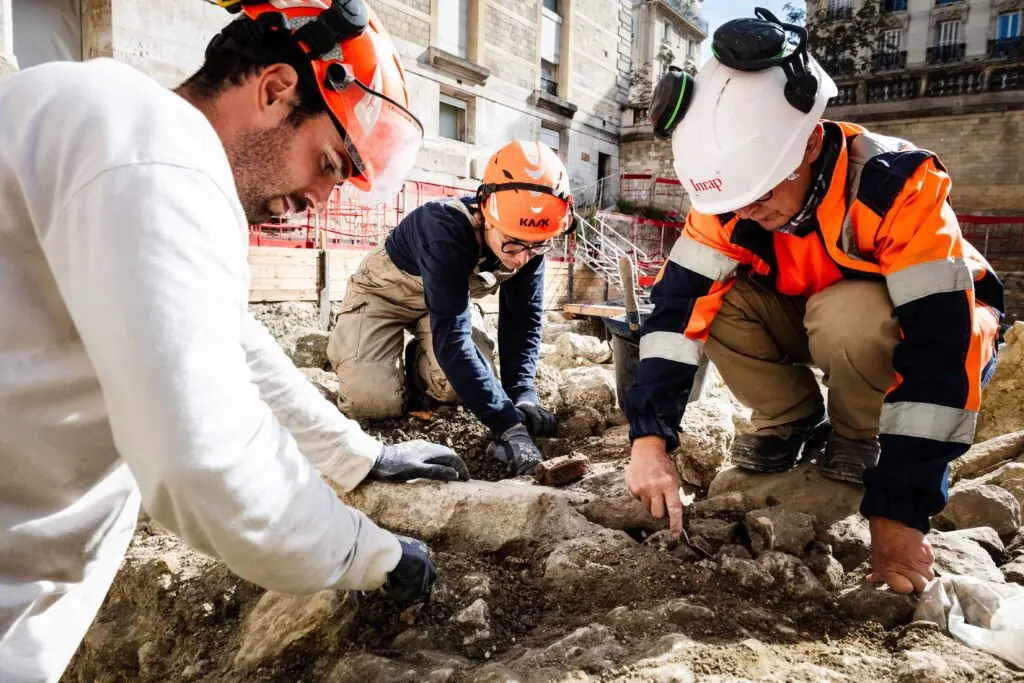
The excavation began in February 2026 ahead of the restructuring of the Hôtel-Dieu. It is being carried out by the City of Paris archaeological service and France’s National Institute for Preventive Archaeological Research (Inrap), with David Couturier directing the dig. Further work will examine the wall and platform together, look for features toward the Seine and search for any earlier occupation beneath the structure.
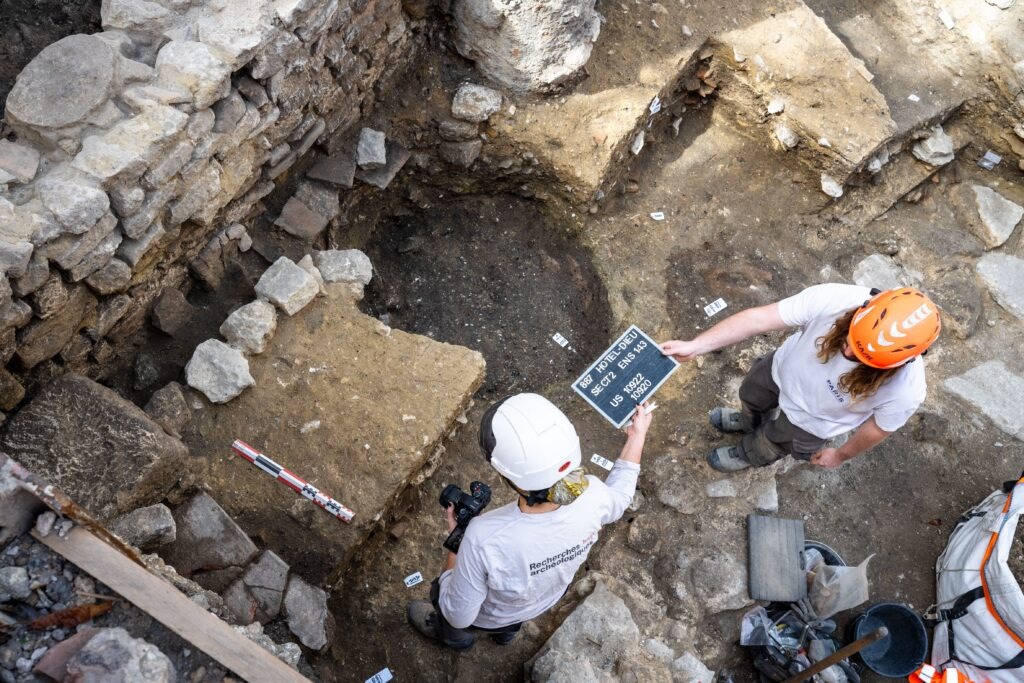
Preserving the remains presents another challenge. The fire left many stones badly altered and much of the timber charred. Archaeologists plan to document the wall through photogrammetry and 3D recording, then make a cast before its careful dismantling. A reconstructed section incorporating original facing stones is intended for display in a Paris museum.
The discovery has placed a tangible Gallic structure at the center of the search for ancient Lutetia. Whether its fire belongs to the events Caesar recorded is the question the next stage of excavation must answer.
Cover Image: A stone wall uncovered beneath the Hôtel-Dieu hospital in Paris may be part of the fortifications of Gallic Lutetia. © Hamid Azmoun, Inrap