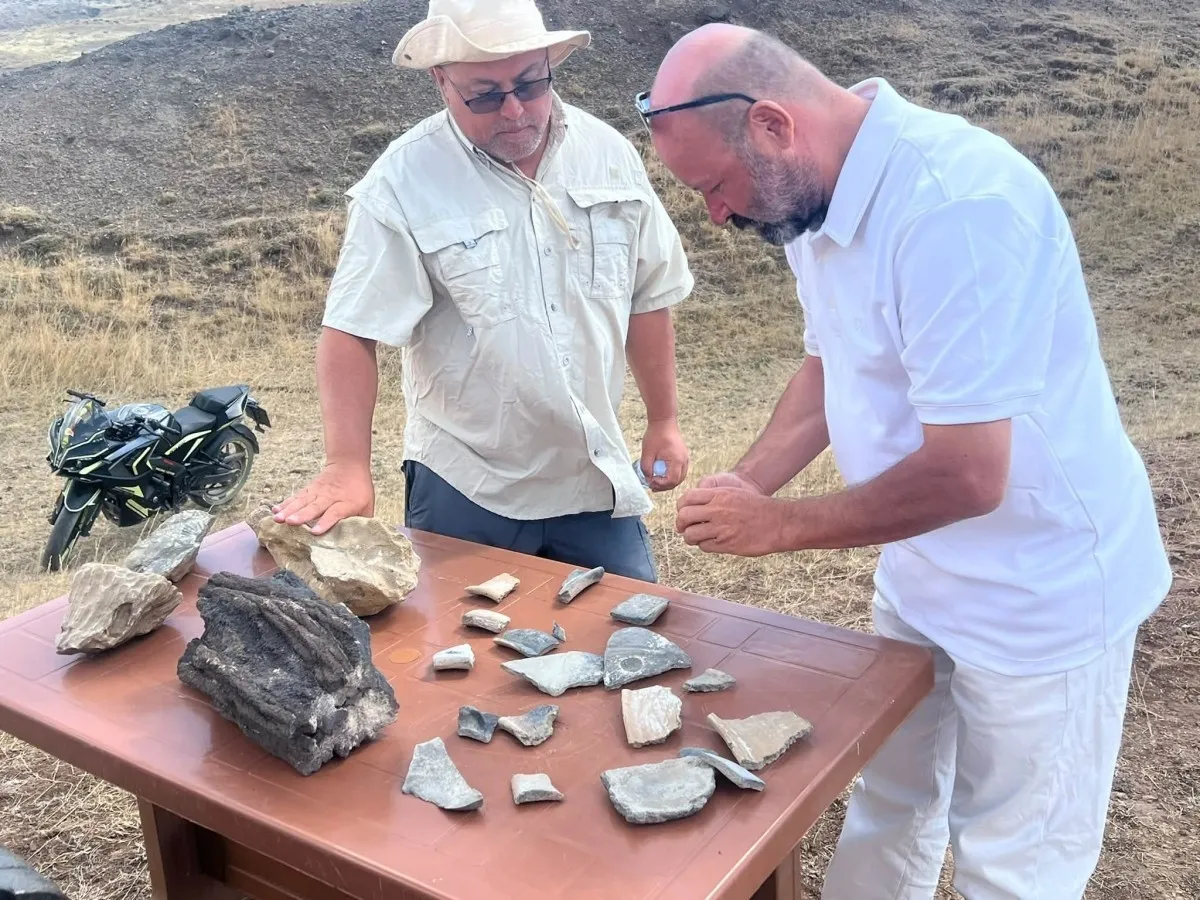
The pottery fragments were laid out on a table as researchers brought their 2026 field season at the Durupınar Formation to a close. The ship-shaped landform in eastern Türkiye has drawn searches for Noah’s Ark for decades, but the newly reported pieces have a more immediate question attached to them: how old are they?
No date has been released for the fragments. Reports have described them as possibly belonging to a period “before the flood,” although the team has not published a dated assessment or the precise locations where they were found. At this stage, the pottery cannot be tied to a historical flood or to a vessel.
A summer of mapping and sampling
The research was led by Prof. Dr. Cenker Atila, an archaeologist at Sivas Cumhuriyet University. Around 20 participants from five countries worked at the formation near Doğubayazıt over approximately 90 days.
The team mapped the area, created two and three-dimensional records, and surveyed the ground with radar. It then collected roughly 1,000 soil samples from 150 locations. Core samples were sent to Ankara for analysis after the fieldwork ended.
Those samples are central to the investigation. Researchers hope to learn whether the deposits contain organic material, including possible wood remains. If suitable material is recovered, it may be possible to date it. The result would still need to be understood in relation to the layer where the material was found.
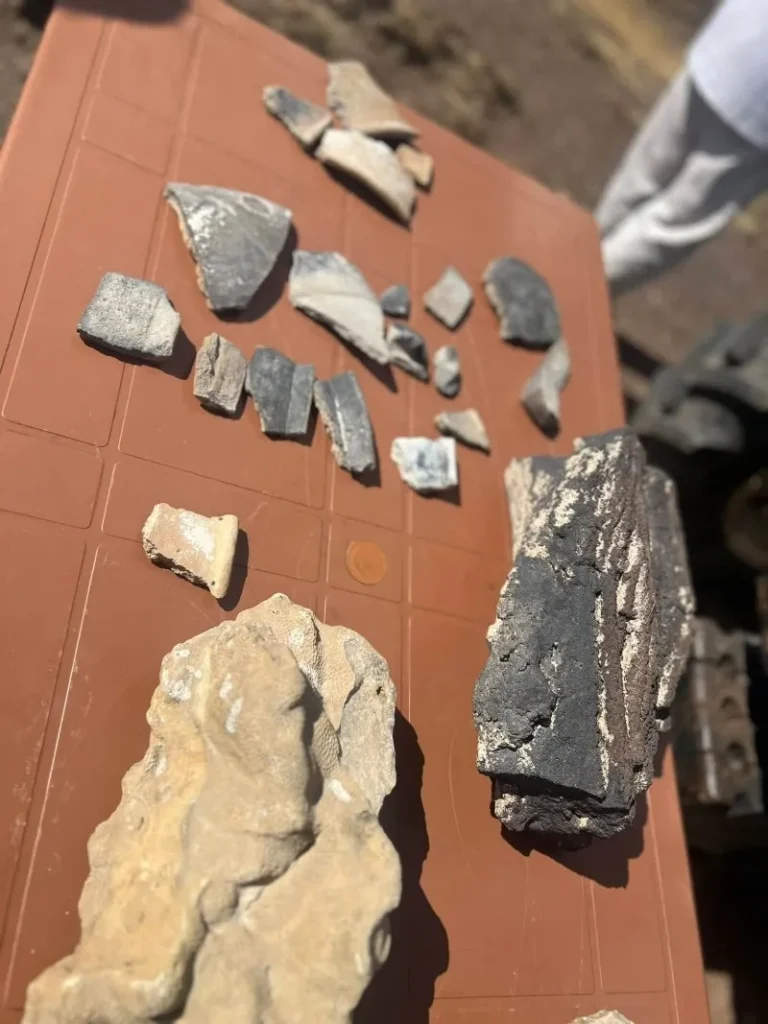
The pottery calls for a different kind of study. Its shape and manufacture could help archaeologists estimate its age, while documented findspots could show how the pieces relate to activity around the formation. Neither assessment has yet been made public.
The shape that made Durupınar famous
Cartographer İlhan Durupınar noticed the formation’s unusual outline in aerial imagery in 1959. Located between the villages of Telçeker and Üzengili, south of Mount Ararat, it became a focus for people seeking physical evidence of Noah’s Ark. Türkiye’s Ministry of Culture and Tourism describes the formation as a natural monument.
This year’s researchers looked beyond the outline visible from the air. In August, Sivas Cumhuriyet University reported that radar surveys had detected anomalies beneath the ground. Atila also reported higher carbon levels in soil samples taken inside the formation than in samples from outside it.
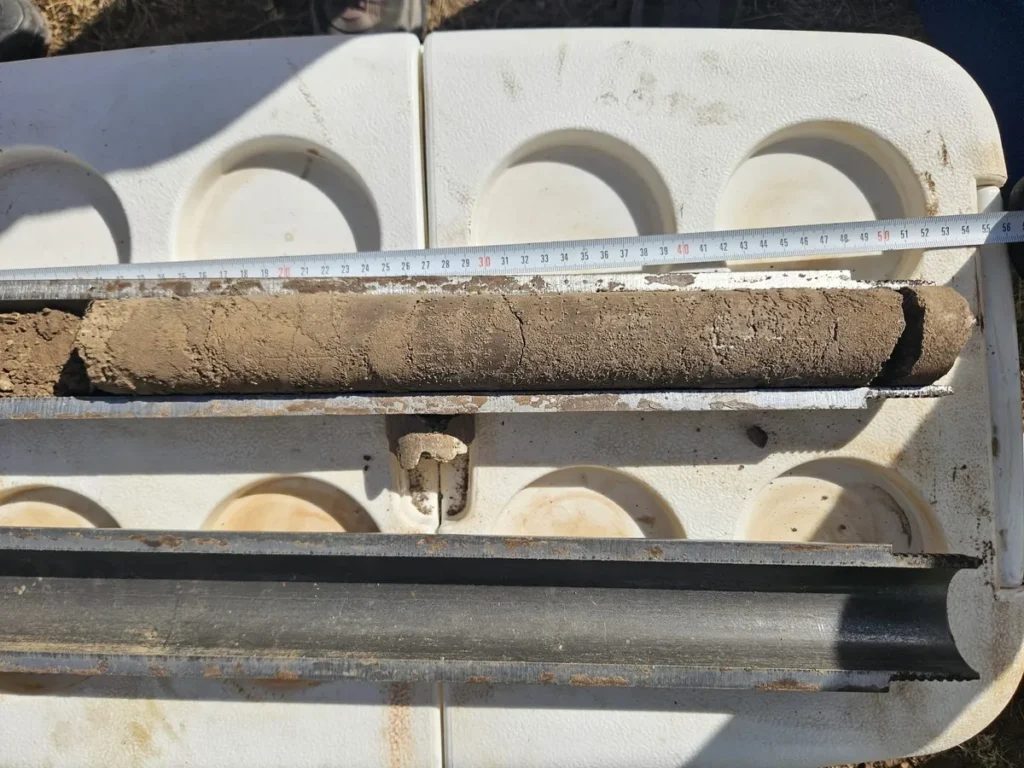
The readings give the team areas to investigate, but they do not yet identify what produced the features underground or account for the carbon difference. The laboratory results, together with a detailed archaeological account of the pottery, will determine what the season’s work can establish.
For the moment, the fragments are a reported find from a landscape whose history remains under investigation. Their value will depend on a confirmed date and clear find context, rather than the story long associated with Durupınar.
Cover Image: Researchers examine fragments displayed during the 2026 investigation at the Durupınar Formation in eastern Türkiye. Credit: İHA