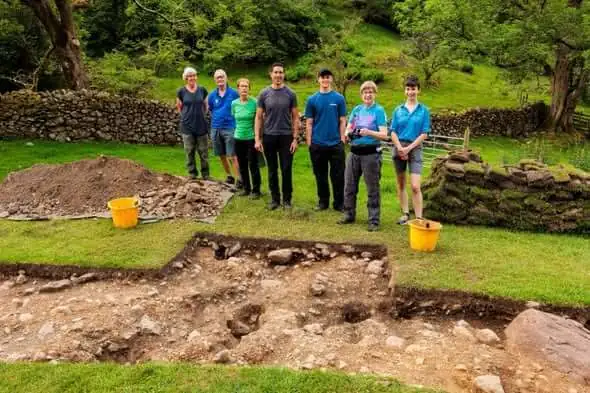
A group of volunteers working in England’s Lake District has uncovered a timber doorway, a cobbled yard and traces of ancient crops at a settlement used around 2,000 years ago. The finds offer a closer look at the people who lived and farmed in Deepdale Valley from the late Iron Age into the Roman period.
The site, known as Deepdale Bridge Settlement, was already recorded as a possible ancient settlement. Its hut circles and enclosure banks remained visible in the landscape, but archaeologists had little firm evidence for when people used it or how they organized life there. Excavation by Lake District National Park Authority volunteers, led by Martin Railton of Eden Heritage, has begun to fill those gaps.
A doorway into everyday life
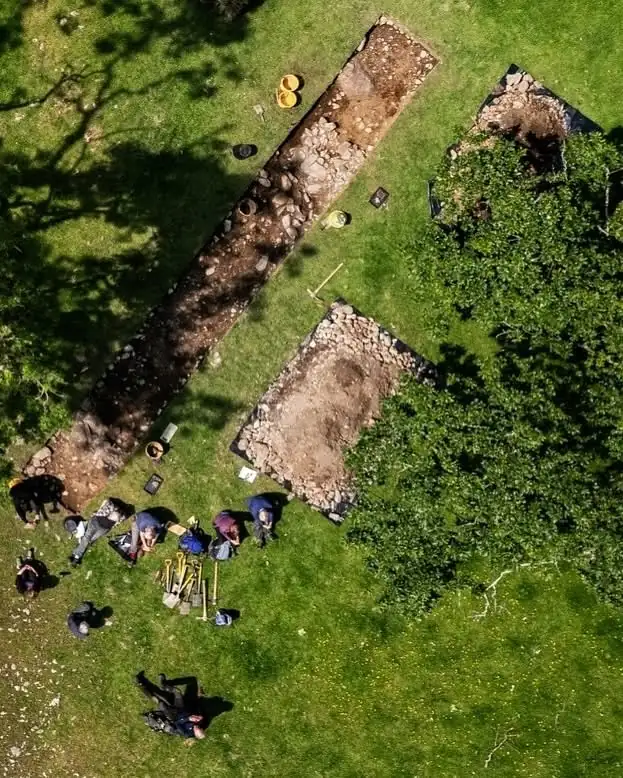
Twenty-five volunteers contributed to the investigation after a wider survey of 150 sites in Deepdale Valley began in 2024. At Deepdale Bridge, they examined a settlement made up of several hut circles and small enclosures surrounded by a rubble bank.
One trench exposed the remains of a timber doorway leading into a roundhouse. Inside, the excavators identified divisions that separated parts of the living space. Outside lay a cobbled yard, which the team believes people probably used to hold animals.
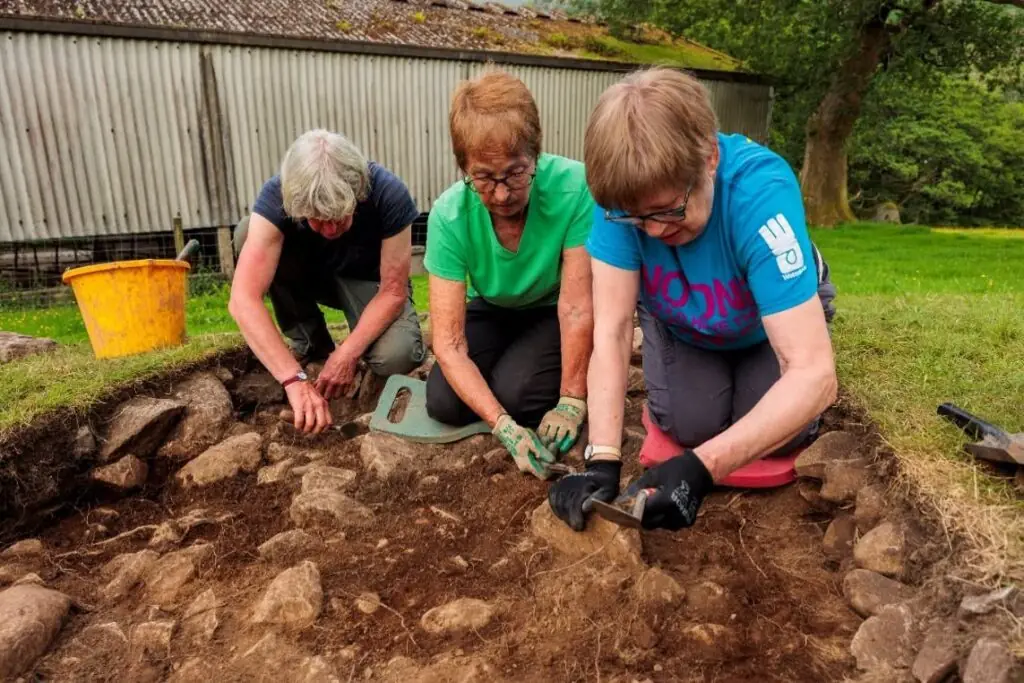
The details give shape to a home that once stood behind the surviving earthworks. People could pass through the doorway from a working yard into a house whose interior they had arranged for different needs. Archaeologists also found evidence of spelt wheat and barley, pointing to farming in the surrounding valley.
The roundhouse changed during its lifetime. Those alterations suggest that its occupants continued to adapt the building rather than leaving it in its original form.
From the Iron Age into Roman Britain
Charcoal recovered from the soil allowed researchers to date activity at the site. Radiocarbon results place the construction of the enclosure bank between 40 BC and AD 118. Samples associated with the roundhouse produced a date range of AD 76 to 216.
Together, the dates show that people used Deepdale Bridge across the transition from the late Iron Age into the Roman period. They do not establish that every part of the settlement was occupied without interruption throughout those years.
The results are particularly useful in the Lake District, where archaeologists have investigated relatively few enclosed settlements of this kind. Fewer still have confirmed dates. Deepdale Bridge can now help researchers assess other settlements whose remains survive in the landscape but whose histories are less clear.
“We know surprisingly little about the people who lived here and farmed the landscape in prehistory,” Railton said. He hopes the investigation will help shed light on several other settlements that probably date to the same period.
For the volunteers, excavation followed two years of surveying the valley. Their work has brought the people of Deepdale Bridge a little closer into view through the entrance to their house, the yard outside it and the crops they grew. Further work at Lanthwaite Green, near Crummock Water, may reveal more about the communities that lived in the Lake District’s valleys.
Cover Image: Volunteers and archaeologist Martin Railton at the Deepdale Bridge excavation in England’s Lake District. Credit: Lake District National Park Authority.