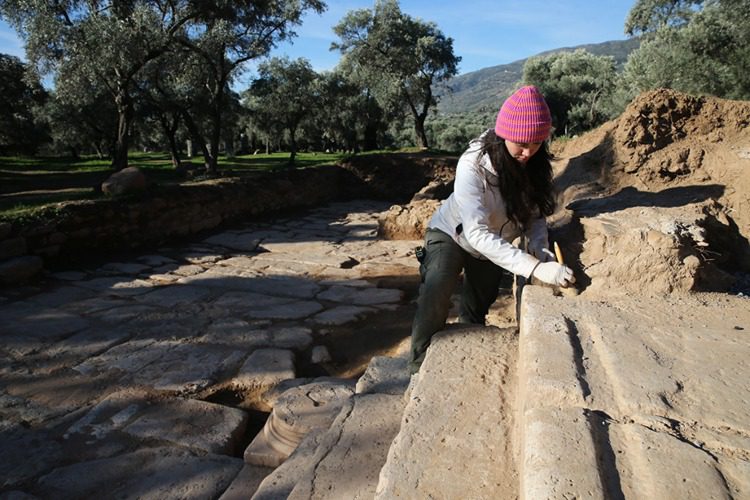
At first glance, it was just another stretch of a Roman street. But as archaeologists continued to peel back the layers at Nysa Ancient City, a long-missing element of the city’s intellectual landscape quietly emerged. A set of marble steps—unused for nearly eighteen centuries—has revealed how ancient visitors once ascended from the city’s main thoroughfare to one of western Anatolia’s best-preserved libraries.
The discovery adds a crucial piece to the architectural and cultural puzzle of Nysa, a city long celebrated in antiquity as a center of education.
A City Shaped by Education
Founded more than 2,300 years ago, Nysa was built across both sides of a narrow valley, earning it the ancient description of a “double-sided city.” Its urban layout reflects a carefully planned Roman settlement, complete with a theater, stadion, gymnasium, agora, council buildings, and wide colonnaded streets.
Nysa’s intellectual reputation is no coincidence. The ancient geographer Strabo is known to have studied here, a fact that continues to shape modern interpretations of the city’s architectural priorities.
Excavations at the site are currently led by Prof. Dr. Serdar Hakan Öztaner of Ankara University’s Faculty of Language, History and Geography.
The Missing Connection to the Library
While the library of Nysa has long been admired for its state of preservation, one key question had remained unanswered: How did people actually reach it from the city’s main street?
That uncertainty has now been resolved.
“When our excavations reached the axis of the library, we uncovered the staircase that connected it directly to the main street,”
explains Prof. Dr. Öztaner.
“We knew the building itself very well, but the way the two-meter elevation difference was overcome had remained unclear until now.”
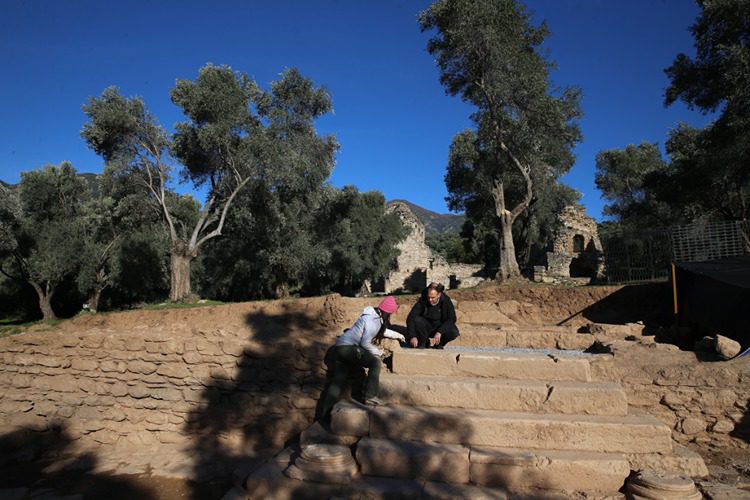
The newly exposed structure consists of five marble steps, rising from the Roman street to a marble-paved courtyard in front of the library. Positioned at the very center of the architectural block, the staircase confirms that this was the primary and intentional approach to the building.
Integrating Knowledge into Daily Urban Life
Archaeological evidence indicates that the library was constructed around AD 130, while Nysa’s street system dates back to the reign of Augustus. This suggests that the staircase was added in the 2nd century AD, carefully integrated into an already established urban network.
“These steps show us that the library was not designed as a detached monument,”
Öztaner notes.
“It was meant to be reached directly from the city’s main artery. Knowledge here was part of everyday urban movement.”
This architectural choice highlights the civic role of education in Roman Nysa, where intellectual life was embedded within the flow of the city rather than set apart from it.
One of Anatolia’s Best-Preserved Libraries
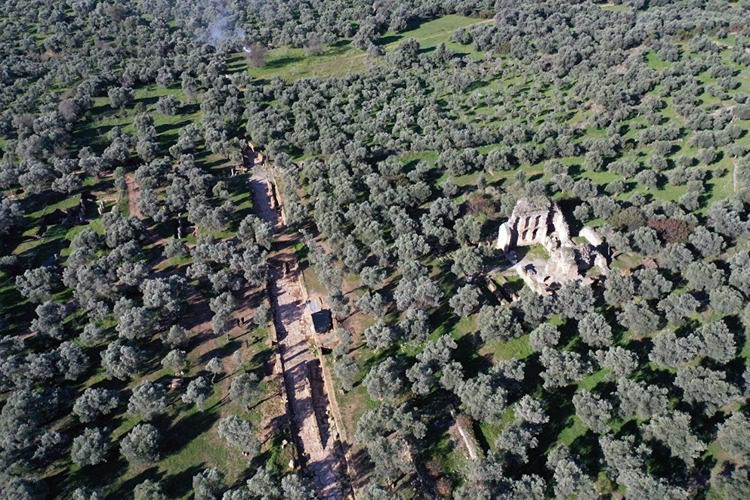
Built after the famous Library of Celsus, the Nysa Library is regarded as one of the best-preserved examples of its kind in western Anatolia.
Ancient sources describe the building as containing sixteen book niches, which once housed important handwritten texts. These were not symbolic decorations, but functional spaces for storing and consulting manuscripts that shaped scholarly life in the Roman world.
Today, visitors continue to linger before the structure, drawn by both its preservation and its story.
More Than a Staircase
The newly uncovered steps may appear modest in scale, but their significance is considerable. Rising directly from a public street to a space of learning, they offer a rare, tangible insight into how education was positioned within the Roman city.
Eighteen centuries after they were last used, this forgotten route once again leads unmistakably toward knowledge.