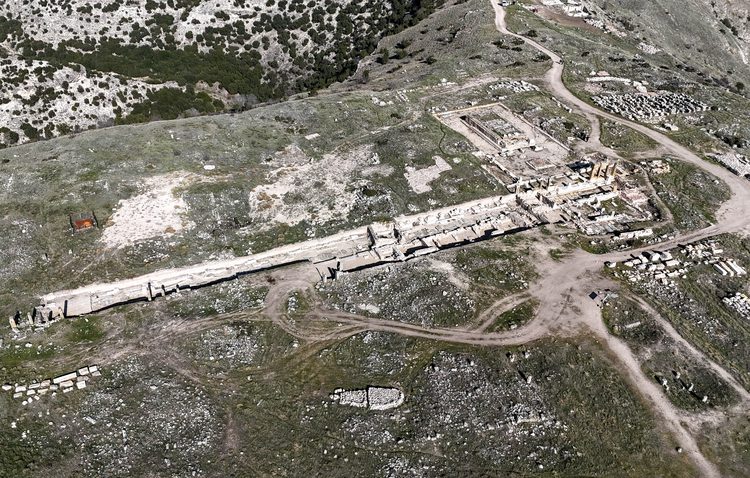
A newly opened excavation at Blaundos in western Türkiye has revealed the first architectural traces of a Roman stadium built on the edge of the Ulubey Canyon — a dramatic setting that may redefine the ancient city’s identity.
On a wind-carved plateau rising above one of Anatolia’s largest canyon systems, Blaundos Ancient City has always appeared more like a natural fortress than a typical settlement. Founded after Alexander the Great’s campaign and later absorbed into the Roman world, the city controlled a landscape where steep cliffs allowed entry from only one direction. For years, archaeologists suspected a large public structure near the city gate, but its form remained unclear. That uncertainty ended this season.
A Roman Stadium Built Above a Canyon Void
Excavations directed by Şerif Söyler have revealed a 140-by-37-meter stadium positioned directly beside the main entrance of Blaundos. The structure stands at the transition point between the plateau and the canyon drop, creating a visual dialogue between Roman architecture and the raw topography of western Anatolia.
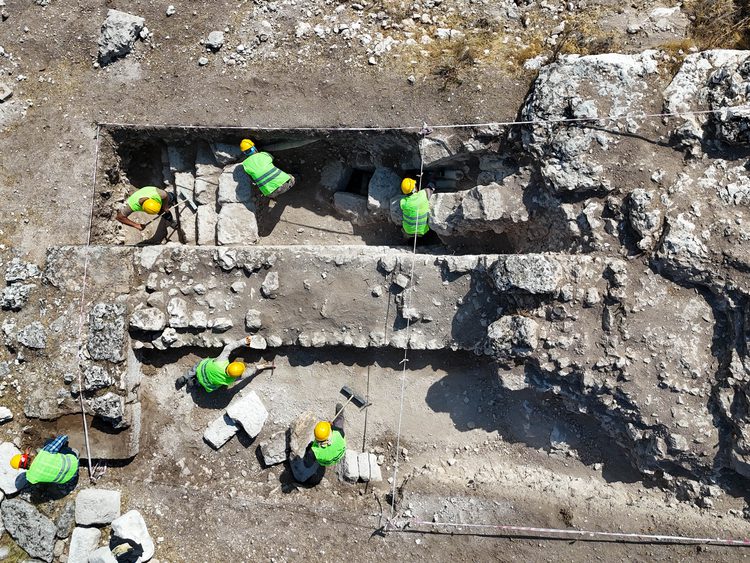
Archaeologists uncovered a rock-cut water channel that once supplied the nearby bath complex, the stepped entrance of the stadium, and a substantial terrace wall designed to stabilize the sloping bedrock. These discoveries indicate careful engineering rather than simple hillside adaptation.
Söyler explains that the stadium likely dates to the 1st century AD, though further work may identify earlier phases or signs of seismic reconstruction.
“It is rare to find a stadium placed in such a dramatic location,” he says. “Once fully exposed, this structure will change how we interpret Blaundos as an urban organism.”
A City Defined by Monumentality
Blaundos presents a sequence of architectural landmarks that together shape the character of the site.
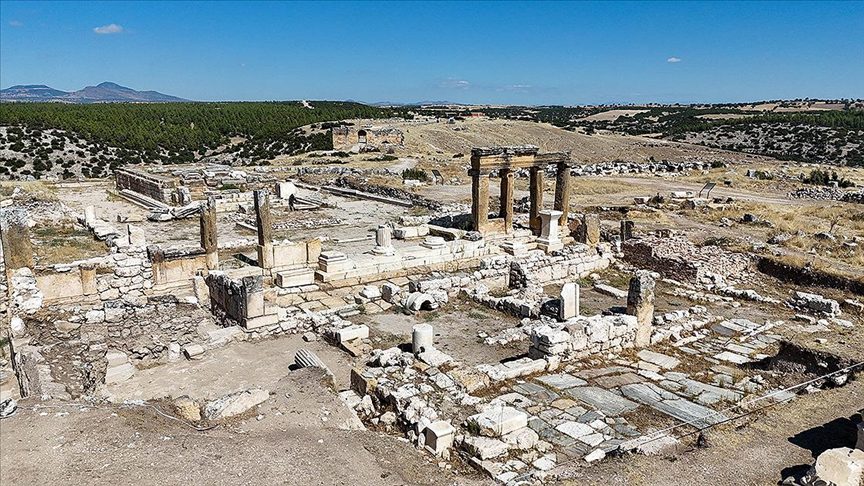
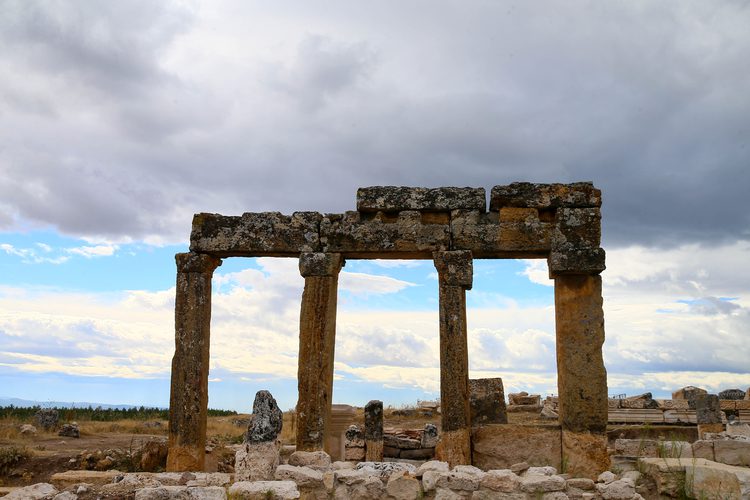
The colonnaded avenue still marks the city’s main axial line, preserving the rhythm of its civic life. Not far from it stands the Temple of Demeter, a sanctuary that has remained remarkably intact for nearly two millennia.
Across the plateau rises a monumental tomb, a powerful expression of status within the ancient community.
And at the very edge of the settlement, three massive upright stones — a trilithic arrangement often compared to Stonehenge — mark a ritual landscape unique to Blaundos.
Below the plateau, dozens of rock-cut tombs stretch along the canyon walls, completing one of Türkiye’s most striking archaeological panoramas.
Engineering Carved Directly Into Bedrock
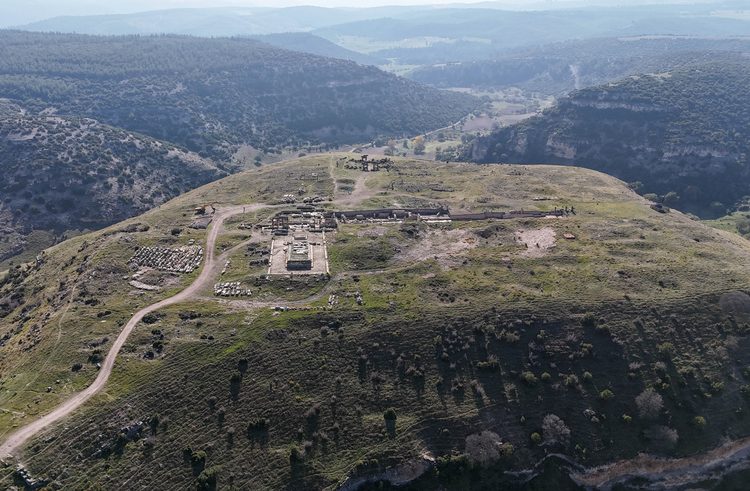
The team’s drone footage shows large sections of the stadium carved directly into the mother rock. The terrace wall, exposed for the first time, reveals the precise alignment needed to anchor a public venue on a sharply sloping edge.
This integration of architecture and landscape suggests that Roman planners embraced the plateau’s dramatic contours rather than attempting to override them. The result is an arena that appears to grow organically from the cliffs themselves.
A Future Cultural Venue Above the Canyon
With ongoing restoration, the stadium is expected to evolve into a new cultural venue — a rare case of an ancient arena regaining its public function after two thousand years.
Local authorities envision concerts, theatrical performances, and open-air gatherings using the natural acoustics of the canyon.
“The idea that a Roman stadium, silent for centuries, may once again host audiences is incredibly inspiring,” Söyler notes. “Blaundos has the potential to become a major cultural landmark for western Türkiye.”