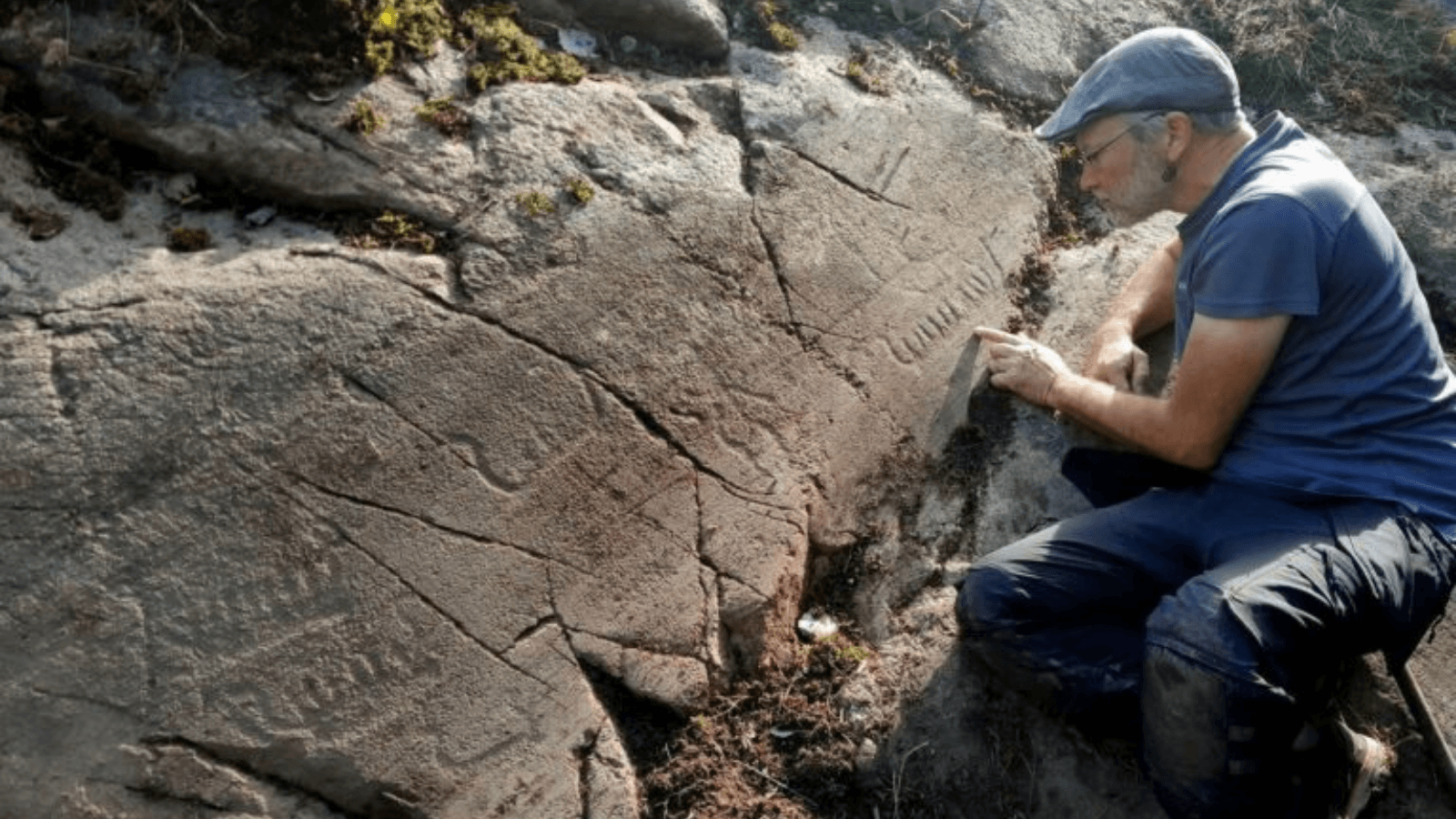
A survey of the Tanum rock carvings at Trättelanda has revealed 16 previously undocumented carved rock surfaces. The largest contains ships and human figures across an area whose boundaries researchers have yet to establish.
Researchers surveying the southern edge of Sweden’s Tanum World Heritage Site have reached a granite panel they cannot yet measure in full. Ships and human figures appear across at least 11 by 10 meters of rock, and the carvings continue beyond the area the team has defined.
The panel was the last of 16 newly identified carved surfaces found at Trättelanda during the opening week of an inventory by the Foundation for Documentation of Bohuslän Rock Carvings and Vitlycke Museum. It is considerably larger than the other finds. In a brief announcement accompanying photographs, the foundation described its fine-grained granite and the unusually good preservation of its figures.
Sixteen finds in a studied landscape
Tanum is one of Europe’s best-known prehistoric rock-art landscapes. More than 600 carving sites are recorded within the World Heritage property, whose images of ships, people, animals, weapons and other symbols have attracted study for generations. That makes the Trättelanda discoveries striking: the survey has only just begun, yet it has already brought 16 more surfaces into view.
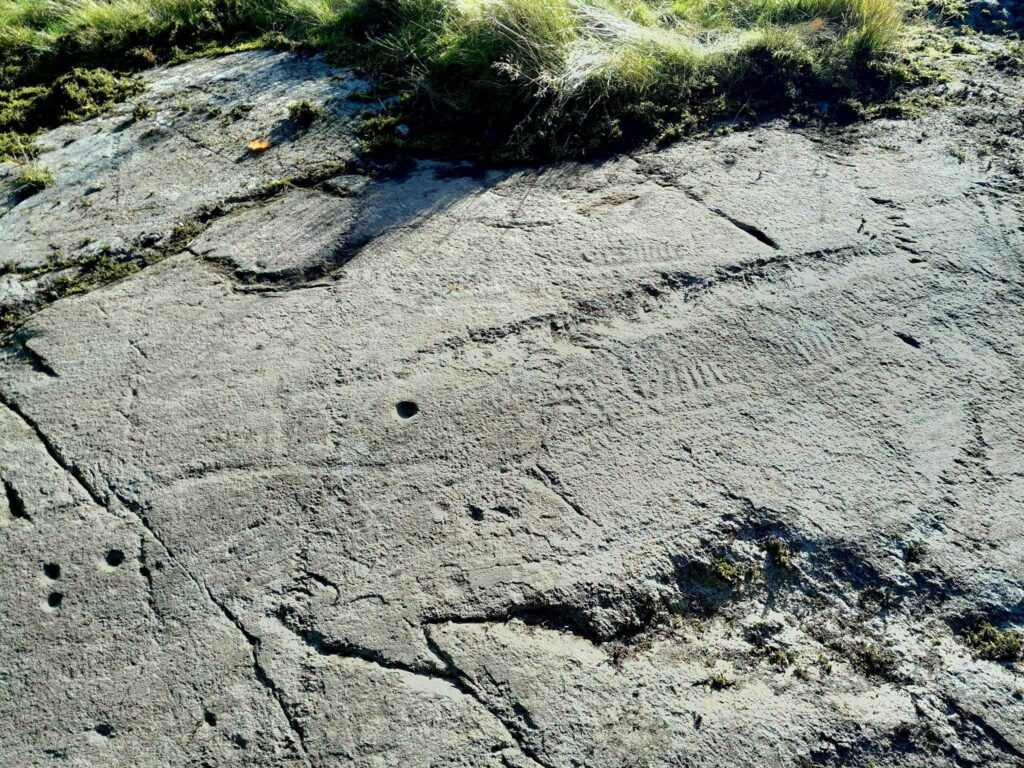
The team started at Trättelanda, a farm at the southern end of the protected area. Its announcement gives no count of individual figures on the largest panel and does not say how many ships or people appear there. Those details will depend on further examination of a surface whose edges are still unknown.
Recording the whole panel matters as much as identifying its individual carvings. Ships and human figures may stand alone or form part of larger arrangements across the stone. Until researchers have documented the full surface, they cannot assess the composition as a whole.
Ships and people on the granite
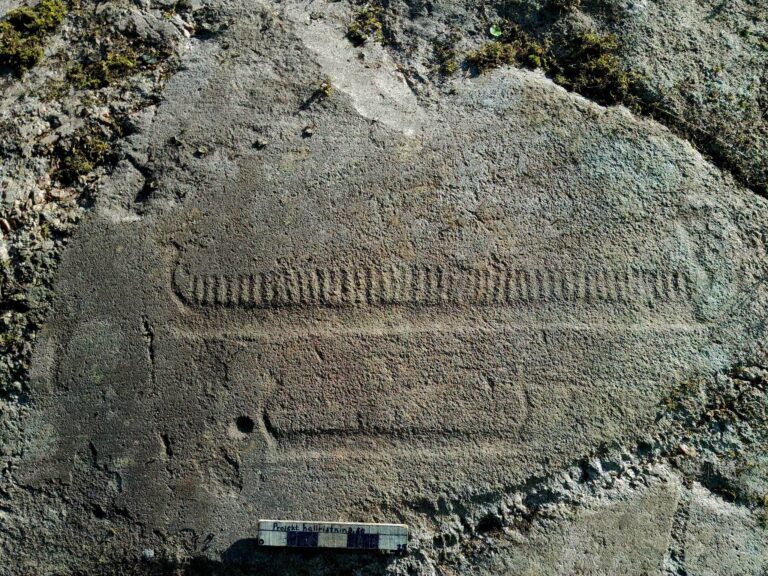
Ships are among the most familiar images in Tanum’s rock art, but they do not tell a single, simple story. Elsewhere in the World Heritage area, they appear alongside people, animals, weapons and other symbols. Researchers examine both the figures and their placement on the rock to understand how prehistoric communities used these surfaces.
The setting has changed since the carvings were made. During the Bronze Age, the shoreline lay closer to parts of Tanum that appear inland today. The area’s exposed granite offered broad surfaces on which people could create images, sometimes adding figures to the same rock over long periods.
Tanum’s principal carving tradition belongs to the Nordic Bronze Age, broadly dated from about 1700 to 500 BC. The survey team has not announced a specific date for the newly found Trättelanda panel, and its figures should not yet be treated as the work of a single moment.
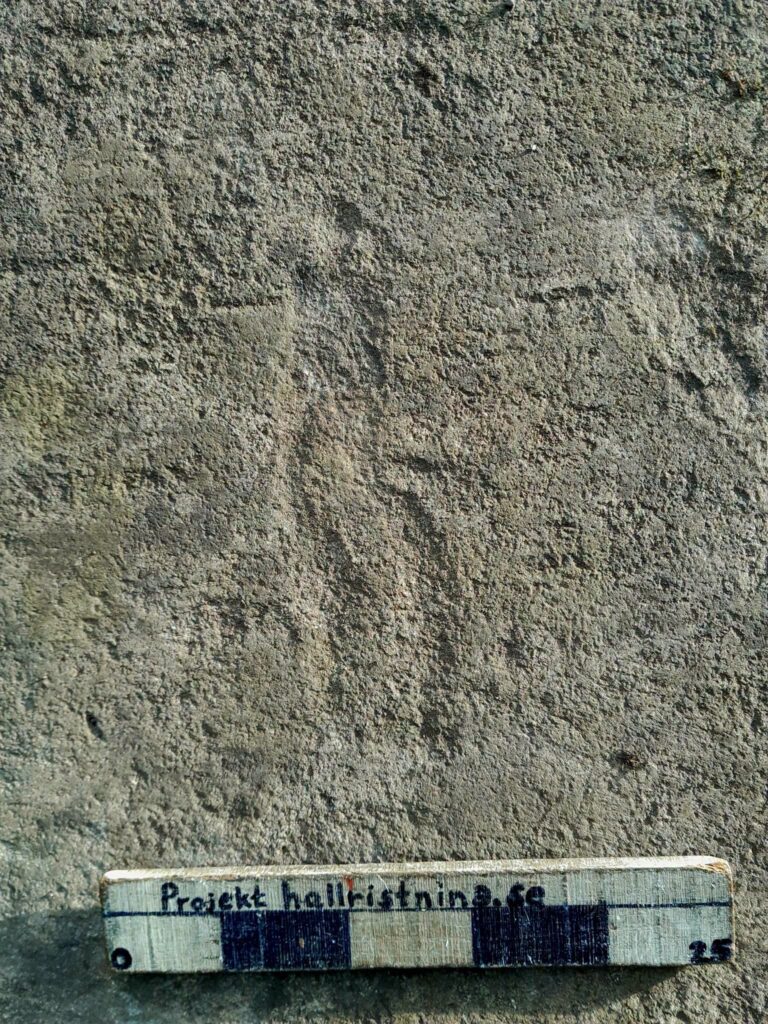
The discovery opens a new part of a familiar archaeological landscape to study. Sixteen carved surfaces have been identified at the start of the inventory, and the largest remains only partly defined. Even after generations of research at Tanum, a rock covered with ships and people can still emerge with its edges—and much of its story—unrecorded.
Cover Image: A researcher examines rock carvings during the new survey at Trättelanda in Sweden’s Tanum World Heritage Site. Credit: Stiftelsen för dokumentation av Bohusläns Hällristningar.