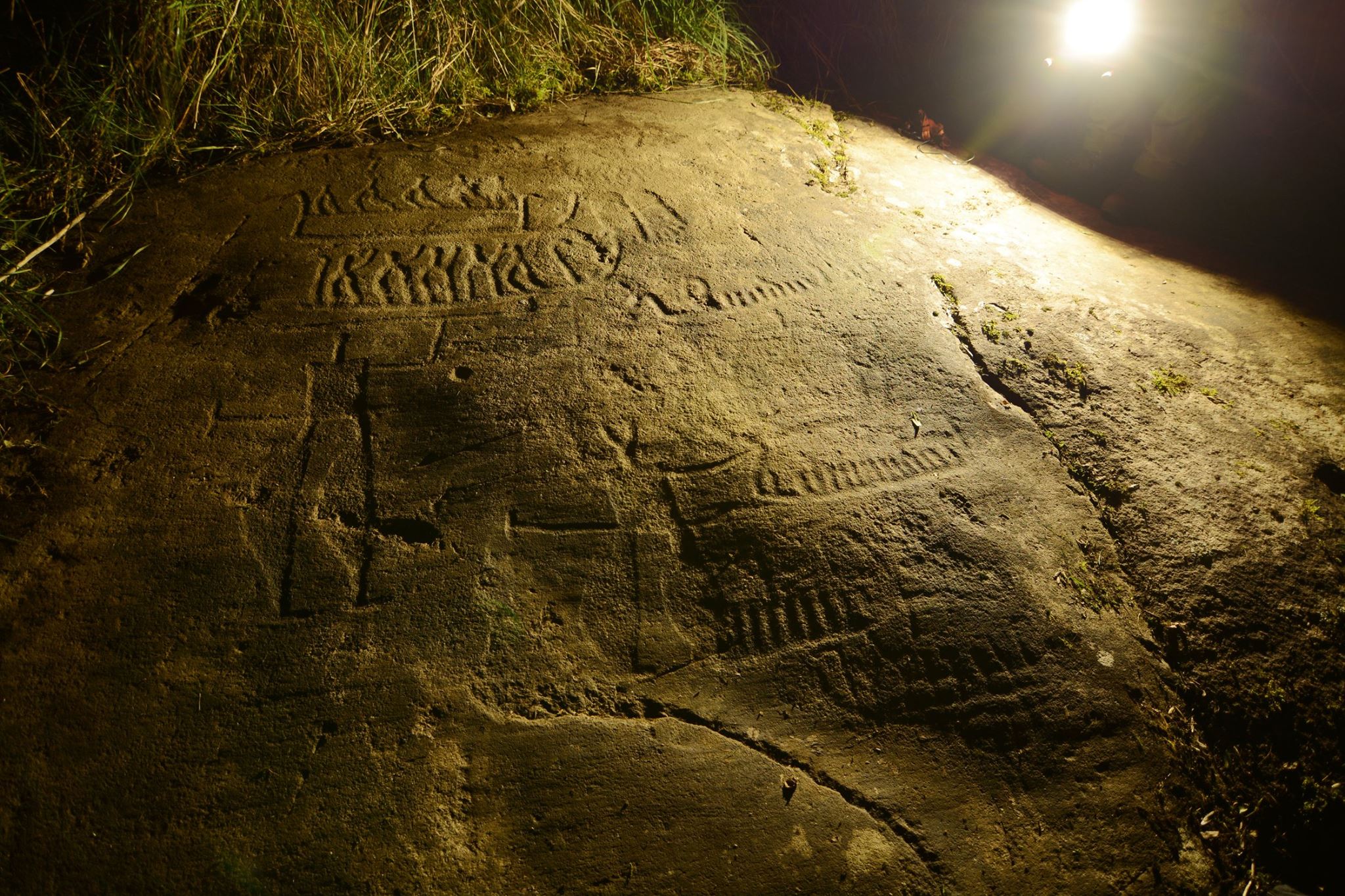
A quiet hillside in eastern Norway has revealed a remarkable cluster of Bronze Age rock carvings, hidden in plain sight for more than 3,000 years. Discovered beneath a prominent hill in the Bærum region near Oslo, the newly documented images—ranging from large ship motifs to rare human imprints—are reshaping archaeologists’ understanding of how prehistoric Scandinavian communities marked their landscapes and expressed ritual belief.
Beneath Kolsåstoppen, a well-known hill in Bærum, the carvings had remained unnoticed for millennia. Their rediscovery is now drawing renewed attention to how Norway’s earliest coastal societies used rock art to anchor stories, beliefs, and identity within the natural landscape around them.
Beneath Kolsåstoppen, a prominent hill in Bærum, an unexpected discovery has revealed a dense cluster of Bronze Age rock carvings—images that had remained unnoticed for more than three millennia. The find is now drawing fresh attention to how Norway’s earliest coastal societies marked their landscapes, told stories, and understood their world.
A moment of recognition on a familiar road
The discovery was made not during a formal excavation, but in the course of everyday life. Veteran rock-art hunter Tormod Fjeld noticed unusual markings while driving through the area with his daughter. What initially appeared as subtle irregularities in the stone soon resolved into something far more remarkable: sharply preserved carvings etched into exposed rock surfaces beneath the hill.
Among the figures were large ships—some upright, others inverted—rendered with a confidence typical of the Nordic Bronze Age (c. 1800–500 BCE). Ship imagery dominates Scandinavian rock art and archaeologists have long linked these forms to seafaring, ritual journeys, long-distance exchange, and cosmological ideas connected to the sun and the afterlife. Similar carvings are known from sites such as Tanum and Alta, pointing to shared symbolic traditions across prehistoric Scandinavia.
Human traces carved in stone
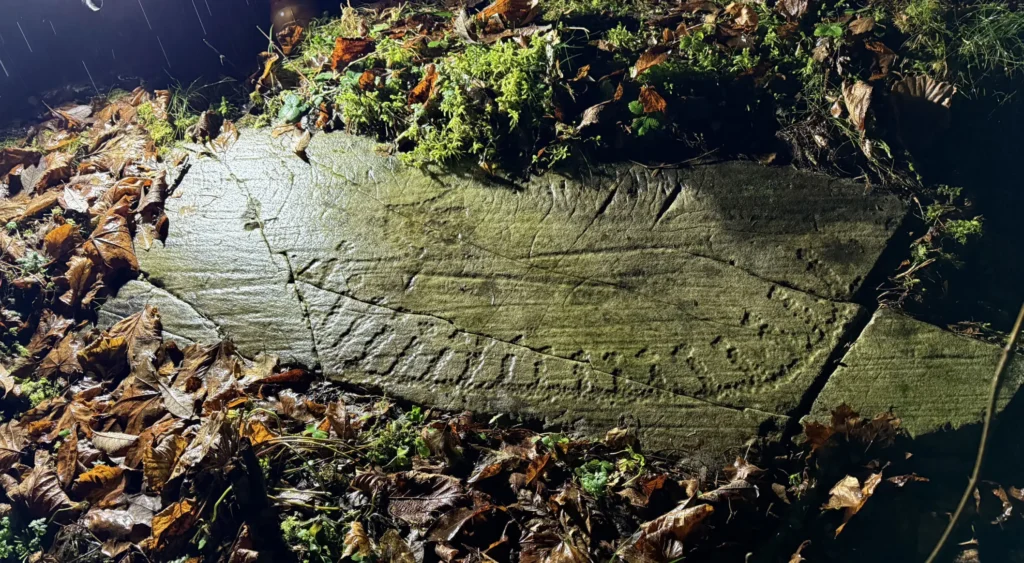
What sets the Bærum discovery apart is not only the ships. Fjeld also documented a large footprint showing the sole of a foot, alongside a carved hand with five thick fingers. Such human body motifs are comparatively rare in Norwegian rock art, where animals and boats usually dominate.
In Nordic archaeology, footprints and handprints are often interpreted as more than decoration. They may signal ritual presence, claims to place, participation in ceremonies, or symbolic acts linking the human body to sacred terrain. Their appearance here adds a personal, almost intimate dimension to a landscape otherwise shaped by grand maritime imagery.
Reading the land like a map of the past
Fjeld is quick to stress that finds like this are not the result of luck alone. Years of experience have taught him to “read” the terrain—seeking sun-facing rock surfaces, tracing ancient shorelines, and paying attention to how water once moved through the landscape. During the Bronze Age, sea levels were significantly higher, meaning many carvings now far inland originally lay close to the coast.
This pattern is well established across Norway, where rock art often follows former maritime routes. Understanding that geography, Fjeld argues, brings modern observers closer to the people who carved these images and clarifies why certain places mattered enough to be permanently marked.
Why amateurs still matter in Norwegian archaeology
Professional archaeologists have welcomed the discovery. Reidun Marie Aasheim of the Akershus County Municipality described the finds as “very exciting,” noting that large parts of Norway’s cultural heritage remain undocumented. Systematic surveys are usually triggered only by construction projects, leaving vast areas unexplored.
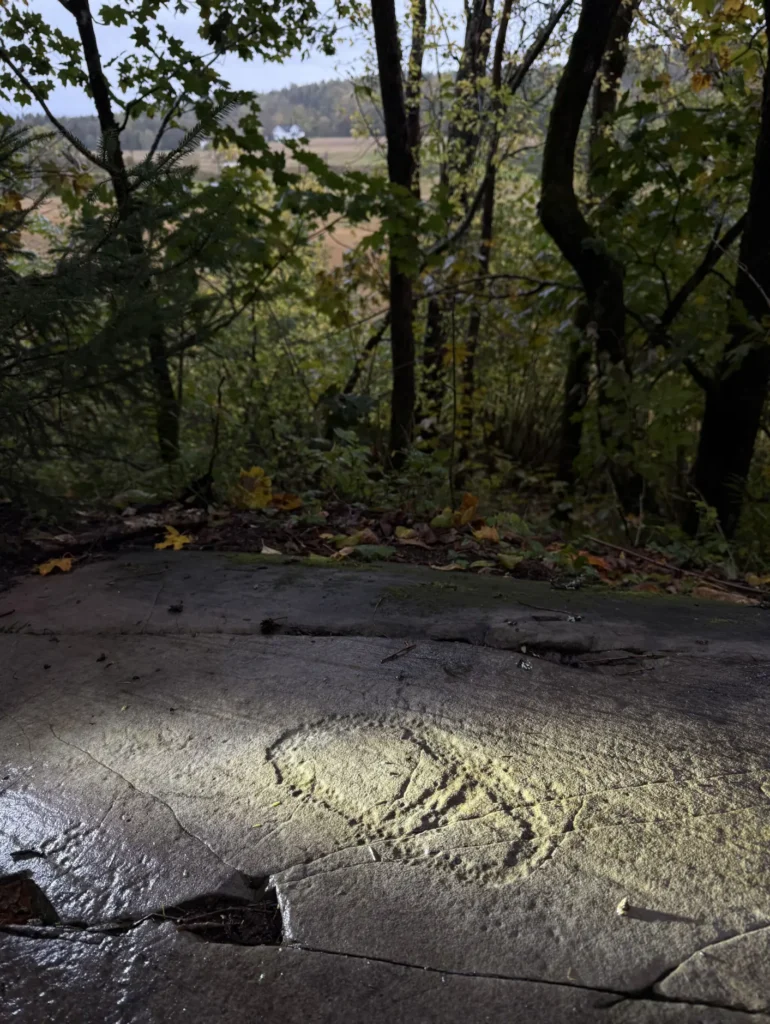
In that gap, dedicated independent researchers have become essential. Fjeld’s track record underlines the point. Across the Oslofjord in Frogn municipality near Drøbak, the number of known rock-carving sites has jumped from just ten to more than seventy since 2023—most of them located by Fjeld himself. The surge suggests that southeastern Norway may host one of the region’s densest, yet still under-recorded, rock-art landscapes.
Carved into sandstone, not granite
Another unusual feature of the Bærum carvings lies in their material. Unlike most eastern Norwegian sites, which are cut into hard granite, these images are etched into sandstone. The softer stone preserves individual tool strikes as small, visible indentations, offering rare insight into carving techniques and Bronze Age tools.
Sandstone is also more fragile, which makes the survival of these carvings all the more significant. Their presence shows how prehistoric artists adapted their methods to local geology, balancing durability with opportunity.
A landscape still holding secrets
Taken together, the ships, human motifs, and carefully chosen locations paint a picture of a society deeply bound to the sea, ritual practice, and symbolic expression. They also hint at how much remains hidden.
As Fjeld and archaeologists alike point out, the hills of Asker and Bærum are unlikely to have yielded all their secrets. Future discoveries may further reshape what we know about Bronze Age Norway—and tighten the cultural threads linking rock-art traditions across Scandinavia.
Cover Image Credit: Tormod Fjeld.