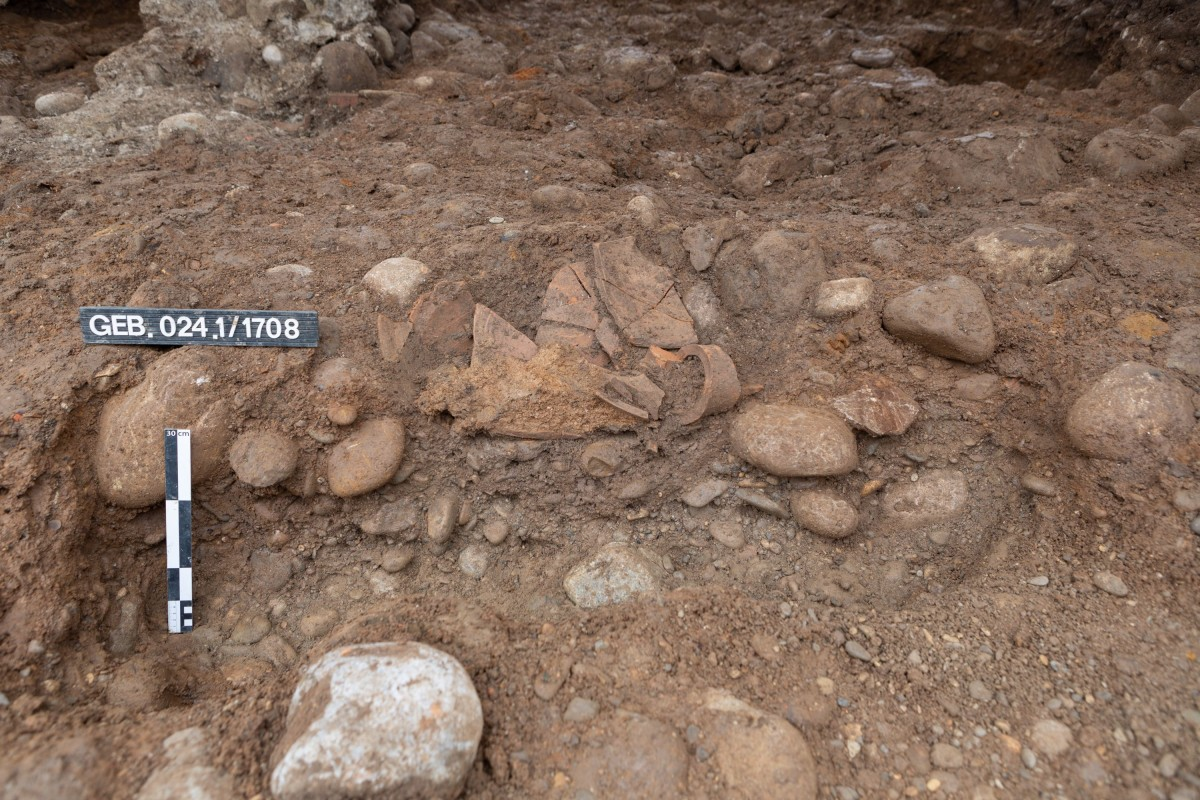
Archaeologists working at Gebenstorf, near the Limmat River in northern Switzerland, have uncovered the first archaeological evidence that sardines were consumed in Roman-era Switzerland, following the analysis of fish remains preserved inside a Roman amphora.
The amphora was discovered during a rescue excavation carried out ahead of a residential construction project. The site lies almost exactly one Roman mile from the legionary camp of Vindonissa, one of the most significant Roman military centers north of the Alps. Excavations revealed the remains of a substantial Roman building complex, strategically positioned along the river to support transport and supply operations.
A Roman logistics and supply center on the Limmat
The complex consisted of three large buildings constructed in the 1st century AD on an artificially levelled hill. Archaeological evidence indicates that the site functioned as a transshipment depot, where goods transported by river were stored and redistributed—most likely to supply the nearby legionary camp.
One structure, built of timber and clay, was exceptionally well preserved. Sections of its rammed-earth walls and fragments of painted wall decoration survived, suggesting long-term use rather than temporary military occupation. A second building featured a two-aisled hall with porticoes, while the central structure included a cryptoporticus, a covered passage partially sunk into the ground, typically associated with Roman marketplaces and administrative complexes. The eastern building stood out for its complex ground plan of rooms, corridors, and courtyards, indicating a different function from the others.
Taken together, the architectural evidence suggests that the site may have served not only commercial but also administrative and legal roles, possibly as part of a planned urban center that was never fully developed.
Amphora fragments and evidence of trade
Thousands of amphora fragments recovered from the excavation point to intensive long-distance trade. The vessels originated from Italy, southern Gaul, and the Iberian Peninsula. Additional finds—including stone and lead scale weights, a folding measuring ruler, and writing styluses—confirm the site’s role in controlled commerce and administration.
The complex appears to have been operated by the Roman military for roughly fifty years. Archaeological evidence shows that it was deliberately dismantled around AD 101, when the 11th Legion withdrew from Vindonissa. No later structures were built over the remains.
Fish sauce residue preserved inside an amphora
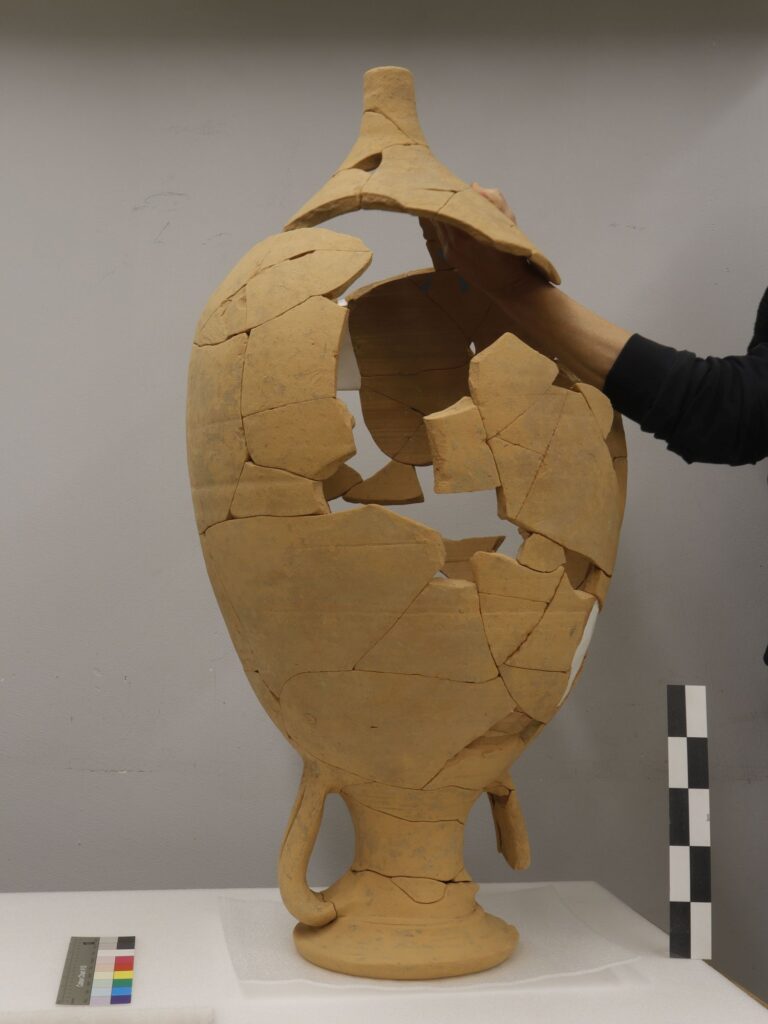
Among the amphora fragments, researchers identified one vessel whose broken pieces remained largely in place rather than scattered. Inside, a greyish-white sediment was visible. The amphora was recovered intact and transported to the cantonal archaeology conservation laboratory, where the sediment was sampled and analyzed at the University of Basel.
After sieving through fine meshes, the residue revealed microscopic bones, scales, and vertebrae of marine fish, indicating that the amphora once contained fish sauce—a staple condiment of Roman cuisine. Ancient texts refer to this product under various names, including garum, liquamen, muria, and (h)allec, which denote different qualities and preparation methods.
Zooarchaeological analysis identified the remains primarily as Sardina pilchardus, the European sardine. The specimens were very small, under ten centimeters in length, consistent with fish typically used in sauce production rather than eaten whole.
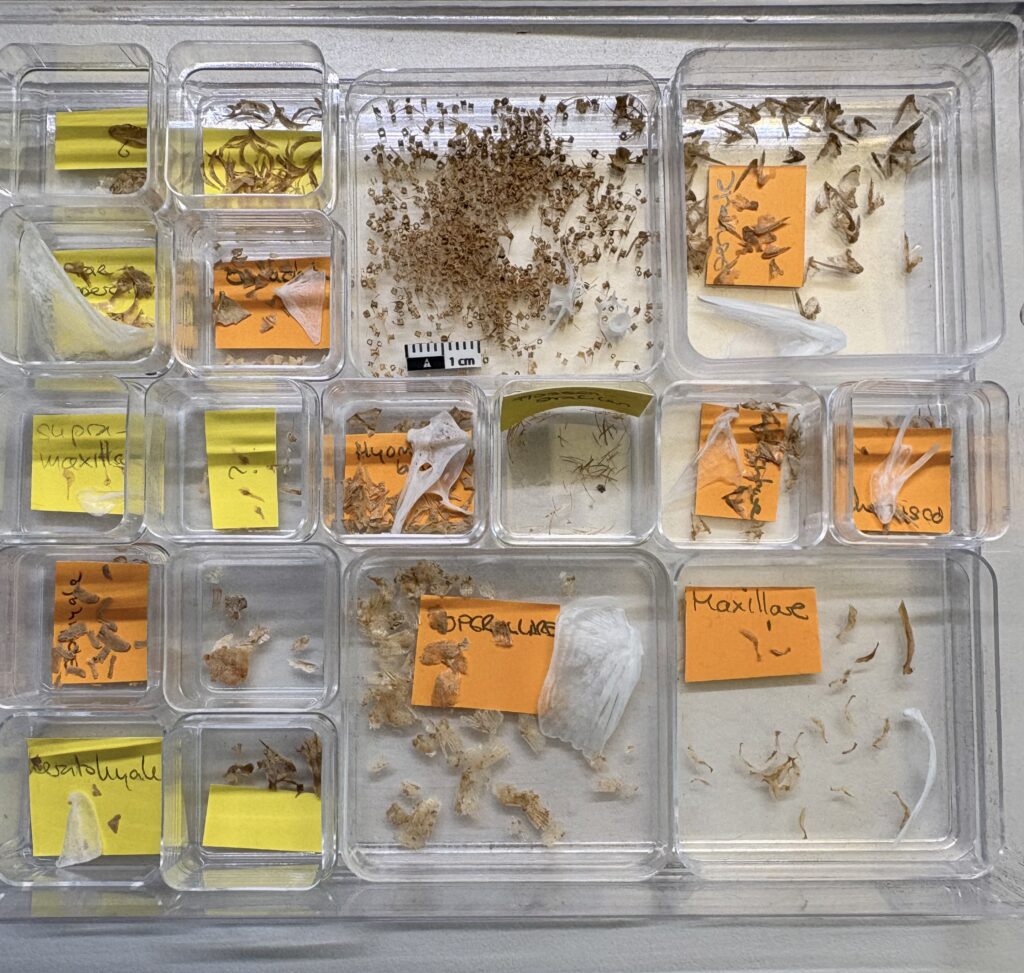
Credit: Integrative and Scientific Prehistoric Archaeology, © University of Basel
First archaeological proof for Roman Switzerland
This discovery represents the first direct archaeological evidence that sardines were consumed in Roman Switzerland. While the import of fish sauce is well documented elsewhere in the Roman world, biological remains confirming sardine consumption had not previously been identified at any Roman-era site within present-day Switzerland.
An amphora specialist examined the vessel fragments and concluded that the amphora—and likely its contents—originated from the Roman province of Baetica, in modern southern Spain, a region famous for large-scale fish sauce production. A Gallic origin, possibly from the region around present-day Lyon, cannot be entirely ruled out. Typological comparisons date the amphora to approximately AD 25–50.
Beyond identifying a single food product, the find highlights the reach and sophistication of Roman supply networks, demonstrating how preserved marine resources were transported hundreds of kilometers inland to provision military and administrative centers in the Alpine region.
Cover Image: Fragments of a Roman amphora found in situ during excavations at Gebenstorf; residue preserved inside the vessel provided the first archaeological evidence of sardine consumption in Roman-era Switzerland.