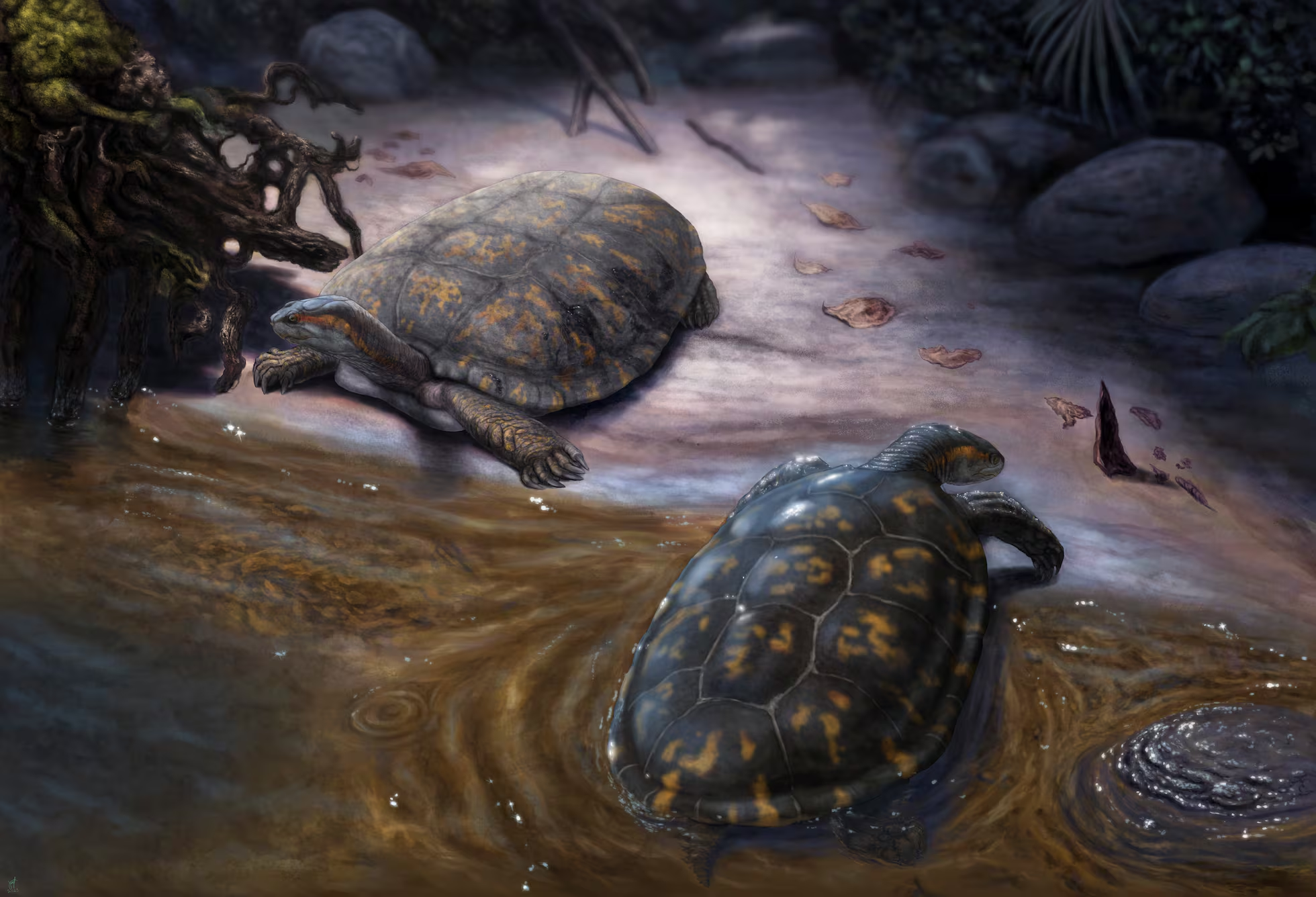
A newly described fossil turtle from central Colombia is reshaping what scientists know about the evolutionary pathways of South America’s freshwater turtles. The species, now formally named Shakiremys colombiana, lived roughly 13 million years ago during the Middle Miocene—a period when the region around today’s Tatacoa Desert was a labyrinth of lakes, floodplains, and interconnected rivers rather than the arid landscape seen today.
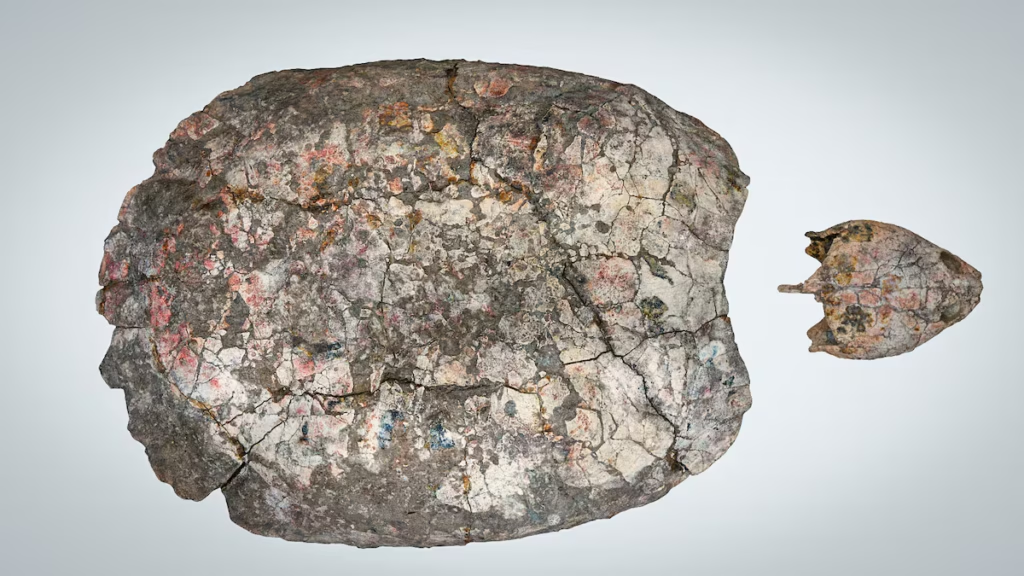
The discovery is based on a remarkably preserved skull with an articulated shell, as well as an isolated carapace found at a second site. Both specimens were unearthed in 2022 near La Victoria, a locality positioned directly above the fossil-rich formation of La Venta, one of the most important paleontological sites in northern South America.
A Turtle Sitting Between Two Branches of Its Own Family Tree
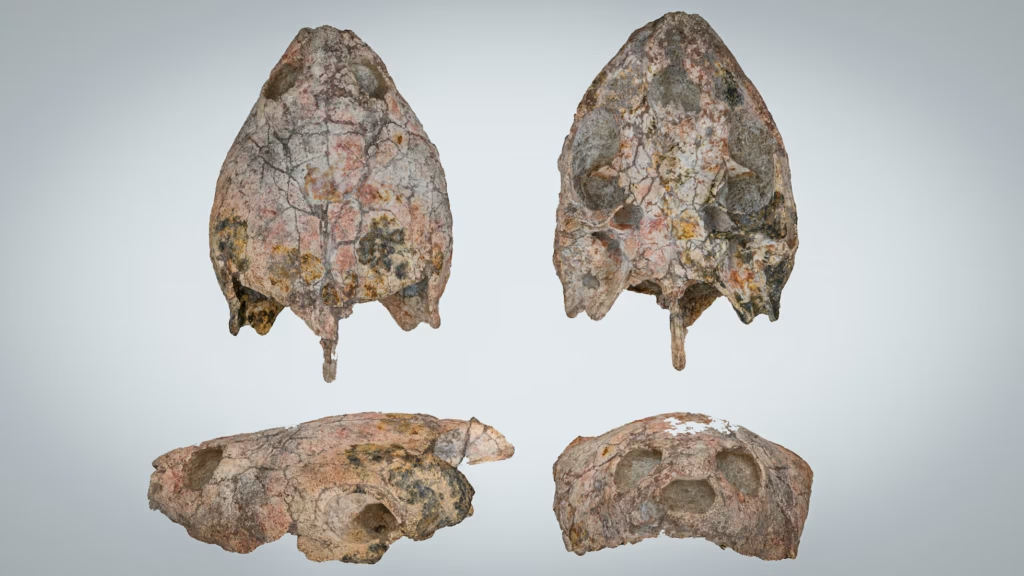
After the excavation, the fossils were transported to Bogotá, where scientists used high-resolution CT scanning to document every anatomical detail. The results were puzzling: the turtle didn’t fit cleanly into any known genus of the Podocnemididae, a family whose modern members are restricted to Madagascar and the northern regions of South America.
Instead, Shakiremys colombiana combines traits from both lineages—something that rarely appears in the fossil record of this group. This intermediate position suggests that evolutionary interactions between the African and South American branches of podocnemidid turtles may have been more complex than previously assumed.
The animal also appears to have been highly adaptable, capable of living in both dark, sediment-rich waters and clearer aquatic environments, and likely maintained an omnivorous diet.
Local Effort at the Core of the Discovery
The Tatacoa region has produced countless Miocene fossils, but structured scientific exploration has intensified only in the past decade, driven by collaborations among Colombian universities and international institutions. Crucially, much of the fieldwork now relies on close cooperation with local residents.
The fossils of Shakiremys colombiana were first noticed by a landowner who suspected they might be significant and alerted Rubén and Andrés Vanegas, two brothers who grew up collecting fossils in the area and today operate the Tatacoa Natural History Museum, safeguarding more than 4,000 specimens from La Venta. They excavated and prepared the material before passing it on to the scientific team.
This community-driven model has made Tatacoa one of Colombia’s most effective examples of citizen-supported paleontology.
Where the Name Comes In — and Why It Matters
The naming of the new genus sparked discussion even within the research team. Scientific naming traditions are sometimes contentious, especially when real individuals—celebrity or otherwise—are involved. Midway through the study, several international commentators, including a report by the Spanish newspaper El País, highlighted that Shakiremys colombiana continues a trend of taxa named after public figures, a practice debated in scientific circles.
The researchers acknowledge the controversy but maintain that the choice serves a communicative purpose. By linking the fossil to a globally recognized Colombian artist, they aim to draw broader attention to the country’s paleontological heritage—particularly to the Tatacoa region, which remains underexplored despite its scientific value.
A Window into a Lost Wetland World
From giant crocodilians to early primates, La Venta has long been a key archive of Miocene life. Shakiremys colombiana now adds a new puzzle piece to that archive, offering evidence that turtle lineages in the Neotropics were more varied and interconnected than previously recognized.
Its anatomy, geological age, and ecological versatility make it a reference point for understanding how freshwater ecosystems functioned long before the Andes reached their modern height—and long before the Tatacoa became a desert.
Whether the name catches attention or sparks debate, the fossil itself expands the map of South America’s deep-time biodiversity. And in that sense, its impact extends far beyond a headline.
Cover Image Credit: Illustration of the turtle to which the ‘Shakiremys’ fossil belongs.
Rosario University