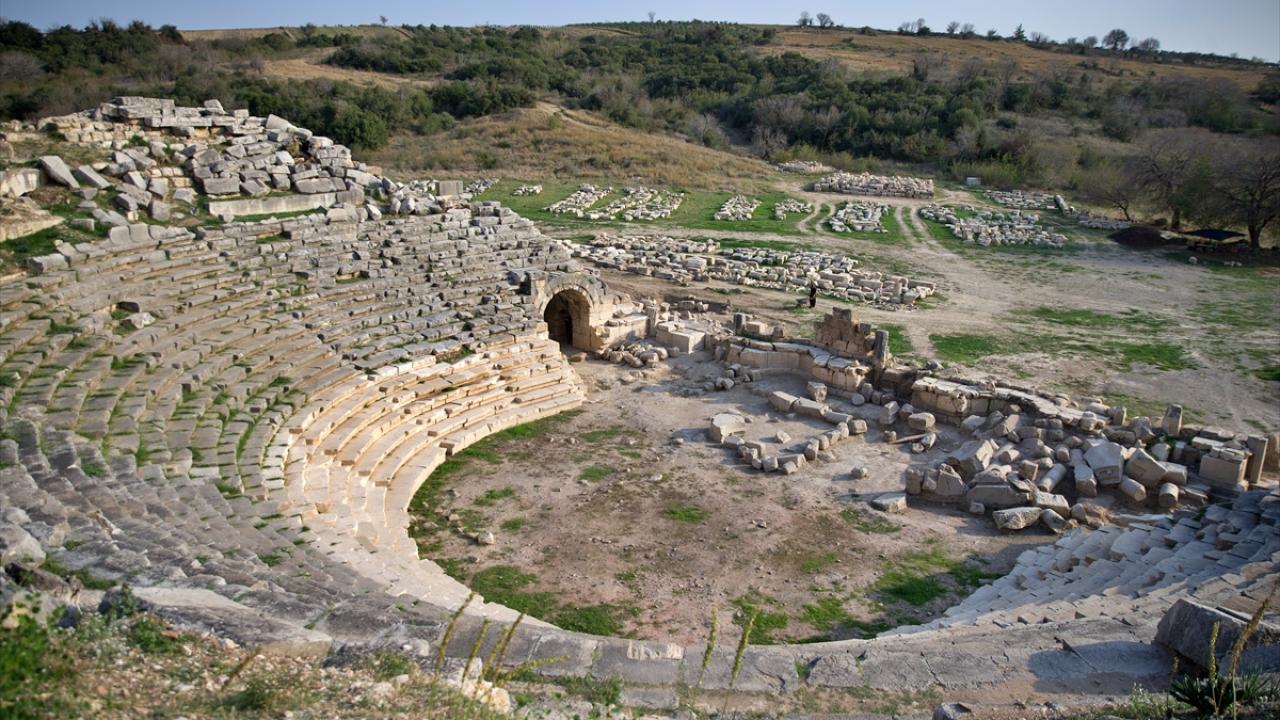
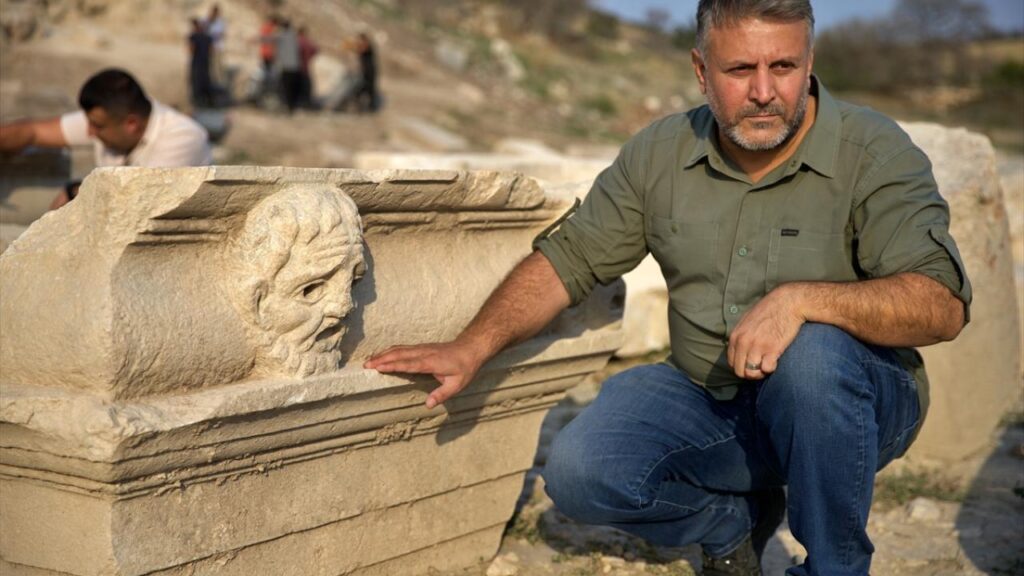
Late afternoon light spills across the ruined theatre of Kastabala, catching on thousands of weathered limestone blocks. The space feels silent now, but archaeologists working here know that every carved detail once served a purpose. And this season, one detail stopped the entire team in its tracks: the face of an elderly philosopher emerging from the theatre’s façade—right where such a figure should not exist in Roman architectural tradition.
An Unexpected Intruder in the Iconography

The discovery was made during ongoing excavations led by Assoc. Prof. Dr. Faris Demir, supported by Türkiye’s Ministry of Culture and Tourism and carried out under the Geleceğe Miras project. Roman theatres typically feature masks of actors, gods, and stock characters. They do not depict philosophers.
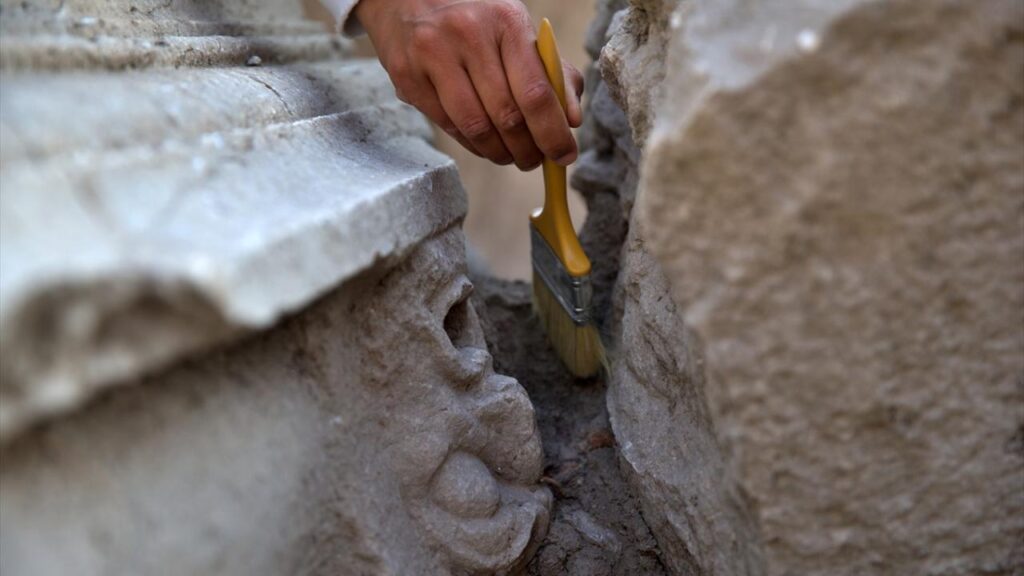
“Masks on stage buildings rarely depict philosophers,” Dr. Demir explains—a point well understood by specialists in Roman Anatolia.
The surprise is not simply the carving itself, but what it implies: Kastabala’s theatre may have hosted activities beyond staged drama. Lectures, readings, or philosophical exchanges may have taken place here, suggesting the city valued intellectual life alongside performance.
A City at the Cultural Crossroads
Often called the “Ephesus of Çukurova,” Kastabala formed a gateway between the Cilician plain and the interior of Anatolia. Its temples, colonnaded streets, and fortified acropolis already hinted at a city shaped by many identities—eastern, western, local, imperial.
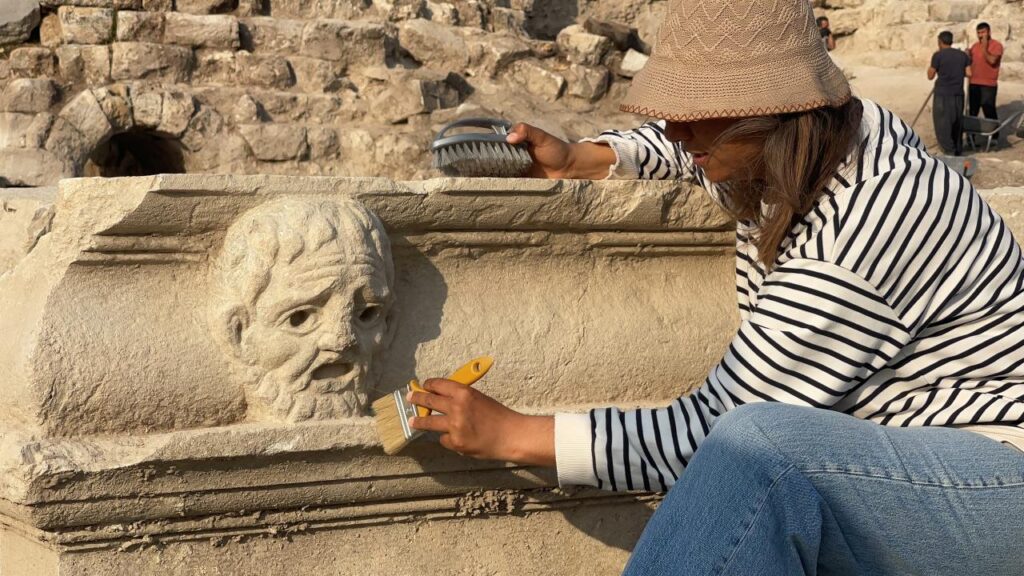
The philosopher mask adds a new dimension.
It strengthens the view that Kastabala was not merely a place of spectacle but a setting for ideas, discussion, and perhaps even scholarly gatherings. In a region where cultural boundaries constantly overlapped, such an interpretation resonates strongly.
Rebuilding the Lost Stage
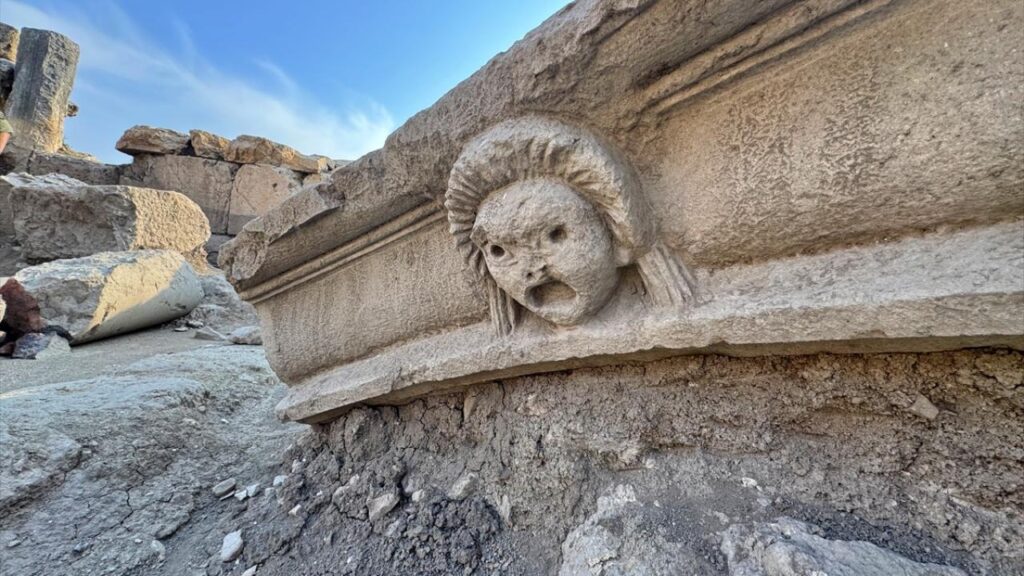
Excavations this season also uncovered additional architectural blocks from the theatre’s stage building—the scaenae frons. The surviving fragments, including dramatic masks of comedy and tragedy, reveal how the façade once framed performances with powerful visual storytelling.
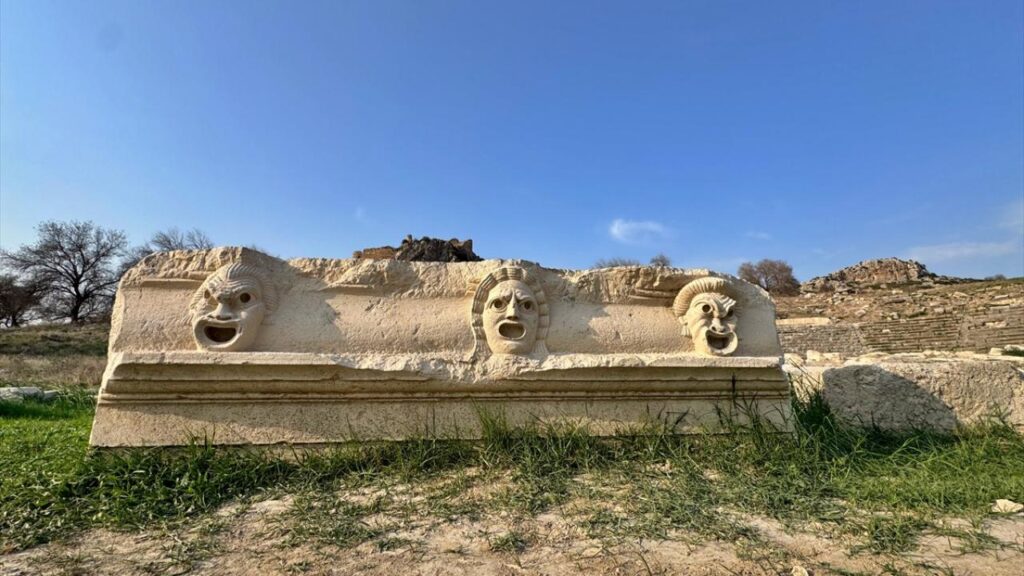
With enough structural material now documented, the team believes the stage building could one day be partially reconstructed. Such a project would restore not only the architecture but also the atmosphere of the ancient venue.
Kastabala’s Rising Significance
As new discoveries surface, Kastabala steadily gains attention among Türkiye’s major archaeological sites. The philosopher mask is not merely a decorative fragment—it’s a disruption to expectations, a challenge to established interpretations, and a reminder that some cities continue to rewrite their stories long after their stones have gone quiet.
For researchers and visitors alike, Kastabala is becoming a place where the ancient world feels unexpectedly alive.
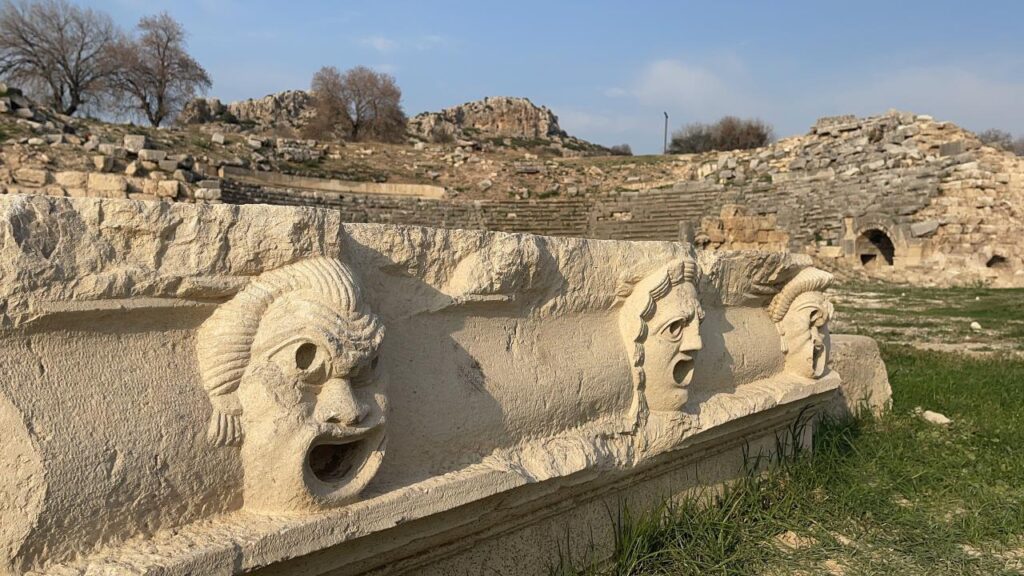
Cover Image: General view of Kastabala’s Roman theatre, where the newly uncovered masks were found during the latest excavation season.