For four years, archaeologists excavating a Roman village northwest of ancient Aquincum have been reconstructing the practical side of life there through houses, pottery, tools and traces of everyday work.
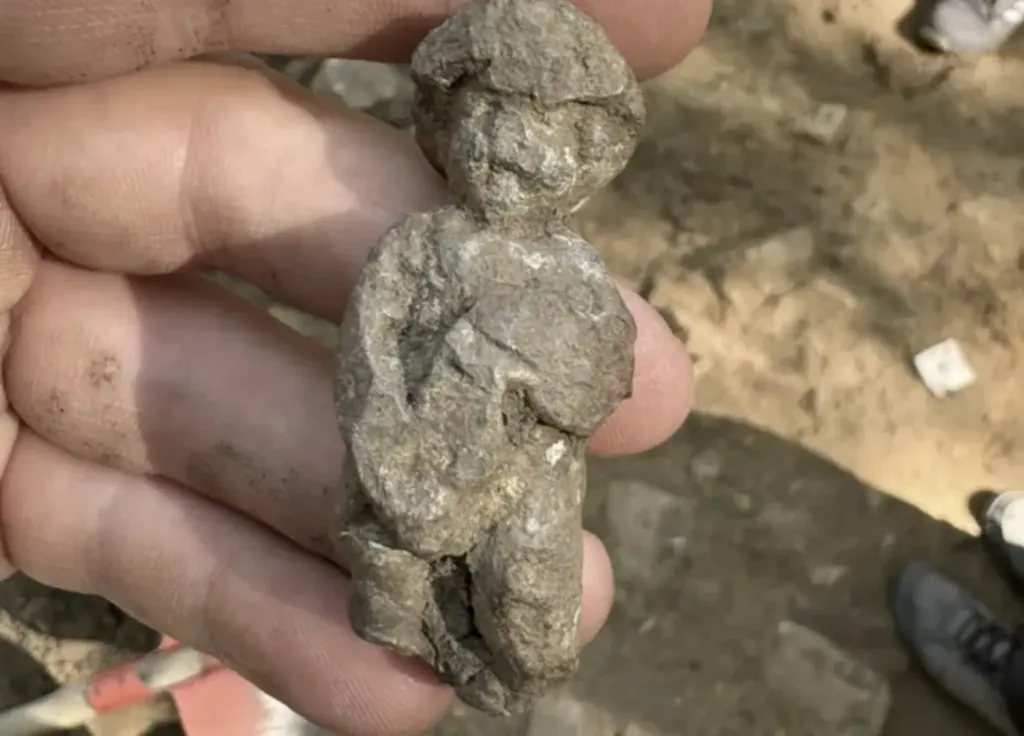
This season, they found something the site had not produced before. A small lead figurine depicting Venus has become the first object from the settlement that archaeologists can directly associate with religion, adding a new dimension to a community previously understood mainly through its buildings and material remains.
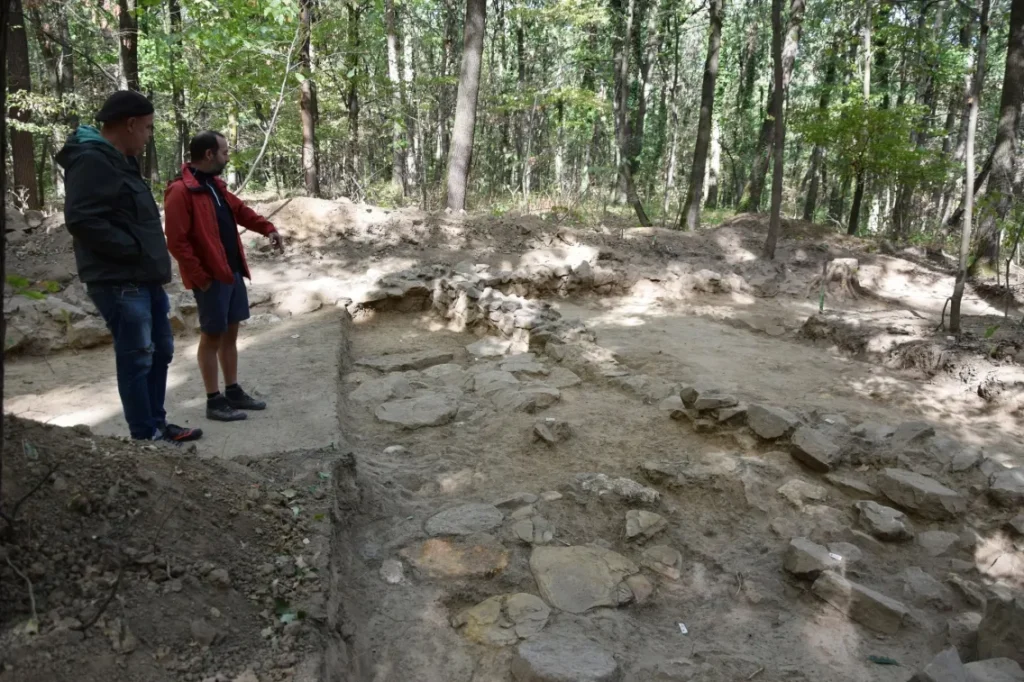
The discovery was made at the Pilisszentiván–Hárs-erdő site in Hungary, where a team from Eötvös Loránd University (ELTE), led by archaeologist Bence Simon, has been investigating a Roman-period vicus, or village. The 2026 excavation season ended on September 23 after researchers returned to buildings near the Hársas spring to clarify their boundaries and better understand how different parts of the settlement were used.
The first glimpse of religion in the village
The lead figure emerged during a metal-detector survey and represents Venus Pudica, the familiar Roman image of the goddess shown covering part of her nude body.
Its importance lies less in its size than in its context. ELTE describes the figurine as the first known object with a religious association from the settlement. Until now, excavation had revealed much about how people lived and worked here, but little that could be linked so directly with religious imagery.
That makes the so-called “Pilisi Venus” a small but significant addition to the archaeological picture. It does not prove the existence of a shrine, nor does it establish exactly how the figurine was used. What it does provide is the first clear indication that an object carrying explicitly religious imagery formed part of the material culture of the village.
Other metal finds recovered during the latest campaign included a fragment of a lead-covered bronze mirror, iron tools, brooches and coins.
A Roman village in Aquincum’s hinterland
Pilisszentiván lay within the northwestern hinterland of Aquincum, the major Roman center whose remains survive in modern Budapest.
Earlier excavations at the village uncovered stone-founded buildings, large pottery assemblages and evidence of workshop activity. Research from previous seasons also suggested that the settlement had adopted elements of a Roman way of life by around the turn of the first and second centuries AD.
The site therefore offers a different view of Roman life from the monumental buildings associated with major cities. At Pilisszentiván, the archaeological record is made up largely of houses, work areas, broken vessels and objects used in daily life.
The Venus now adds a new category of evidence to that picture.
Building E preserves a moment of everyday life
The figurine was not the only important result of the 2026 season. Archaeologists also continued investigating the residential section and northern forecourt of a structure known as Building E.
Near the edge of its living area, they uncovered a stone-paved surface resembling features identified beside other houses at the site. Researchers suspect that the space may have been connected with economic or working activities.
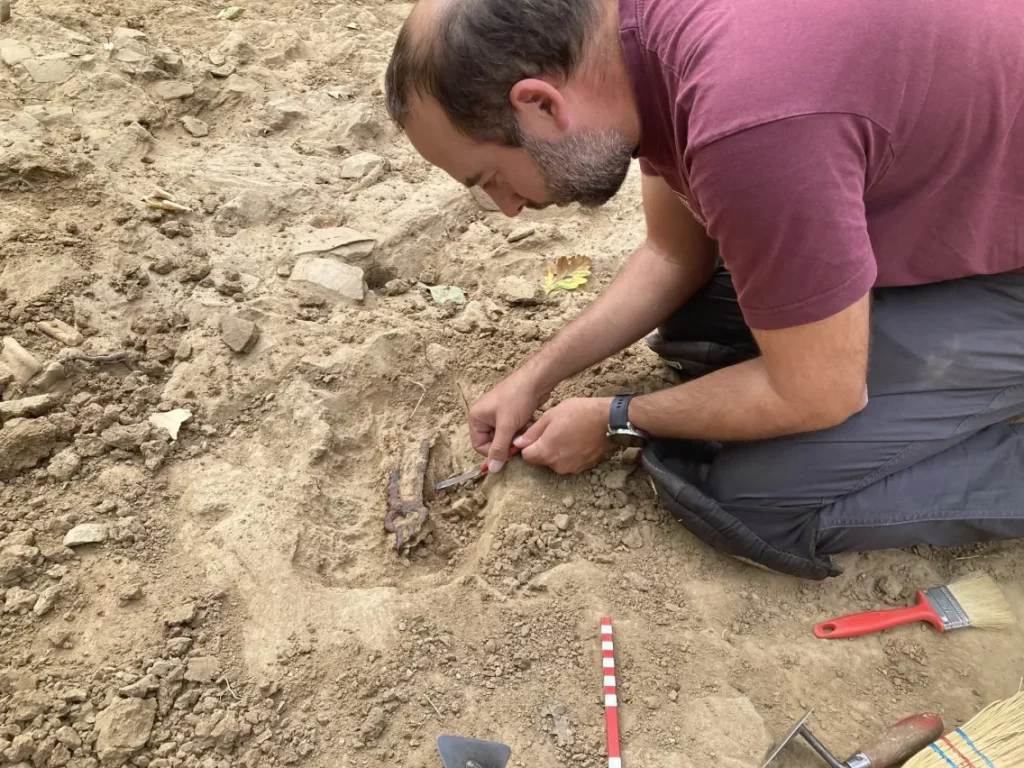
Farther north, the excavation reached an undisturbed collapse layer containing large quantities of pottery, including vessels preserved in unusually complete condition. An iron pair of tongs was also recovered almost intact.
Because the material remained within a relatively undisturbed context, it may help researchers better understand how the building was used before it fell out of use.
Previous excavation had already shown that Building E was larger than first thought, while associated finds suggested that it may have been abandoned around the beginning of the third century AD. The newly exposed material could now help refine that sequence.
A small object opens a new question
There is still much the Venus cannot tell archaeologists. ELTE has not identified the precise setting in which the figurine was originally used, and interpretation of the latest finds is continuing.
The figurine does not transform everything archaeologists already know about Pilisszentiván–Hárs-erdő. Houses, working areas and everyday objects still provide most of the evidence for life in the Roman village.
But the tiny Venus adds something that had been missing from four seasons of excavation. For the first time, archaeologists have recovered an object from the settlement with a clear religious association, opening a new line of inquiry into a community previously understood mainly through the places where its inhabitants lived and worked.
Cover Image: Archaeologists investigate the remains of the Roman-period settlement at Pilisszentiván–Hárs-erdő in Hungary. Credit: Müller Ákos / ELTE