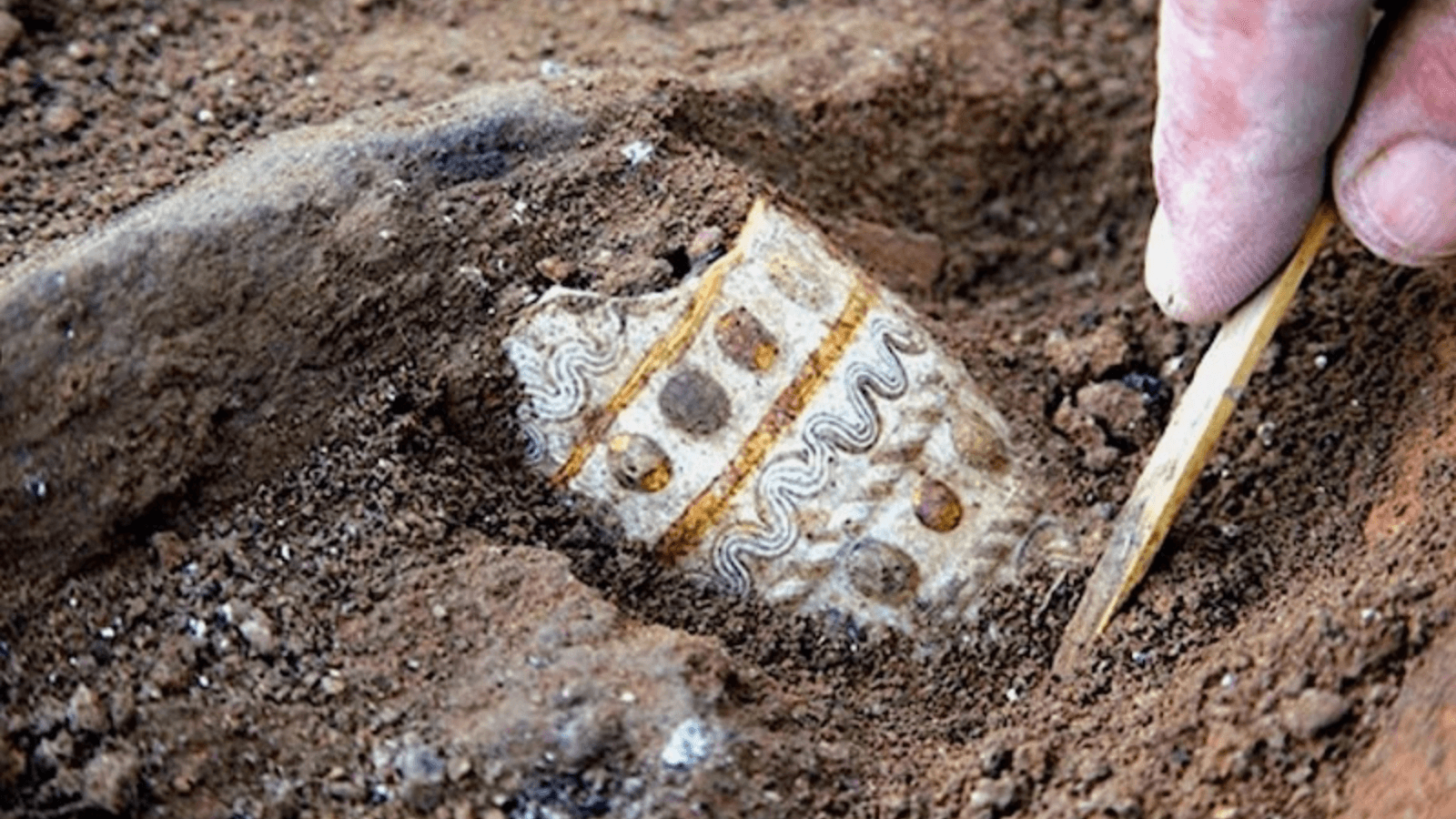
More than 3,600 years ago, someone in Central Anatolia handled an object that would have been extraordinary even by the standards of the Bronze Age: a large, carefully decorated glass bottle.
Found at Büklükale, a settlement on the Kızılırmak River southeast of Ankara, the vessel dates to around 1600 BCE and ranks among the oldest glass bottles known from the ancient Near East. Its age alone makes it exceptional, but researchers have found something even more intriguing.
The bottle does not fit neatly into the better-known traditions of early glassmaking in Mesopotamia. Its unusual size, white body, manufacturing technique and scientific composition have raised the possibility that an unidentified glass workshop once operated somewhere in Central Anatolia, close to the world from which the Hittite kingdom was emerging.
A rare object from the dawn of glass vessels
Archaeologists recovered the bottle from Room R14 at Büklükale in a destruction layer dating to around 1600 BCE. The period marks a critical transition in Central Anatolia, between the end of the Assyrian Trading Colony era and the formation of the early Hittite state.
Glass itself was not new. Small glass objects and beads had appeared earlier across the Near East. Producing an actual vessel, however, required far more sophisticated control over materials and temperature.
That makes the Büklükale find significant. According to studies of the vessel, it belongs among the earliest known glass bottles yet excavated in the Near East.
Only part of the bottle survives, but it was unusually large compared with contemporary examples. Its opaque white body carried colored decoration, including zigzag and herringbone-like patterns that recall vessels known from sites such as Nuzi, Assur and Tell al-Rimah.
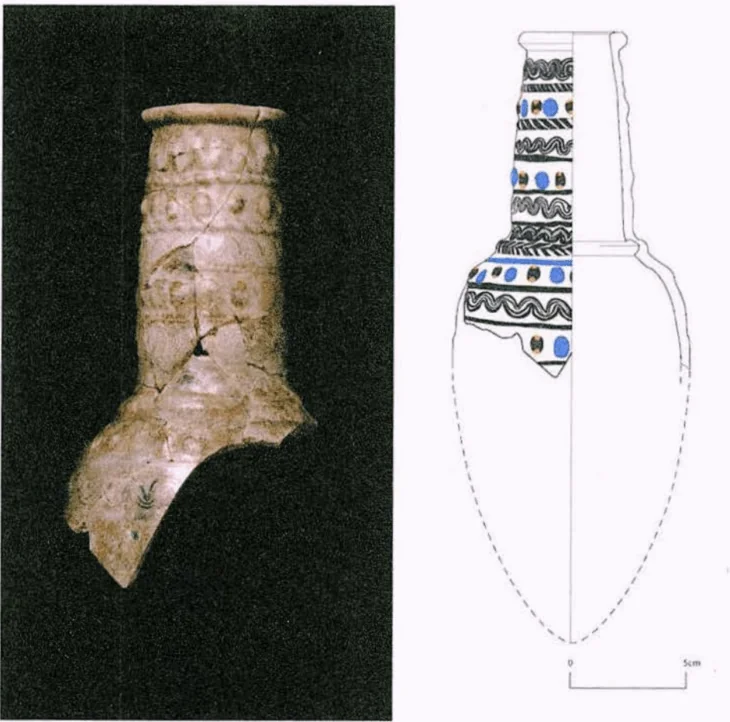
Those visual similarities might suggest that the bottle simply arrived in Anatolia from farther east. Its manufacture tells a more complicated story.
It was made differently
Many early glass vessels were formed around a core, with glass applied around a temporary inner structure that created the vessel’s shape. The Büklükale example shows an unusual variation on this method.
Kimiyoshi Matsumura noted that the neck and body appear to have been produced separately and joined using a twisted glass rod. He suggested that this joining technique may have allowed the craftsman to produce a considerably larger bottle than was typical for contemporary Mesopotamian examples.
Was this simply an experimental variation used by a craftsman working within the broader Mesopotamian tradition, or does it preserve evidence of another technological tradition developing farther west?
The bottle’s opaque white base adds to the mystery. Matsumura identified its size, color, production technique and early date as characteristics that distinguish it from better-known Mesopotamian bottles.
The chemistry adds another clue
Scientific analyses of glass from Büklükale and nearby Kaman-Kalehöyük have added another layer to the discussion.
Researchers examining Hittite and Early Iron Age glass have explored whether some material found in Central Anatolia could reflect production outside the established glassmaking centers traditionally associated with Egypt, Syria and Mesopotamia.
The results do not yet prove that the Hittites maintained their own glass industry. They do, however, leave open the possibility that at least some glass circulated through a technological network that remains archaeologically elusive.
Matsumura has proposed that the peculiar characteristics of the Büklükale bottle could point to an unidentified workshop, possibly located somewhere in Central Anatolia, although no such production center has yet been excavated. That absence is precisely what makes the bottle interesting. Archaeologists have an object whose technology appears unusual, but the craftsmen and production center behind it remain missing.
A glass ingot deepens the mystery
Büklükale has produced another piece of evidence that keeps the local-production question alive: a fragment of a blue glass ingot.
An ingot is closer to raw manufacturing material than a finished bottle or pendant. Its presence does not prove that glass itself was originally melted from its basic ingredients at Büklükale, but Matsumura argued that it could indicate that glass products were at least being manufactured from imported ingots in the region. Further analysis is still needed.
Central Anatolia already possessed highly developed traditions of metalworking, which required furnaces, specialist knowledge and control of high temperatures. Researchers have therefore questioned whether some of the technological expertise needed for working glass could also have developed within this environment.
For the moment, the workshop itself remains hypothetical. The material evidence, however, is sufficient to keep the question open.
Another glass object points east
The same archaeological context also produced a large turquoise-blue glass disk pendant.
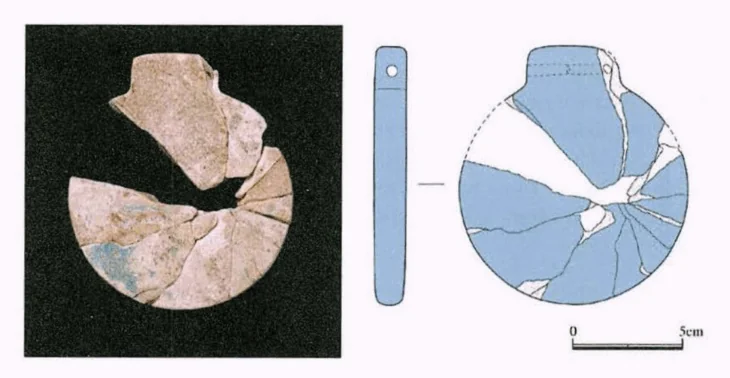
Comparable objects are known from northern Mesopotamian sites such as Nuzi and Assur, where disk-shaped pendants have been connected with religious and elite contexts. The Büklükale example is itself unusually large, measuring about 10.4 centimeters across.
These similarities reveal that Büklükale was not technologically or culturally isolated.
The settlement existed within a world of long-distance movement in which objects, materials, techniques and religious ideas traveled between Mesopotamia, Syria and Central Anatolia. Later research at Büklükale has reinforced that picture, with finds showing Hattian, Hurrian, Luwian and Hittite cultural connections.
This makes the bottle’s unusual character even more significant. Its makers clearly belonged to a world connected with eastern glass traditions, yet they may not simply have been copying them.
A missing chapter in the history of glass
Büklükale occupied an important position along the Kızılırmak at a time when political power in Central Anatolia was being transformed.
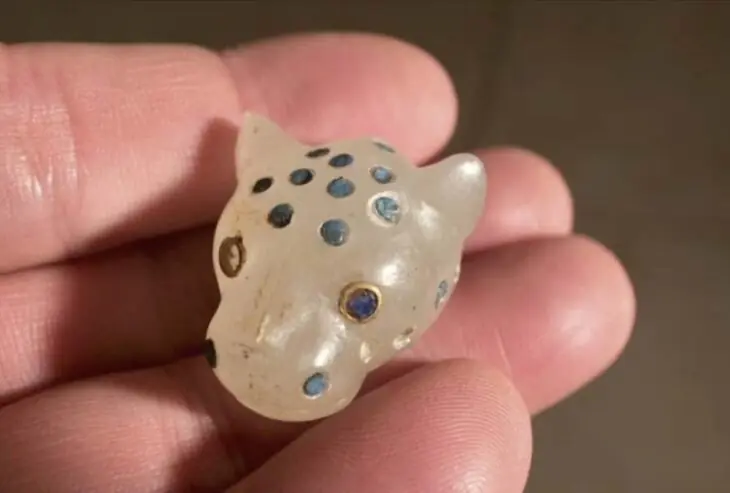
Its monumental architecture, written documents and luxury objects show that the settlement participated in networks extending far beyond its immediate region. The glass bottle now adds a technological question to that broader picture.
Matsumura’s research does not establish the existence of a Hittite glass industry. What it does show is that the earliest history of glass vessels may have been geographically more complex than a simple movement of finished objects outward from Mesopotamia.
Somewhere in or around Central Anatolia, another workshop may once have been experimenting with this rare and difficult material.
Until archaeologists find it, the 3,600-year-old bottle from Büklükale remains one of the most intriguing clues: an exceptionally early glass vessel whose makers have disappeared, while their technology survives.
Cover Image: The 3,600-year-old decorated glass vessel emerging from the soil at Büklükale in Central Anatolia. The find is among the earliest known glass bottles from the ancient Near East. Credit: Japanese Institute of Anatolian Archaeology.