
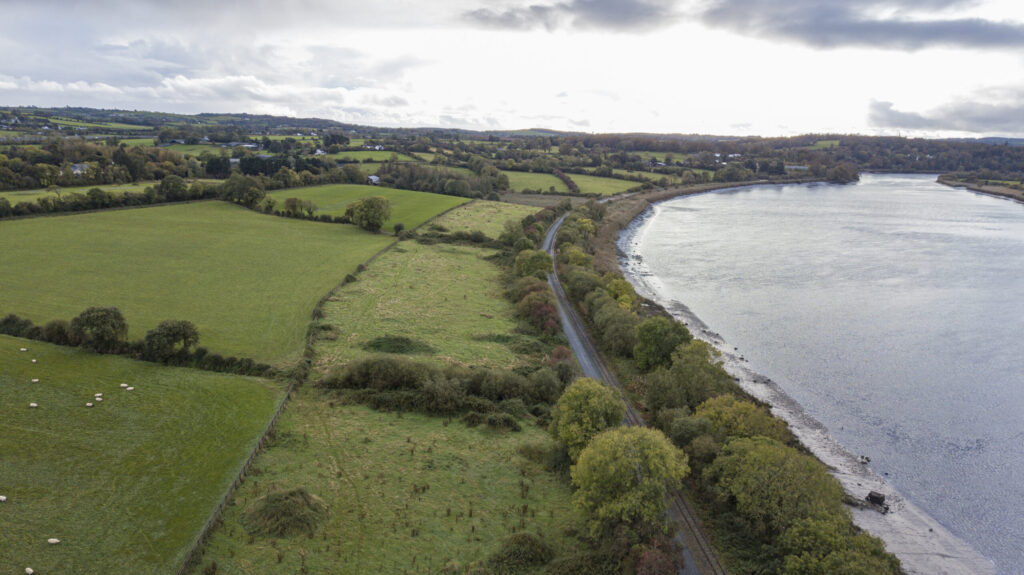
A field beside the River Suir in southeast Ireland is beginning to look like one of the most important Viking Age sites ever found on the island. At Woodstown, near Waterford City, Irish and Norwegian archaeologists are investigating what may be Ireland’s largest Viking Age trading settlement, a place probably established by Norse Vikings from western Norway.
The excavation brings together the Museum of Archaeology at the University of Stavanger, the Discovery Programme Ireland, Waterford City and County Council, and Abarta Heritage. The project is funded by the Royal Irish Academy. At the centre of the work is a large structure that may have formed the heart of the settlement.
If the interpretation is confirmed, Woodstown will stand out not simply as another Viking site in Ireland, but as a rare preserved trading centre where raiding, settlement, craft production, and long-distance exchange came together.
A Viking site that was never buried beneath a city
Woodstown is unusual because it did not become a modern city. Dublin and Waterford both grew from Viking and medieval roots into dense urban centres, leaving their earliest layers difficult to study. Woodstown followed another path. It remained largely open ground, preserving traces of Viking activity beneath the fields.
That makes the site especially valuable. Archaeologists can investigate a Viking settlement as a wider landscape, rather than through scattered remains trapped under later streets and buildings.
Earlier work had already shown that Woodstown was important. Irish archaeologists previously uncovered the grave of a Viking warrior buried with a sword, along with evidence for craft activity, trade, and settlement. The new excavation now suggests that the site may have been larger and more organised than earlier finds alone could show.
A large hall or longhouse near the centre
The latest work is focused on the remains of what researchers believe may be a very large longhouse or hall. In the Viking world, such buildings were rarely neutral spaces. They could be places of authority, storage, exchange, feasting, and political negotiation.
Kristin Armstrong-Oma, museum director and professor of archaeology at the University of Stavanger’s Museum of Archaeology, has said the feature appears to be the remains of a substantial hall or longhouse. She also notes that the settlement was most likely established by Norse Vikings.
That changes the way Woodstown should be understood. The site was probably not just a temporary base for attacks on the surrounding landscape. The evidence points to a settlement with economic weight, one tied into the movement of silver, metal, goods, and people across the Irish Sea.
Silver weights and metalworking reveal a trading centre
Among the finds are weights used to measure silver. In Viking Age trade, silver was not just a precious metal. It was a flexible form of value, weighed and exchanged across regions where coinage and political systems differed.
The team has also recovered crucibles, raw metal, and slag. These are practical traces of metalworking, and they show that production took place at Woodstown as well as exchange.
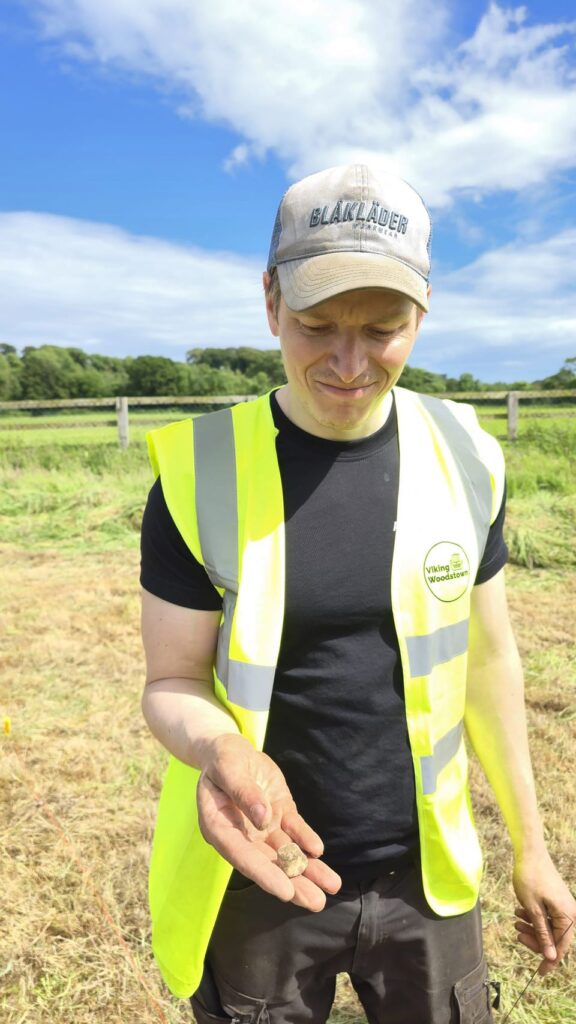
Håkon Reiersen, associate professor and archaeologist at the University of Stavanger’s Museum of Archaeology, says the weights, crucibles, raw metal, and slag show that both trade and metalworking were carried out at the site.
The location helps explain why. Woodstown sits beside the River Suir, a natural route linking inland Ireland with maritime networks. For Viking ships, rivers opened the landscape. They connected settlements, markets, monasteries, farms, and the sea.
Finds point toward western Norway
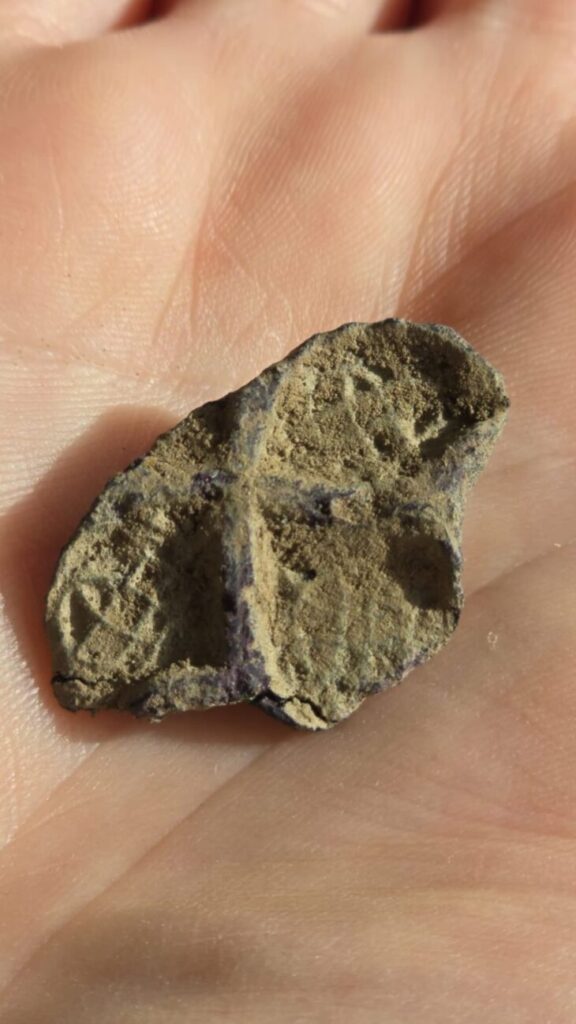
Several discoveries suggest that Woodstown had strong links with Norway, especially Rogaland in the southwest. One of the clearest clues is a decorated Irish metal fitting that may once have belonged to a church object, perhaps a cross, reliquary, or manuscript cover.
In Norway, similar fittings were often reused as ornaments. The Museum of Archaeology at the University of Stavanger holds one of the largest Scandinavian collections of such material, including many examples from Rogaland. Comparable objects are also presented in the museum’s World of the Vikings exhibition in Stavanger.
The meaning of these fittings is complex. They may have reached Viking hands through raiding, tribute, extortion, trade, or reuse. In the case of Woodstown, the object creates a direct material link between Ireland and western Norway. It also fits a wider pattern of Viking movement between the Irish Sea world and the Norwegian coast.
Another find makes that connection even more tangible. Archaeologists have recovered fragments of a pot made from Norwegian soapstone. Soapstone vessels were common in Norway because the material was durable, workable, and resistant to heat. In Ireland, however, this was not a familiar local material.
The vessel must have crossed the sea. It may have been brought by Vikings who carried practical objects from home into a new settlement. Among the silver weights and metalworking debris, the soapstone pot gives Woodstown a more personal dimension: people were not only trading and raiding here. They were living here.
Norse settlers in Viking Age Ireland
The Viking Age, roughly AD 790 to 1050, reshaped the North Atlantic world. Scandinavian groups travelled, raided, traded, and settled across a huge area, from eastern Europe to the North Atlantic and, eventually, North America.
In Ireland, early Viking activity was marked by raids, especially on monasteries and coastal communities. By the mid-9th century, the pattern began to change. Scandinavian groups started to establish more permanent bases. Some grew into towns, including Dublin, Waterford, Wexford, Cork, and Limerick.
Many Vikings active in Ireland appear to have come from regions that are now part of Norway. The western sea routes connected Norway with Scotland, the Isle of Man, Ireland, Iceland, and Greenland. Saga traditions also associate people from Rogaland with westward expansion.
Genetic research has added support to this broader picture. DNA analyses have confirmed Norwegian ancestry in both male and female Viking Age graves in Ireland. Woodstown gives archaeologists a rare settlement-scale opportunity to examine those connections through buildings, artefacts, craft debris, and trade equipment.
A settlement between Ireland and Norway
Woodstown’s importance lies in the way different kinds of evidence meet at one place. There is the possible hall or longhouse, suggesting organised settlement. There are silver weights, pointing to trade. There are crucibles, metal, and slag, pointing to production. There are Irish ecclesiastical fittings reused in a Viking world. There is Norwegian soapstone, carried across the sea.
Together, these finds suggest that Woodstown was a working settlement in a connected Viking Age world. It linked the River Suir to the Irish Sea, and Ireland to western Norway.
The cautious wording still matters. Archaeologists may have found Ireland’s largest Viking Age trading settlement, but the interpretation depends on the results of the ongoing excavation. Even so, Woodstown is already emerging as one of the clearest places to study how Norse Vikings moved from raiding into settlement, trade, and everyday life in Ireland.
Cover Image Credit: Archaeologist Hilde Fyllingen points to fragments of a Norwegian soapstone vessel she has just uncovered. Håkon Reiersen, Museum of Archaeology, University of Stavanger