
When archaeologists broke ground along Sweden’s E18 highway between Köping and Västerås, they did not just prepare for modern traffic — they uncovered a vanished world of warriors, rituals, and ancestral memory. The rescue excavations revealed two upright swords thrust into Viking-Age graves, glittering beads, and exquisitely preserved horse gear, offering a rare cross-section through centuries of Scandinavian life and death.
A Window Into the Viking Landscape
Between 2021 and 2022, teams from Arkeologerna, the archaeological branch of Sweden’s National Historical Museums, investigated nine sites in Västmanland. The project, led by archaeologist Fredrik Larsson, coincided with the highway’s expansion into a full motorway.
“The individual sites are fascinating, but the real power lies in the overview,” Larsson explained. “We’re seeing how the landscape and society evolved generation by generation.”
The findings stretch from everyday farm life — bread-baking and iron production — to elite cremation rituals staged for local chieftains whose pyres would have glowed across the valley. One Viking-Age farm even stood beside Västmanland’s largest rock carving at Häljesta, linking prehistoric imagery to medieval habitation.
The Fires of Rallsta
Among the most spectacular discoveries was a cremation complex at Rallsta, near Hallstahammar. Here, Vikings reshaped a small hill to create two monumental pyre platforms — places meant to be seen from afar. Human remains, burnt offerings, and traces of repeated ceremonies suggest that Rallsta served as a regional stage for public rites of passage and remembrance.
The Swords of Viby and Norrtuna
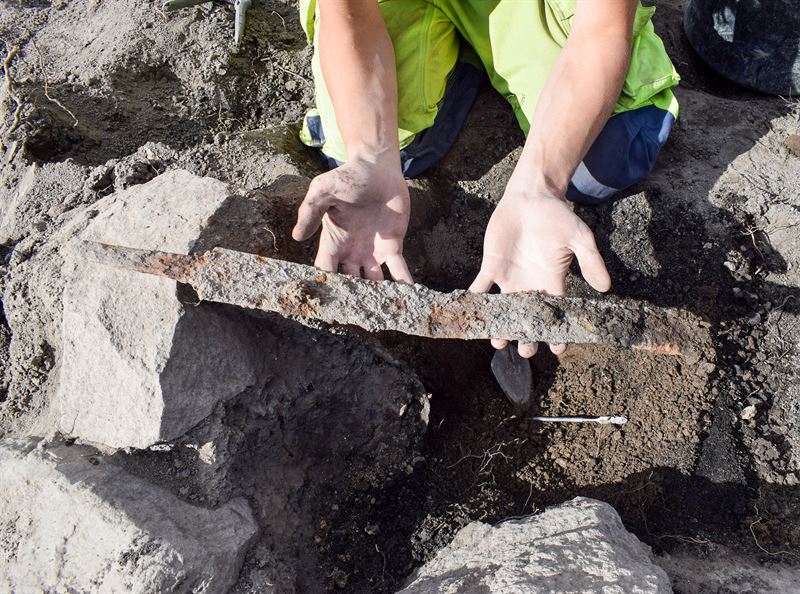
Further west, at Viby/Norrtuna in Munktorp parish, archaeologists unearthed a unique monument — Viking-Age stone settings built directly into an older Vendel-period burial mound. Inside the graves, two swords stood upright, deliberately embedded beside the dead.
“Such graves are extremely rare,” said Larsson. “There may be a dynastic link or an elite warrior brotherhood represented here.”
One burial contained both a man and a woman, though their relationship remains uncertain. Whether comrades, kin, or sacrificial partners, their resting place hints at social complexity on the eve of the Viking expansion.
Horses of the Afterlife
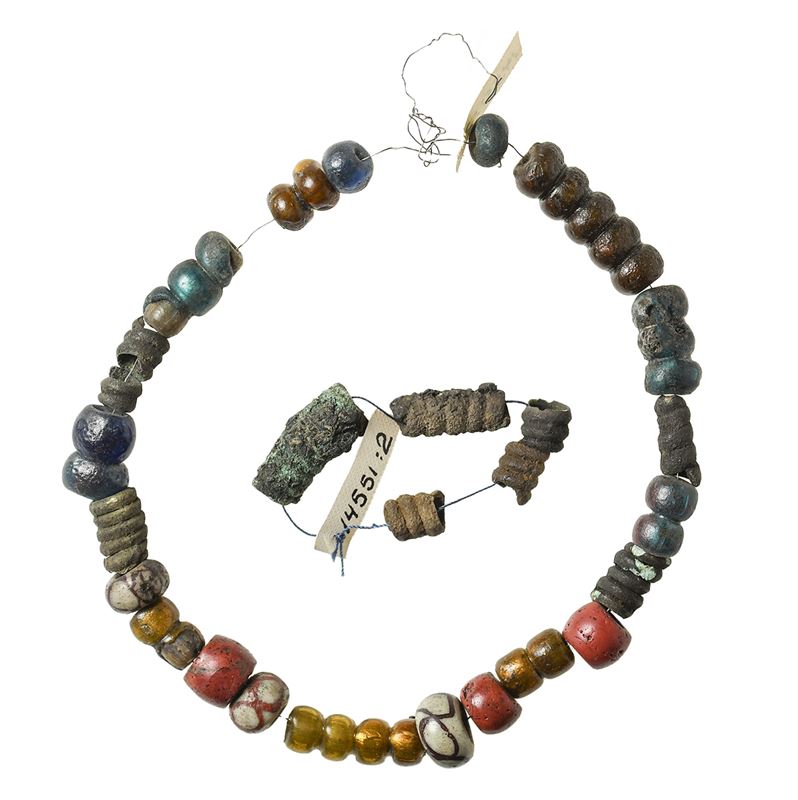
At Sylta near Köping, an extensive Viking-Age cemetery spanning the 9th to 12th centuries revealed around 30 cremation graves where horses were burned alongside their owners. The animal gear — bits, pendants, and strings of bells — survived in remarkable condition.
“These are among the richest and best-preserved horse equipments we’ve ever found,” Larsson noted. “They appear in both men’s and women’s graves, suggesting that the decorated tack may have functioned as a local emblem of status — even a kind of ‘dress’ for the horse.”
The site also marks one of the last pagan burial grounds before Christian traditions took hold, offering a vivid glimpse of a society in spiritual transition.
A Book of Memory and Discovery
The results of these years of excavation are now gathered in a newly released volume,
Människor, möten och minnen – Arkeologi längs E18 i Västmanland (“People, Encounters and Memories – Archaeology Along the E18 in Västmanland”), funded by the Swedish Transport Administration (Trafikverket).
The richly illustrated book, available for free download or at Västmanlands läns museum and Köpings stadsmuseum, presents a sweeping portrait of Västmanland’s ancient past — from the flicker of Viking pyres to the clang of medieval forges.
Cover Image: Archaeologists from Arkeologerna during excavations at Viby/Norrtuna, where two Viking swords were found standing upright in their graves. Credit: Arkeologerna