
Archaeologists working in southern Spain have uncovered a rare and striking piece of physical evidence from one of antiquity’s most violent conflicts. A small elephant bone found in Córdoba has been securely linked to the Second Punic War, offering what researchers describe as a unique example of direct archaeological proof for the presence of war elephants in western Europe.
The discovery was made at the Colina de los Quemados site, identified with the Iberian settlement that preceded Roman Corduba. The bone was unearthed during a rescue excavation carried out in 2020, ahead of construction work linked to the expansion of Córdoba’s Provincial Hospital.
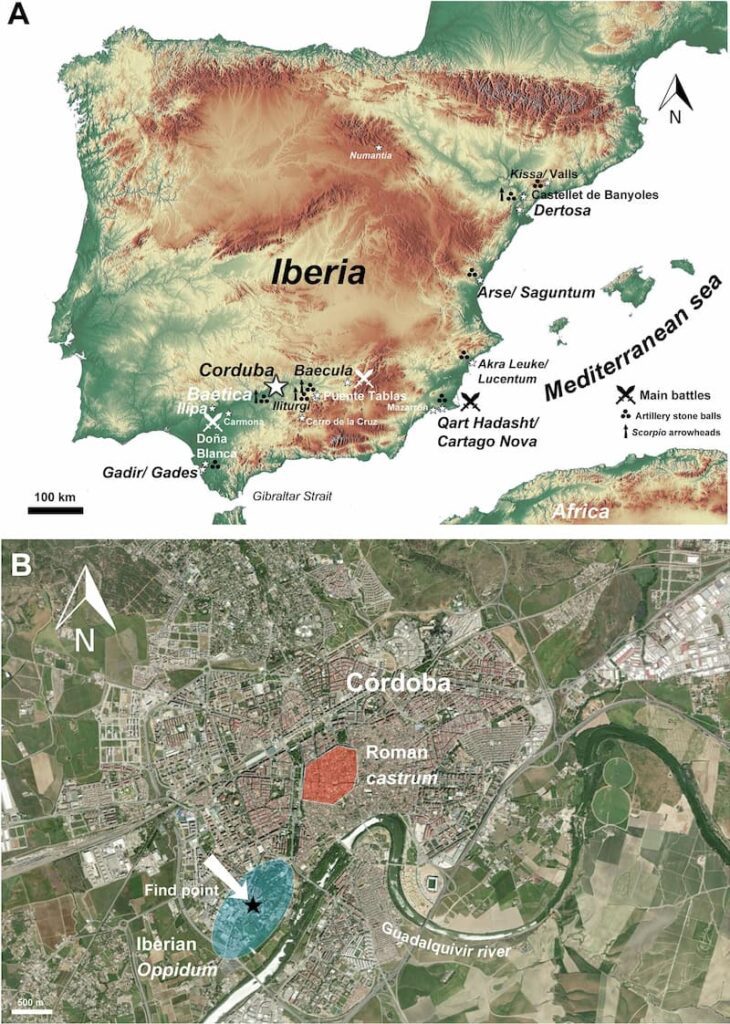
B: Satellite view of modern Córdoba highlighting the Iberian oppidum where the discovery was made and the location of the later Roman foundation.
Credit: R. M. Martínez Sánchez et al., 2026.
An Unusual Bone Raises Questions
Buried beneath the collapse of a mudbrick wall dating to the late Iron Age, archaeologists encountered a bone fragment measuring roughly 10 centimeters. Its size and shape did not match any known terrestrial animal native to ancient Iberia, immediately raising questions among the excavation team.
Detailed anatomical comparisons conducted with reference collections at the University of Valladolid and Leiden University in the Netherlands led to a clear identification. The fragment proved to be the third carpal bone (os magnum) from the front right leg of an elephant. Comparative analysis ruled out fossil origins and confirmed the bone belonged to an animal used in historical times.
A Battlefield Context
What makes the find especially compelling is the archaeological context in which it appeared. Alongside the elephant bone, researchers documented a concentration of unmistakable military material. Twelve carefully shaped stone spheres—each around 11 centimeters in diameter and weighing approximately 1.4 kilograms—were identified as ammunition for torsion-powered catapults known as lithoboloi or petroboloi.
The assemblage also included a heavy arrowhead associated with a scorpio, a Roman and Punic siege crossbow, as well as a Carthaginian bronze coin of the so-called “Helmet” type. Minted in Carthage Nova (modern Cartagena) between 237 and 206 BC, the coin provides a precise chronological anchor for the episode.
Taken together, these elements leave little doubt that the site witnessed a military action rather than routine domestic or industrial activity.
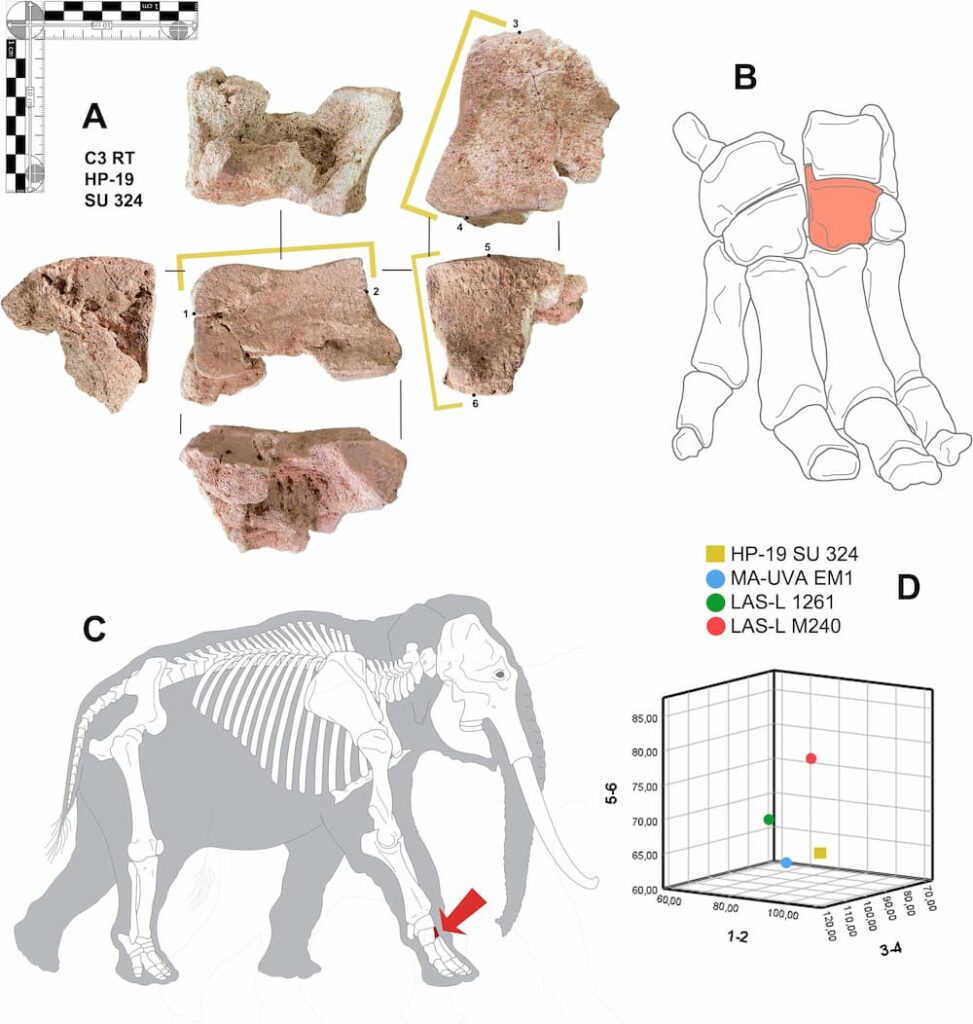
B: Anatomical position of the bone within the right forelimb (manus) of an elephant.
C: Placement of the bone within the overall skeletal structure.
D: Three-dimensional scatter plot comparing measurements of the archaeological specimen with reference samples: two female Asian elephants (Valladolid Anatomical Museum and Leiden Archaeozoology Laboratory) and one steppe mammoth (Leiden Archaeozoology Laboratory).
Credit: R. M. Martínez Sánchez et al., 2026.
Radiocarbon Dating Confirms the Period
Although poor collagen preservation prevented conventional radiocarbon dating, scientists successfully analyzed the bone’s mineral fraction. The resulting date range falls between the late fourth and third centuries BC, fully consistent with the timeline of the Second Punic War.
Crucially, the analysis excluded both a modern intrusion and a Pleistocene fossil origin, reinforcing the interpretation that the bone belongs to a historical war elephant active during the Carthaginian–Roman struggle for control of the western Mediterranean
Why Was an Elephant in Iberia?
Ancient historians such as Polybius and Livy record that Carthaginian commanders—including Hannibal Barca, Hasdrubal, and Hamilcar—maintained dozens, and possibly hundreds, of elephants in Iberia at the outbreak of the war. These animals served both as battlefield weapons and psychological instruments of intimidation.
While no major battle at Corduba is mentioned in surviving written sources, archaeologists argue that this absence is not surprising. Minor engagements, skirmishes, and sieges often went unrecorded, particularly when they occurred away from the main theaters of war.
The Córdoba evidence fits a growing archaeological pattern. Similar artillery projectiles have been documented at other Iberian sites attacked during the same period, including Kissa, Iliturgi, and Puente Tablas, pointing to widespread military operations across the peninsula.
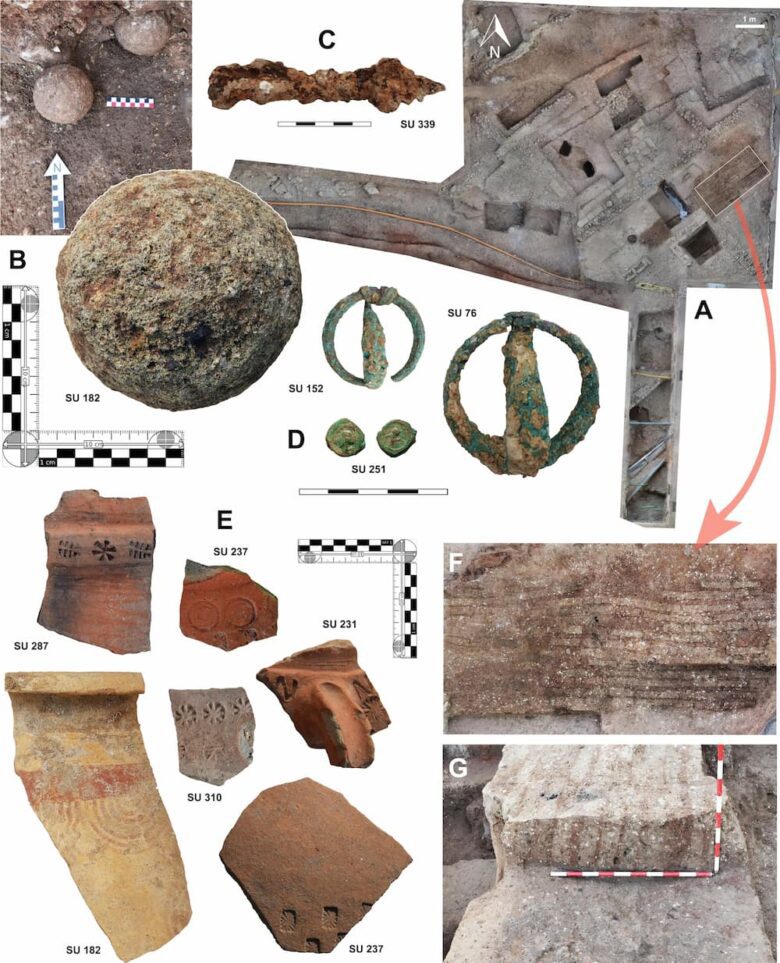
C: Projectile point from a scorpio siege weapon.
D: Hispanic annular fibulae and a bronze coin (quadrans, AE14, Hispano-Carthaginian imitations).
E: Detail of painted and stamped Late Iberian pottery.
Credit: R. M. Martínez Sánchez et al., 2026.
One Bone, Many Questions
The presence of a single isolated bone rather than a full skeleton remains puzzling. Researchers suggest several explanations. The elephant may have died at or near the site, with most of its remains later destroyed or dispersed. Alternatively, the bone could have been kept as a curiosity or informal trophy, although its lack of decorative or practical value makes this less likely.
What is certain is that the bone’s position beneath a collapsed wall shielded it from later disturbance, allowing it to survive where other remains did not.
A Rare Window into Ancient Warfare
Elephant bones are extraordinarily rare in European archaeological contexts, especially outside of ivory artifacts. This modest fragment therefore carries disproportionate significance. It represents tangible proof—beyond texts, coins, and artistic depictions—that war elephants were physically present in western Europe during Classical antiquity.
According to the study’s authors, while the Córdoba bone does not belong to one of the legendary elephants that crossed the Alps, it may nevertheless constitute one of the earliest surviving relics of the animals deployed in the Punic Wars.
More than 2,200 years after it was buried, this silent remnant now offers a direct and unsettling glimpse into the brutality of ancient warfare and the violent transformation of Iberia from an indigenous world into a Roman province.
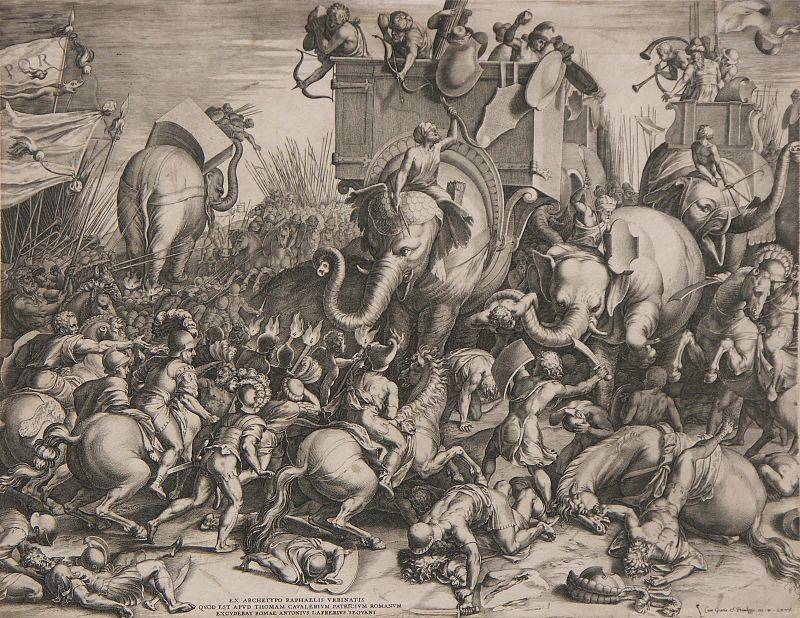
Cover Image: The Battle of Zama, depicted in a 1567 engraving by Cornelis Cort.
Rafael M. Martínez Sánchez, Agustín López Jiménez, et al., The elephant in the oppidum. Preliminary analysis of a carpal bone from a Punic context at the archaeological site of Colina de los Quemados (Córdoba, Spain). Journal of Archaeological Science: Reports, Volume 69, February 2026, 105577. doi.org/10.1016/j.jasrep.2026.105577