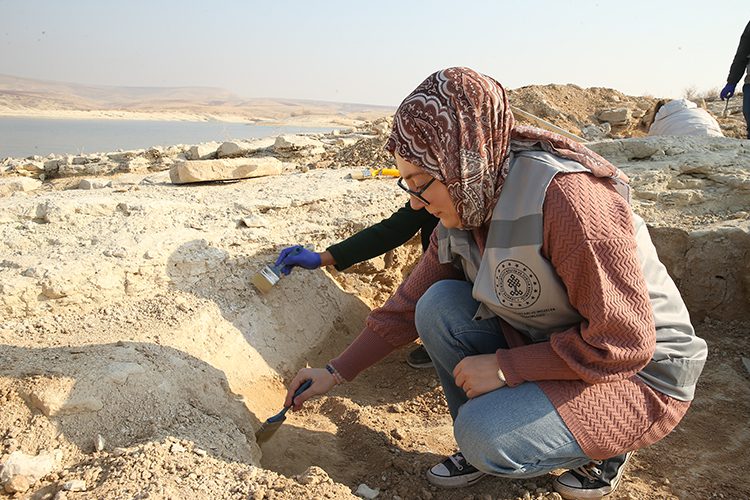
When the waters of the Upper Euphrates pulled back, the stones left behind told a story archaeologists know well—but not from this place.
Along the exposed shoreline of the Atatürk Dam reservoir in southeastern Türkiye, researchers have identified T-shaped stone elements—a form inseparable from the ritual landscape of Göbeklitepe. Their appearance here, hundreds of kilometers beyond the site that made them famous, is raising new questions about how wide the Taş Tepeler world may once have been.
Standing at the site, Prof. Dr. Sabahattin Ezer of Adıyaman University did not hesitate to frame the discovery in broader terms.
“This area immediately excited us,” Ezer said. “What we are seeing is not something isolated. These stones belong to the same cultural world that we associate with Göbeklitepe. Today, we describe that world as the Taş Tepeler tradition—and the evidence tells us it reached farther than we thought.”
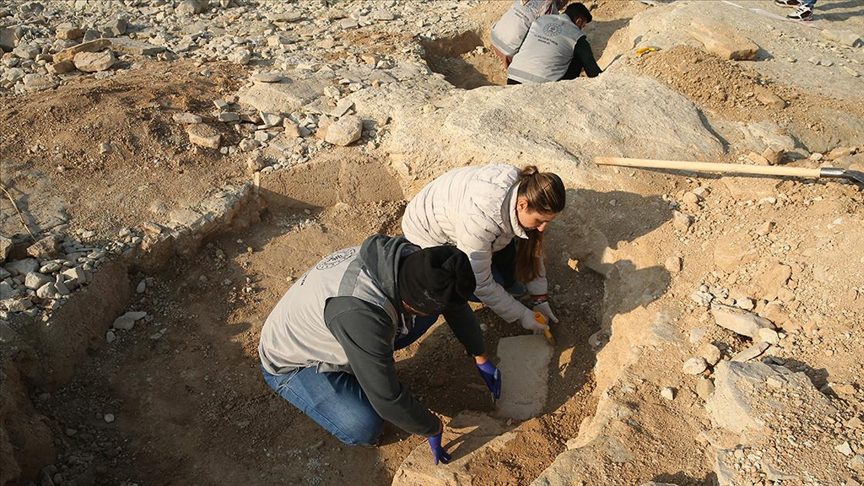
The newly identified remains lie near Kızılöz village in the Samsat district, a stretch of the Upper Euphrates rarely discussed in conversations about early monumental architecture. Yet the chronology is unmistakable. Ezer dates the stones to roughly 11,000 years ago, placing them firmly within the Pre-Pottery Neolithic.
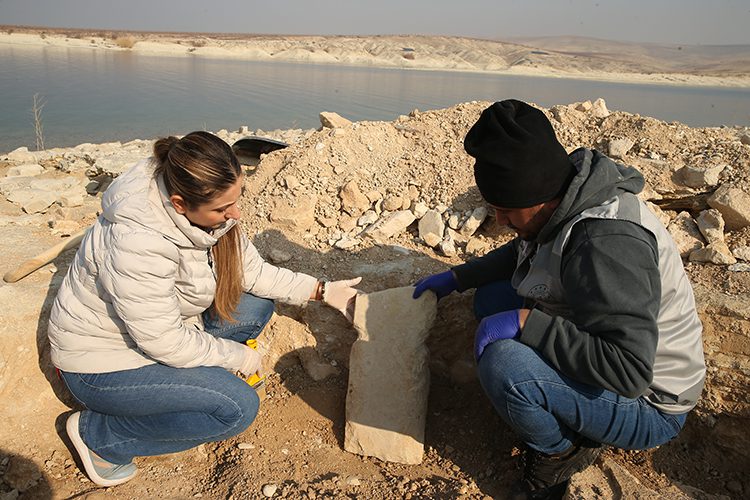
What has been exposed so far is modest but telling. Two small architectural units have been identified, including shallow, circular features bordered by stone slabs. Set among them is a small T-shaped pillar, a design choice that closely echoes the layout seen at sites like Sayburç and other Taş Tepeler localities around Şanlıurfa.
“Even at this early stage, these structures give us clear signals,” Ezer explained. “The architectural logic is the same. That matters.”
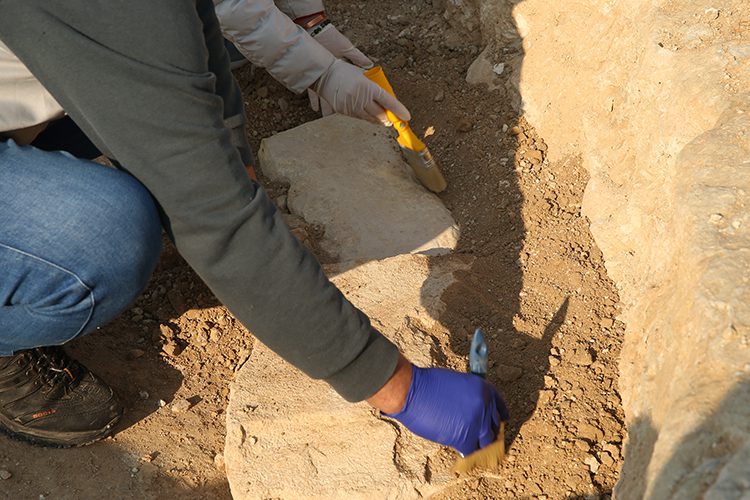
Museum officials stress that the discovery owes much to chance. Mustafa Çelik, Deputy Director of the Adıyaman Museum, described how the stones surfaced only after years of fluctuation in the dam’s water level.
“Originally, this area lay two to three meters beneath the soil,” Çelik said. “As the water rose and fell, the upper layers were stripped away. That is when the T-shaped form became visible—directly on the surface.”
For now, the focus is on protection rather than excavation.
“Our priority is rescue,” Çelik added. “Once the water returns, these features could disappear again. We are racing against time.”
The recovered stone elements have been transferred to the Perre Ancient Citywhere they are now on public display while researchers assess the site’s future.
Taken together, the finds add to a growing body of evidence that the monuments of Göbeklitepe were not anomalies. Instead, they may represent one expression of a shared ritual and architectural language spread across the Upper Euphrates basin.
As the map of Taş Tepeler continues to fill in, the question is no longer whether Göbeklitepe stood alone—but how many such places still wait beneath the soil, or the water, to be revealed.