
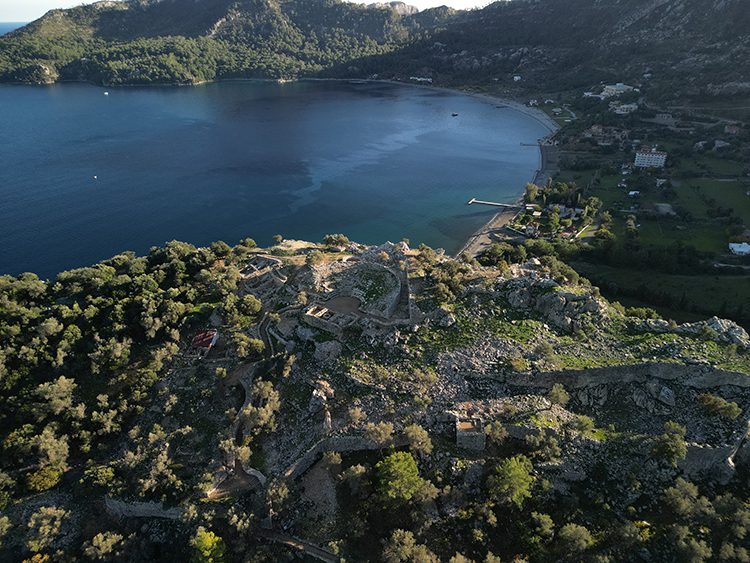
Archaeologists working at the ancient city of Amos, near modern-day Marmaris on Türkiye’s southwestern coast, have uncovered a rare silver pendant decorated with symbols associated with the Assyrian goddess Ishtar. Although modest in size, the object offers significant insight into the city’s long-distance cultural and commercial connections with the ancient Near East.
A symbolic object marked by lion and eight-pointed star
The pendant was discovered during the 2025 excavation season at Amos Ancient City, located on Asarcık Hill overlooking the Gulf of Gökova. Crafted in silver, the ornament features a lion figure alongside an eight-pointed star, a combination widely recognized as emblematic of Ishtar within Assyrian religious iconography.

Archaeologists emphasize that this pairing is unlikely to be coincidental. Rather than a purely decorative item, the pendant is interpreted as an object carrying religious or symbolic meaning, reflecting beliefs that originated far beyond the Aegean world.
According to excavation director Mehmet Gürbüzer of Muğla Sıtkı Koçman University, the iconography is particularly telling.
“The lion and the eight-pointed star are well-known attributes of the goddess Ishtar,” Gürbüzer explains, noting that their presence together allows for a confident cultural interpretation of the find.

From Inanna to Ishtar: Near Eastern beliefs reaching Anatolia
Ishtar was known in earlier Mesopotamian traditions as Inanna, a powerful deity associated with fertility, love, warfare, and celestial authority. Over time, her cult spread widely across the Near East, with the eight-pointed star becoming one of her most enduring visual symbols.

The appearance of such imagery at Amos demonstrates how religious ideas and symbolic systems traveled alongside merchants, soldiers, and diplomatic contacts, reaching coastal Anatolia through networks of trade and exchange.
Amos and the wider ancient Mediterranean world
Archaeological and historical evidence suggests that from the 7th century BCE onward, elements of Near Eastern culture increasingly entered the Mediterranean through both commercial and military interactions. Amos, functioning as a strategically positioned harbor city, appears to have been integrated into these broader networks.
Dr. Gürbüzer notes that the new pendant reinforces the view of Amos as more than a small regional settlement. Instead, it reflects a community that was economically active, culturally receptive, and well connected to the wider ancient world. The find provides a tangible reminder that globalized interaction is not a modern phenomenon, but one deeply rooted in antiquity.
Ongoing excavations and research history
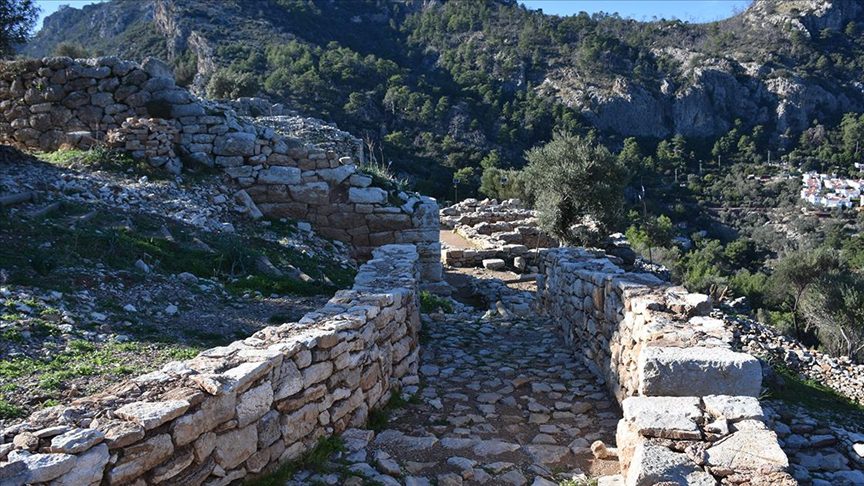
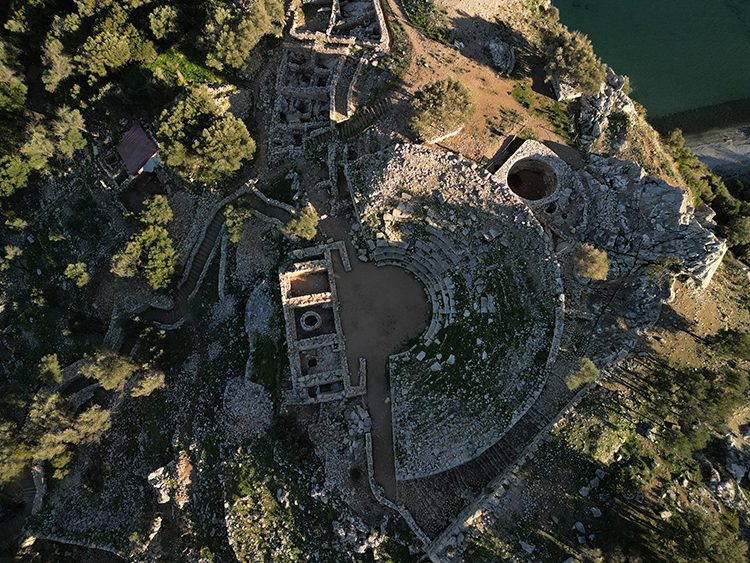
During the 2025 season, excavation work at Amos has continued in several key areas. Archaeologists have carried out landscaping and documentation in the orchestra section of the ancient theater, conducted investigations in sectors of civilian housing, and cleared vegetation and debris around the Temple of Apollo Samnaios, improving the visibility of architectural remains.
The site itself has been known to scholarship since 1948, when initial excavations were conducted by George E. Bean. His work brought Amos to wider academic attention after the discovery of inscriptions related to land-lease contracts, highlighting the city’s organized economic structure.