
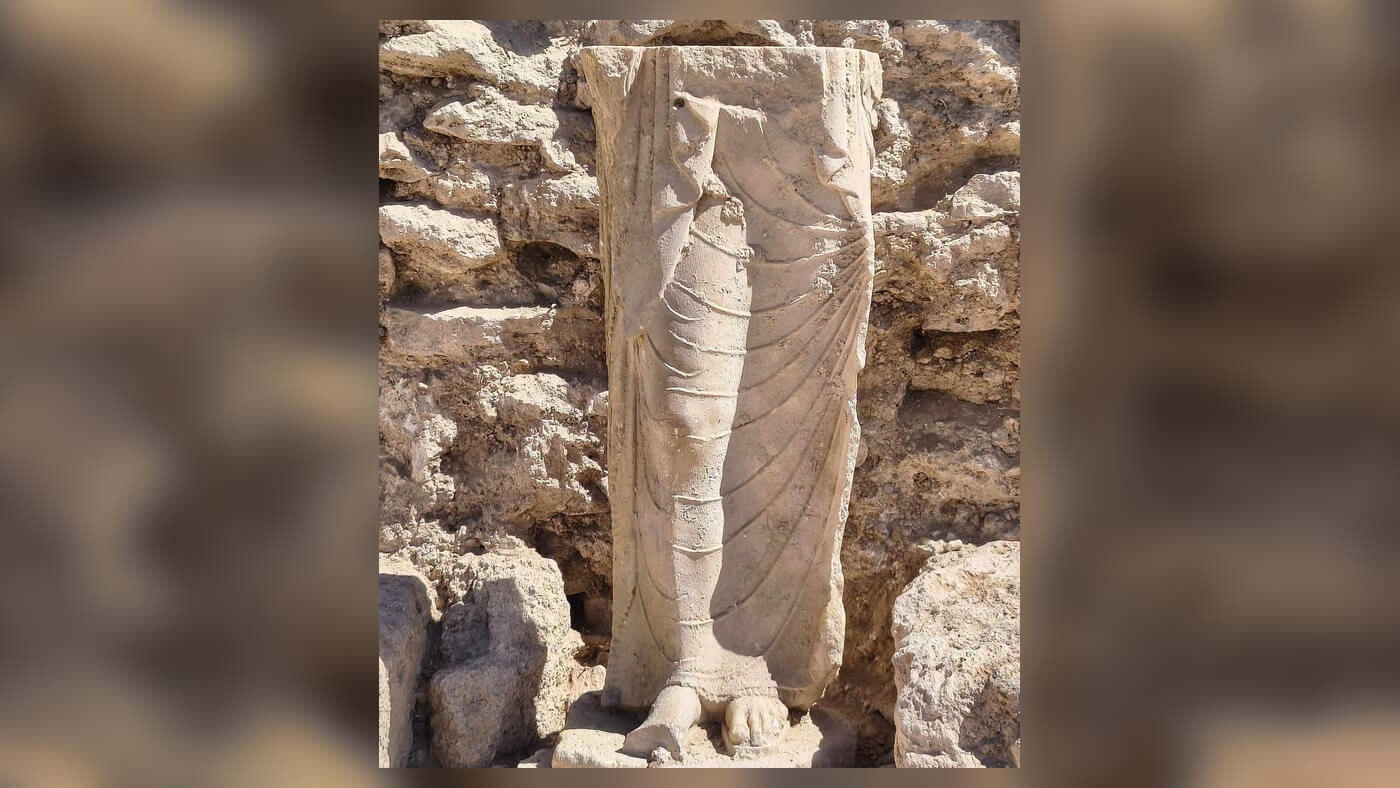
A female marble statue found at Mozia in the summer of 2025 has given Sicily’s famous marble Youth an unexpected companion 46 years after his discovery. Yet the newly named “Young Woman of Mozia” emerged not from a sanctuary or grand public building, but from the working space of a large Punic pottery complex.
The University of Palermo’s archaeological mission uncovered the sculpture on July 8 in Area K, also known as Mozia’s Ceramic Quarter. Found inside a clay-processing basin, the fragment offers a striking glimpse of the cultural connections between the Greek and Phoenician-Punic worlds in ancient Sicily.
A marble woman in a pottery workshop
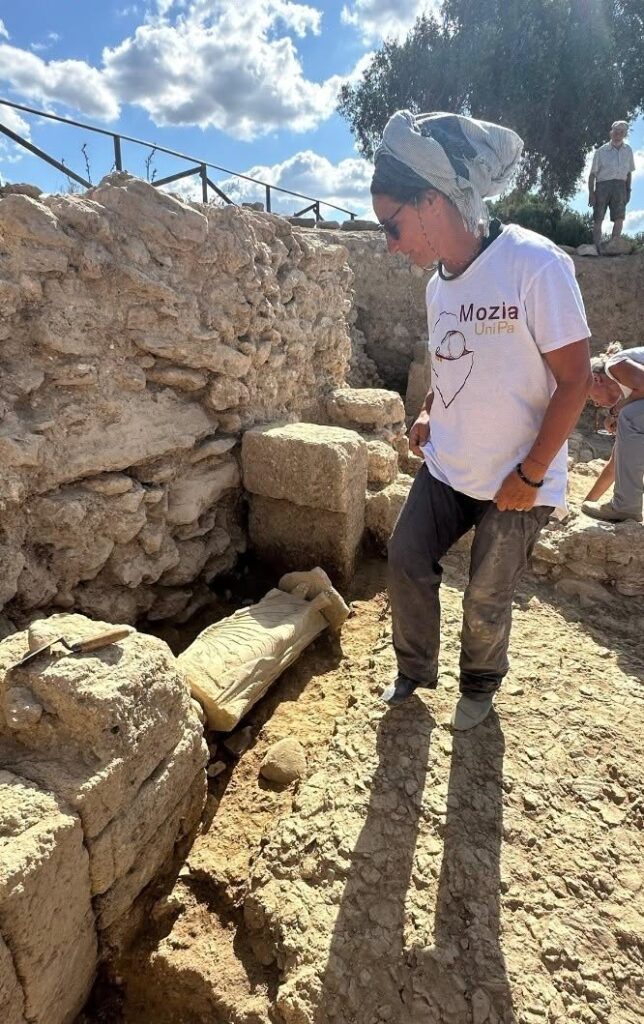
The surviving statue measures approximately 72 centimeters high, including its base. Its head and upper torso are missing, but the lower body remains remarkably well preserved, with deeply carved folds giving movement to the figure’s long garments.
The woman appears to be walking and wears clothing shaped in the Greek tradition. Archaeologists date the sculpture to the late sixth or early fifth century BC, which could make it several decades older than the celebrated Youth of Mozia.
The statue was carved from marble and follows the artistic language of the late Archaic Greek world. Excavation director Paola Sconzo believes it was produced in two sections by a Greek craftsman, perhaps an itinerant sculptor or one working in western Sicily, and then assembled.
According to Sconzo, the surviving section was moved during the Syracusan assault on Mozia in 397 BC. It was carefully placed inside a workshop basin and covered with fresh clay, apparently in an attempt to protect it amid the attack.
This interpretation would explain why the preserved section survived without the deliberate disfigurement seen on some sculptures recovered elsewhere on the island. The missing upper body may have separated where the statue’s two original sections had been joined.
The setting makes the discovery particularly unusual. The figure was not found in a temple or elite residence but inside what Sconzo described as the largest Punic pottery workshop yet identified in the western Mediterranean.
The complex contained kilns, a potter’s wheel, wells and separate basins used for pure clay, sand and recycled ceramic material. Located near Mozia’s North Gate, it stood close to the defensive walls and directly in the path of the attack launched from the sea.
The famous Youth found 46 years earlier
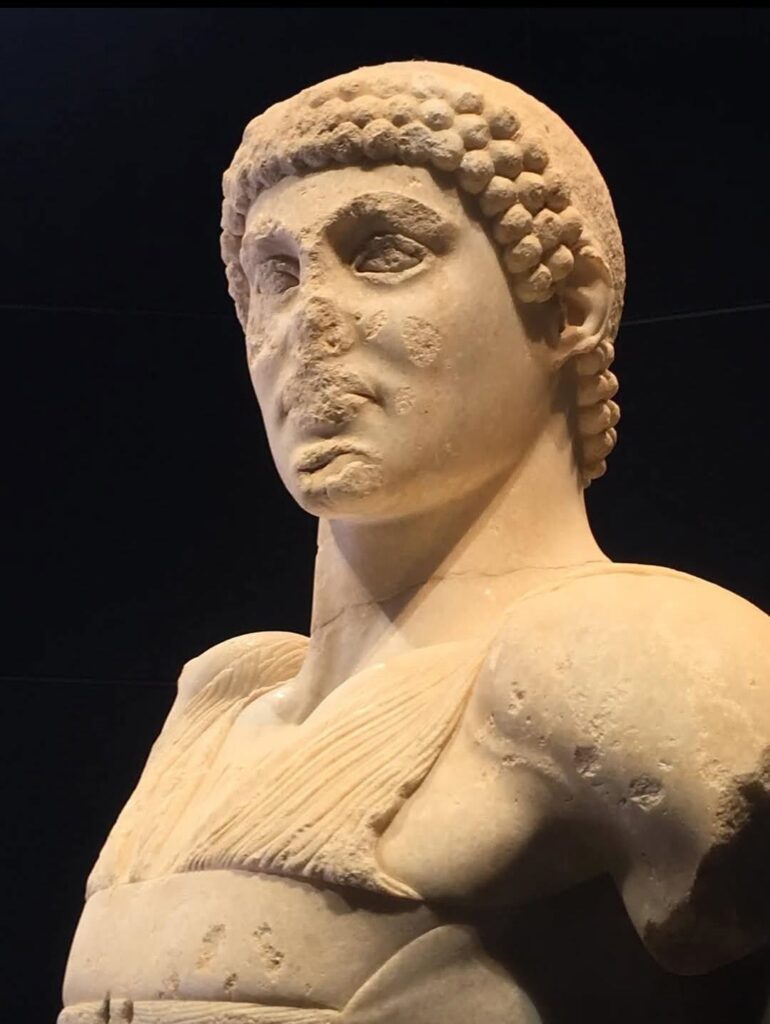
The female figure was soon nicknamed the “Young Woman of Mozia,” inevitably inviting comparison with the island’s most famous archaeological find. On October 26, 1979, excavators working in northeastern Mozia uncovered the marble statue now known as the Youth of Mozia.
Carved from Parian marble and standing 1.81 meters tall, the statue is generally dated to around 450–440 BC. Its identity remains one of the enduring mysteries of ancient Sicilian art.
The tightly draped garment and commanding pose have inspired several interpretations. Scholars have variously identified the figure as a victorious charioteer, a deity such as Melqart or Heracles, or a Punic official represented through the visual conventions of Greek sculpture.
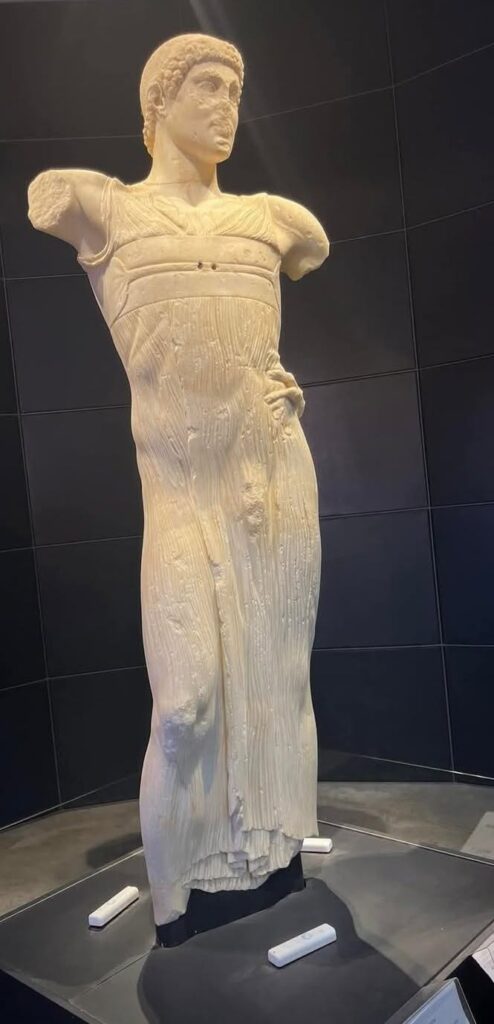
The Youth was recovered near the sanctuary of Cappiddazzu and the city’s defensive wall. Its head had separated from the body, its face was damaged, and its arms and feet were missing.
The statue lay among architectural blocks and debris in an artificial deposit connected with a destroyed sacred complex. Archaeologists have associated this context with the capture of Mozia by Dionysius I of Syracuse in 397 BC, although the figure’s original location and the circumstances of its burial remain debated.
Not a couple, but part of the same story
The names “Youth” and “Young Woman” make the two statues sound like an ancient pair, but no archaeological evidence shows that they originally stood together or represented connected figures. They were created at different dates and recovered from separate contexts.
Their real relationship lies in what they reveal about Mozia. Located on a small island in the lagoon near modern Marsala, the city was an important Phoenician and later Punic center with commercial and cultural connections extending across the Mediterranean.
The appearance of Greek-style marble sculpture in this setting does not turn Mozia into a Greek city. Instead, it shows how its inhabitants participated in a shared Mediterranean culture while maintaining a distinct Punic identity.
This is what makes the setting of the Young Woman particularly valuable. She was discovered within a functioning production area where Punic craftspeople prepared clay and manufactured pottery, bringing Greek sculptural traditions into the everyday industrial life of the city.
The fragment was presented at the Whitaker Museum on October 6, 2025. Museum officials announced that it would undergo conservation and full scientific documentation before receiving a permanent display connected to Mozia’s Ceramic Quarter.
Although the Young Woman and the Youth may never have met in antiquity, their discoveries 46 years apart now offer two complementary views of Mozia: one monumental and enigmatic, the other fragmentary but rooted in the working life of the Punic city.
Cover Image: The surviving lower section of the Young Woman of Mozia, a marble statue dated to the late sixth or early fifth century BC. Credit: Mozia Archaeological Mission, University of Palermo