
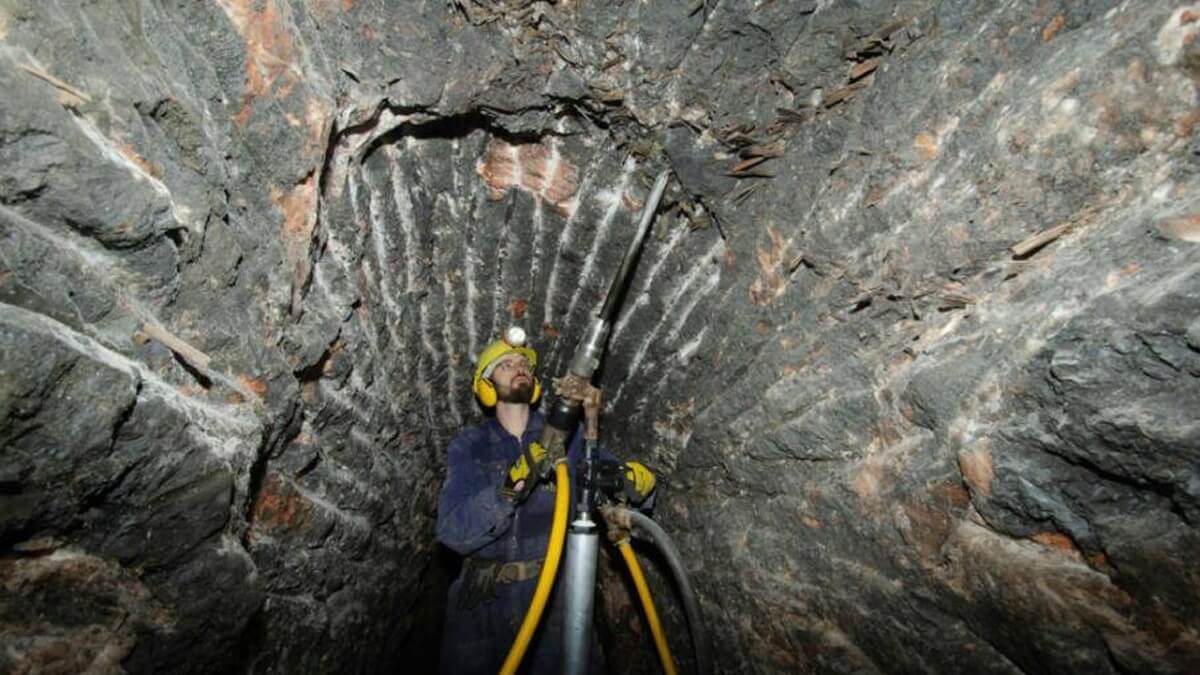
Exploratory drilling in Austria’s prehistoric Hallstatt salt mine has identified an extensive Iron Age mining complex made up of enormous chambers arranged beside and above one another. Their floors preserve tools, clothing, food remains and biological traces left by miners around 2,500 years ago, effectively turning the underground workings into an archive of prehistoric labor.
Archaeologists from the Natural History Museum Vienna have traced the newly identified workings for approximately 300 meters through the mountain. The chambers measure about 25 meters across and around 20 meters high, pointing to mining on a scale that required both careful organization and a close understanding of the mountain’s geology.
A hidden system of mining chambers
Much of Hallstatt’s prehistoric mine remains difficult to investigate. Archaeologists usually encounter its ancient workings only where later tunnels happen to intersect them, leaving large parts of the original mining landscape inaccessible.
Researchers began exploratory drilling in 2022 with a core-drilling machine supplied by Salinen Austria AG. Normally used for geological surveys, the equipment can penetrate hundreds of meters into the mountain and allows the team to examine areas that cannot be reached through existing passages.
The archaeologists initially suspected that the drilling might locate a single enormous cavity. Instead, the cores revealed several large chambers running parallel to one another, with additional spaces positioned above and below them.
Daniel Brandner, who leads the underground excavations for the Natural History Museum Vienna’s Department of Prehistory, said researchers had not previously encountered such an arrangement at Hallstatt. The structure indicates that Iron Age miners followed the richest rock-salt deposits, changing the position and shape of their workings as the geology demanded.
Only sections of the newly identified complex have so far been excavated. Much of its known extent has been reconstructed from the drilling results, meaning further investigation will be needed to establish its complete layout.
Nine meters of debris beneath the miners’ feet
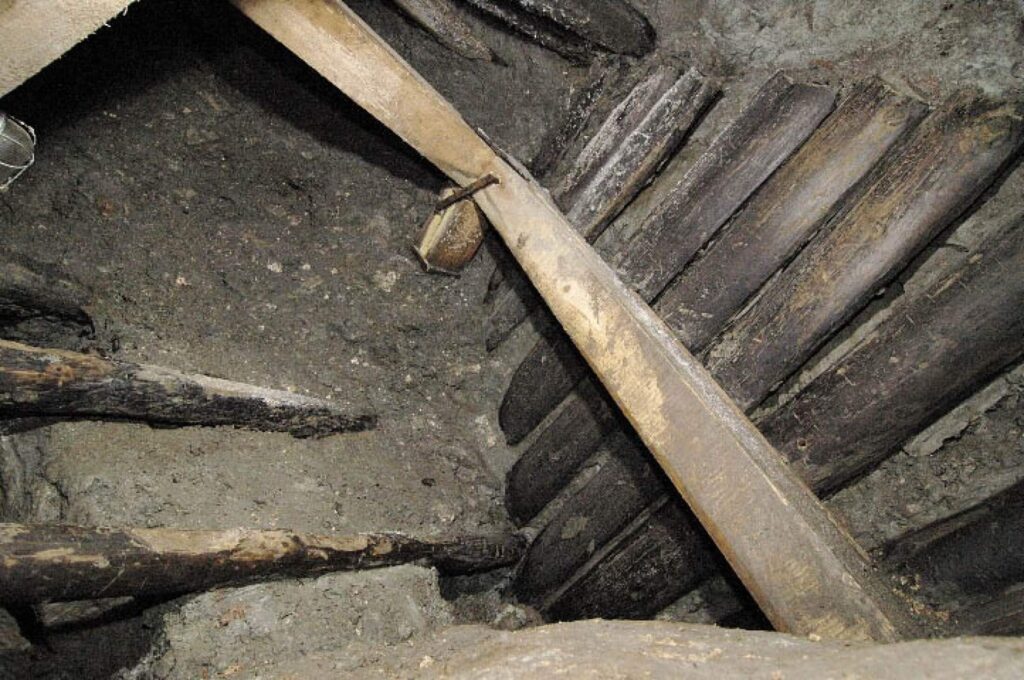
The chamber floors contain an equally important part of the story. In some areas, deposits created by prehistoric mining activity reach a depth of up to nine meters.
These layers include burnt pine splints used to illuminate the mine, damaged tools and fragments of clothing discarded or lost during work. Human excrement and food remains also survived, preserving unusually intimate evidence of the people who spent their working days beneath the mountain.
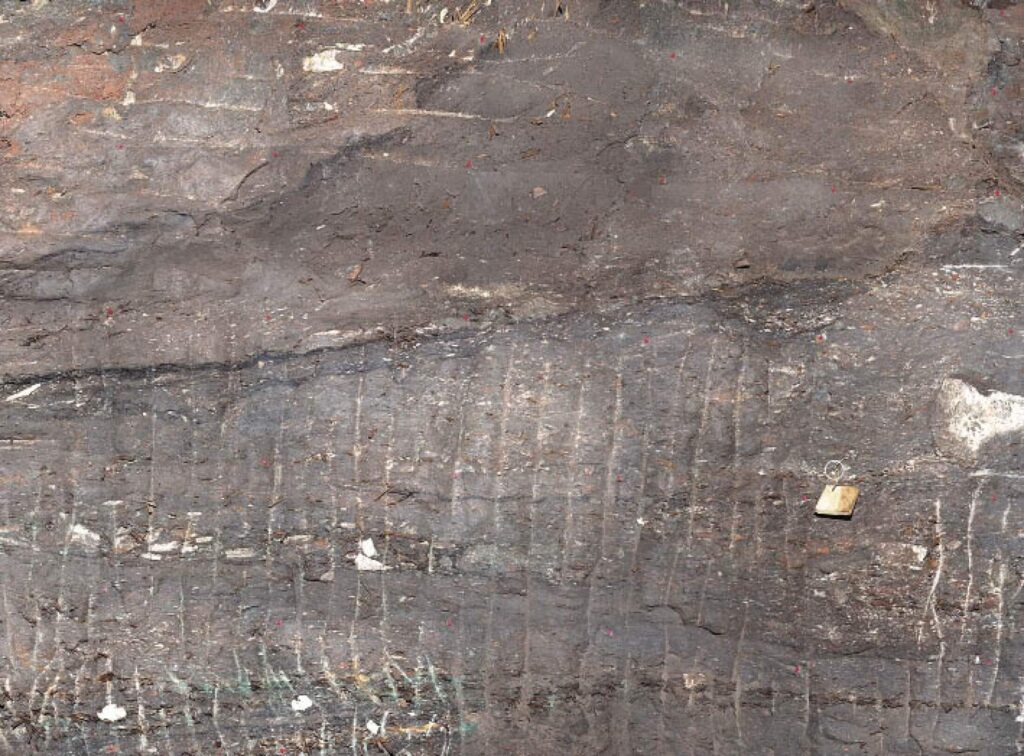
Salt created the conditions that made this survival possible. The dry, saline environment slowed biological decay, allowing textiles, wood and other organic materials that would normally disappear from an archaeological site to endure for millennia.
Researchers have identified wooden bowls containing traces of food as well as pieces of garments worn by the miners. The deposits may also retain human DNA and genetic material from consumed foods, offering an opportunity to examine diet, health and the identities of the workers alongside their equipment.
The former open spaces above the working floors are now filled with material that entered from the surface. Archaeologists think this infill may have resulted from a major landslide, one of several such events that repeatedly interrupted prehistoric salt production at Hallstatt.
Iron Age miners changed how salt was extracted
People were exploiting salt around Hallstatt thousands of years before the newly identified complex was created. By approximately 1200 BCE, mining had reached what researchers describe as an almost industrial scale, with estimated production of around 1.5 tonnes of salt per day.
The recently traced chambers belong to a later phase beginning in the sixth century BCE, which remains less thoroughly understood than the Bronze Age workings. Initial excavation is already revealing changes in the equipment and methods used below ground.
Archaeologists have observed different ways of attaching handles to mining tools. This detail is significant because earlier Hallstatt equipment was highly standardized and designed for particular stages of salt extraction.
Some of the newly recovered objects closely resemble finds from Dürrnberg near Hallein, another important prehistoric salt-producing center where organized mining also began during the sixth century BCE. The similarities may reflect contact between mining communities, shared technical knowledge or wider changes in Iron Age production.
Hallstatt’s longer mining history also includes the enigmatic “Man in the Salt,” a remarkably preserved miner’s body encountered in 1734. Its prehistoric age was not understood at the time, and the remains were buried in the local cemetery, preventing modern researchers from establishing a secure date with current scientific methods.
Recovering the people behind Hallstatt’s wealth
Hallstatt gave its name to one of Europe’s defining Iron Age archaeological cultures. While its richly furnished graves document status and long-distance connections, the mine preserves evidence of the workers whose labor helped create that prosperity.
The debris reveals how they illuminated the underground chambers, which tools they carried, what they wore and what they ate. Rather than presenting prehistoric mining only through monumental spaces and production estimates, it records the repeated actions of individuals working deep inside the salt mountain.
Researchers are also cooperating with Salinen Austria AG and Salzwelten GmbH to restore passages leading to earlier archaeological sites. Some of these access tunnels were constructed 200 to 300 years ago and must be stabilized before archaeological teams can safely return.
Reopening the passages will allow scientists to examine long-inaccessible deposits using modern analytical methods. Combined with excavation inside the newly traced chambers, that work could clarify how Iron Age mining technology changed and how Hallstatt’s underground workforce lived from day to day.
Cover Image: An archaeologist conducts exploratory drilling inside the Hallstatt salt mine, where surveys have identified an extensive Iron Age mining complex. Credit: NHM Wien / D. Brandner