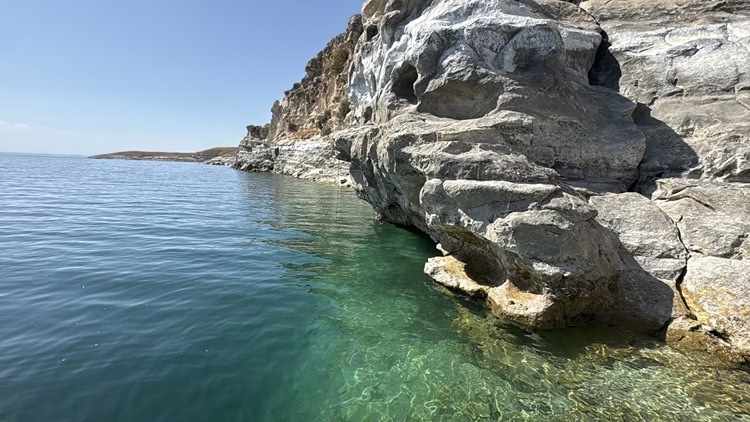
Underwater Paleolithic panel shows humans and animals carved into an 8-meter rock surface
Beneath the deep waters of Türkiye’s Atatürk Dam, archaeologists have rediscovered a series of Paleolithic rock engravings estimated to be at least 12,000 years old — an extraordinary survival from the dawn of symbolic human art in the Euphrates Basin.
The site, located near Kahta in Adıyaman Province, was first noticed eight years ago by local fishermen when drought temporarily lowered the dam’s water level. This year, a team from the Adıyaman Museum Directorate returned to the location, using underwater cameras to re-document the engravings that have since become partially encrusted with shells and sediment.
“It was difficult to capture clear images due to mussel shells covering the surface,” said Museum Director Mehmet Alkan. “We plan to clean, document, and eventually create a full-scale replica for the museum collection.”
Depicting a Lost World from the End of the Ice Age
Preliminary analyses suggest that the engravings belong to the late Paleolithic or Epipaleolithic period, roughly between 10,000 and 12,000 years ago — when the last Ice Age was drawing to a close and early hunter-gatherer groups flourished across Upper Mesopotamia.
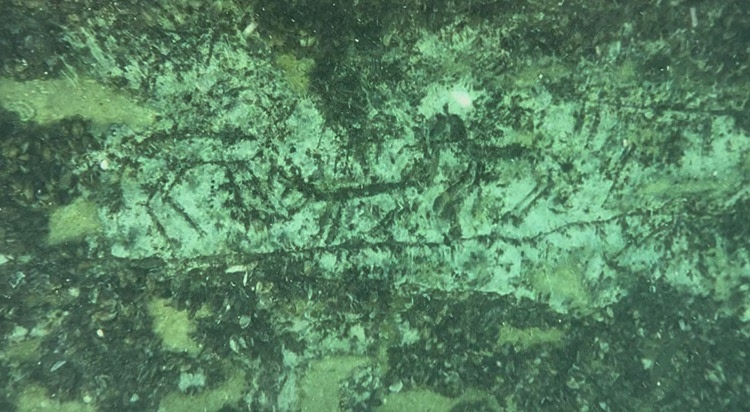
Carved using a scratching incision technique, the monumental panel — 8 meters long and about 70 centimeters high — portrays a dynamic hunting scene that brings to life the world of early humans. The composition features stylized figures of people, mountain goats, horses, wolves, foxes, and storks, arranged in rhythmic movement that evokes pursuit, cooperation, and ritual storytelling.
Archaeologists believe the panel served both a ritual and communicative purpose, possibly marking a sacred or communal space. The thematic and stylistic parallels with open-air carvings in Şanlıurfa, Mardin, and Batman point to a widespread symbolic tradition in the prehistoric cultures of the Euphrates and Tigris valleys.
Submerged Testimony of Humanity’s First Artists
Before the construction of the Atatürk Dam in the late 20th century, the Kahta area was part of a rugged, riverine landscape frequented by hunter-gatherers who relied on migratory herds and water sources. Today, that world lies underwater — but preserved in silence.
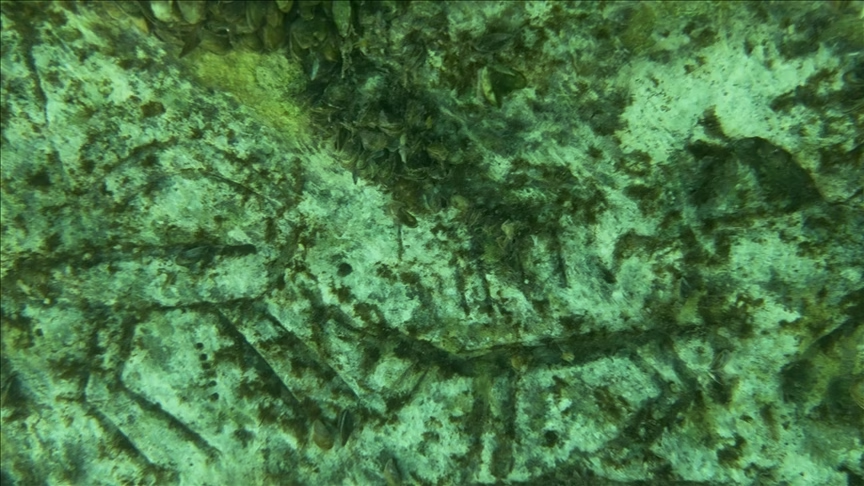
The discovery reminds archaeologists of how modern infrastructure has concealed entire layers of human history while inadvertently protecting them from erosion and vandalism. Experts now aim to employ 3D scanning, photogrammetry, and digital modeling to reconstruct the engraved panel in detail.
“These carvings are among the oldest visual records of human life in the Euphrates Basin,” Alkan added. “Through digital preservation, we can make them visible again — both for science and for the public imagination.”
A Link Between Art and Survival
The Adıyaman engravings reflect an age when art, memory, and survival were inseparable. Their rediscovery strengthens the argument that Anatolia was not just a crossroads of civilizations — it was one of the birthplaces of symbolic thought itself.
As the Euphrates flows quietly above them, these 12,000-year-old carvings stand as a submerged archive of humankind’s earliest attempts to narrate its world.