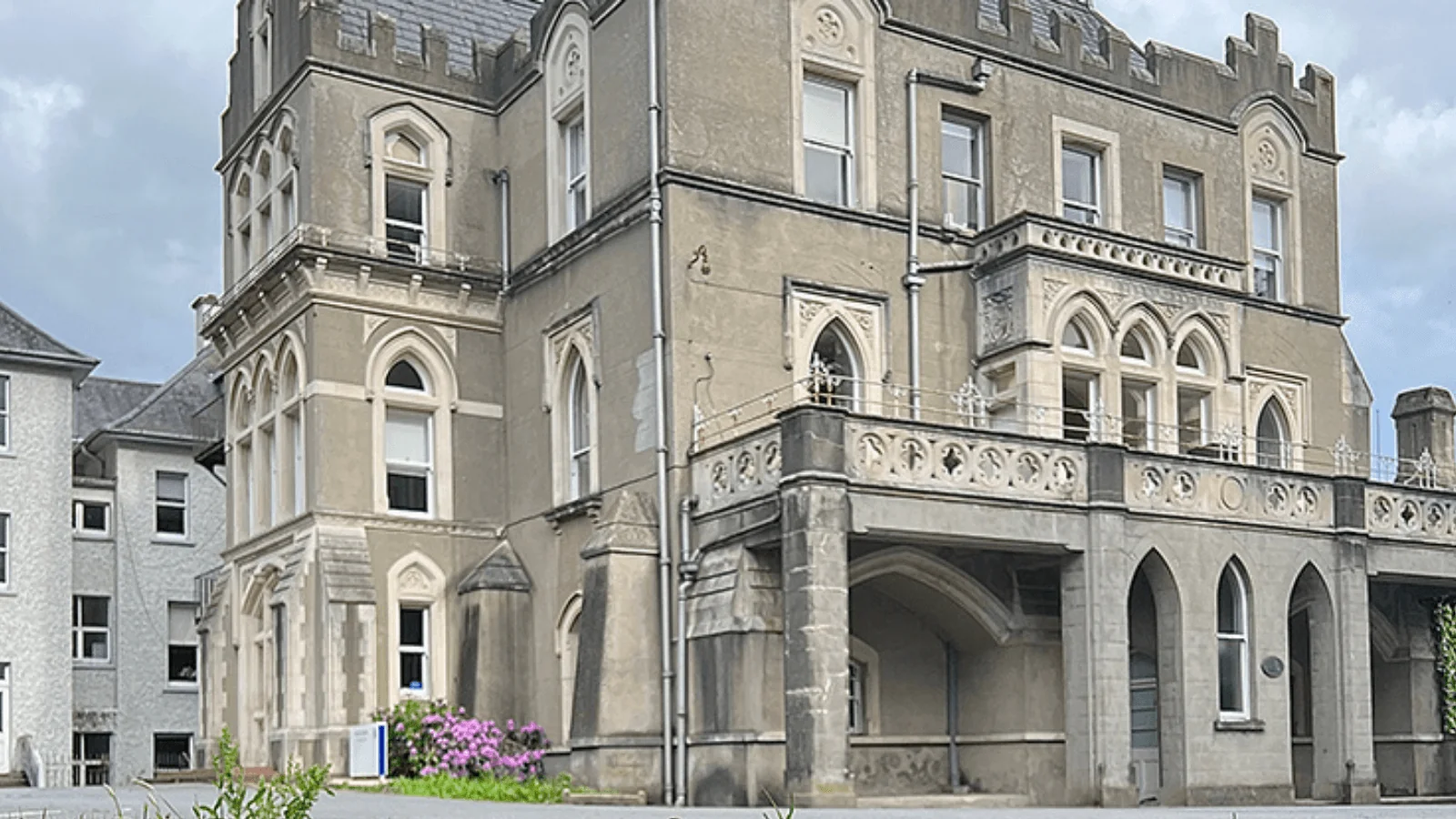
For generations, Roebuck Castle on the campus of University College Dublin appeared to be a largely Victorian building. Its medieval predecessor was believed to have vanished long ago, cleared away as successive owners transformed the property into a more comfortable residence.
The approximately 800-year-old castle, however, never entirely disappeared. New research published in Archaeology Ireland indicates that substantial sections of the early 13th-century Norman stronghold remain inside the present building, concealed beneath plaster and incorporated into walls passed by generations of students and staff.
The finding could make Roebuck Castle the oldest standing building on any university campus in Ireland. Yet the discovery did not begin with an excavation or an object emerging from the ground; it came from reading the building itself and comparing its surviving features with details recorded by an artist more than 250 years ago.
A Medieval Castle Behind Victorian Walls
Professor Tadhg O’Keeffe, a specialist in medieval architectural history at UCD’s School of Archaeology, identified the surviving fabric while investigating Roebuck Castle’s complicated structural history. Although its exterior appears Victorian, the arrangement of its walls preserves substantial remains of a much older building.
O’Keeffe found that medieval features remained visible beneath later plaster and alterations. Georgian and Victorian owners had not erased the castle as completely as historians assumed but had instead constructed around parts of it, retaining older walls while adapting the property to changing architectural tastes and domestic needs.
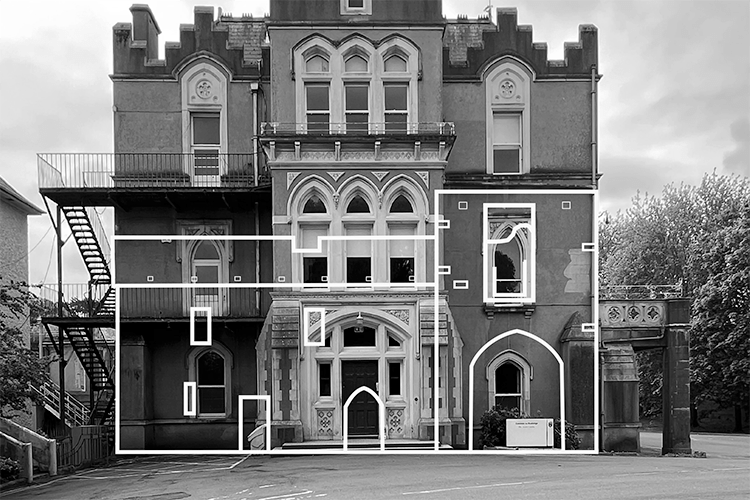
One of the clearest survivals may be hiding in full view behind the house. According to O’Keeffe, the present rear courtyard is actually the courtyard of the medieval castle, preserving a central element of the fortress within the later property.
Historical evidence suggests that the oldest part of Roebuck Castle was built in the early 13th century, within living memory of the Anglo-Norman invasion of Ireland in 1169. It stood beside an important approach road into medieval Dublin and was altered several times during the Middle Ages.
Its occupants included a medieval Lord High Chancellor of Ireland. According to tradition, the castle also hosted the deposed King James II in 1689 after he had lost the English and Irish thrones.
A Watercolor Preserved the Missing Clues
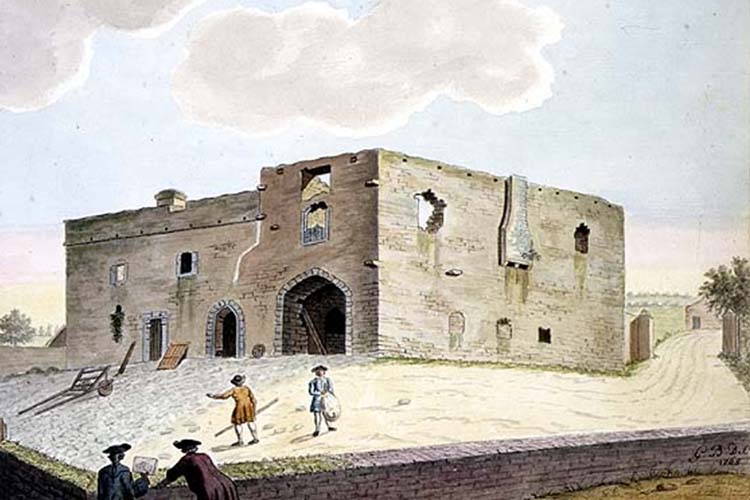
By the 18th century, Roebuck Castle had fallen into ruin. Like many medieval fortifications across south Dublin, it appeared destined either to collapse or to be dismantled so its stone could be reused in newer and more comfortable residences.
Its condition was recorded around 1765 by Gabriel Beranger, a Dutch-born artist of Huguenot descent who documented numerous Irish antiquities. His images of Roebuck captured not only the general form of the ruined castle but also small architectural details that later proved crucial to understanding its history.
O’Keeffe compared Beranger’s depictions with the present building and found that surviving walls corresponded with parts of the castle shown in the artwork. Features hidden beneath later finishes could therefore be recognized as elements of the medieval stronghold.
According to O’Keeffe, Beranger recorded more than the castle’s general appearance. Small architectural details in the artist’s work provided important clues for reconstructing the building’s structural history.
The finding does not mean that the complete early castle survives intact beneath a Victorian shell. Roebuck underwent several medieval alterations before Georgian and Victorian rebuilding changed its appearance again, creating a layered structure in which sections of an approximately 800-year-old fortress were absorbed into later architecture.
That also makes this an unusual type of archaeological discovery. No buried castle was uncovered and no forgotten ruin suddenly emerged; instead, a supposedly lost building was reidentified through architectural analysis, historical evidence and an 18th-century artist’s careful observations.
Ireland’s Oldest University Building
The research suggests that Roebuck Castle could now be recognized as the oldest standing building on an Irish university campus. Further archaeological investigation will be required to establish a more precise date for its earliest surviving sections.
Its survival is especially valuable because so little remains of the medieval castle network that once surrounded Dublin. Many of those buildings were demolished during the 17th century, while others were stripped of reusable masonry or incorporated so thoroughly into later properties that their histories became difficult to reconstruct.
Roebuck offers a rare opportunity to examine how one of these fortresses changed over several centuries. Its walls record the transformation of a Norman stronghold into a ruined castle, then a Georgian property and finally the Victorian building visible on the UCD campus today.
The discovery also shows why familiar historic buildings can still produce surprises. Medieval architecture does not always survive as an obvious tower or picturesque ruin; sometimes it remains beneath plaster, enclosed within later rooms and mistaken for an ordinary part of a much younger structure.
O’Keeffe noted that the disappearance of south Dublin’s medieval castles has left significant gaps in the region’s architectural record. At Roebuck, part of that record has now been restored: the castle was never truly gone; it had simply become almost impossible to see.
Cover Image: Present-day Roebuck Castle on the University College Dublin campus. Medieval walls dating to the early 13th century survive within the largely Victorian building. Credit: University College Dublin