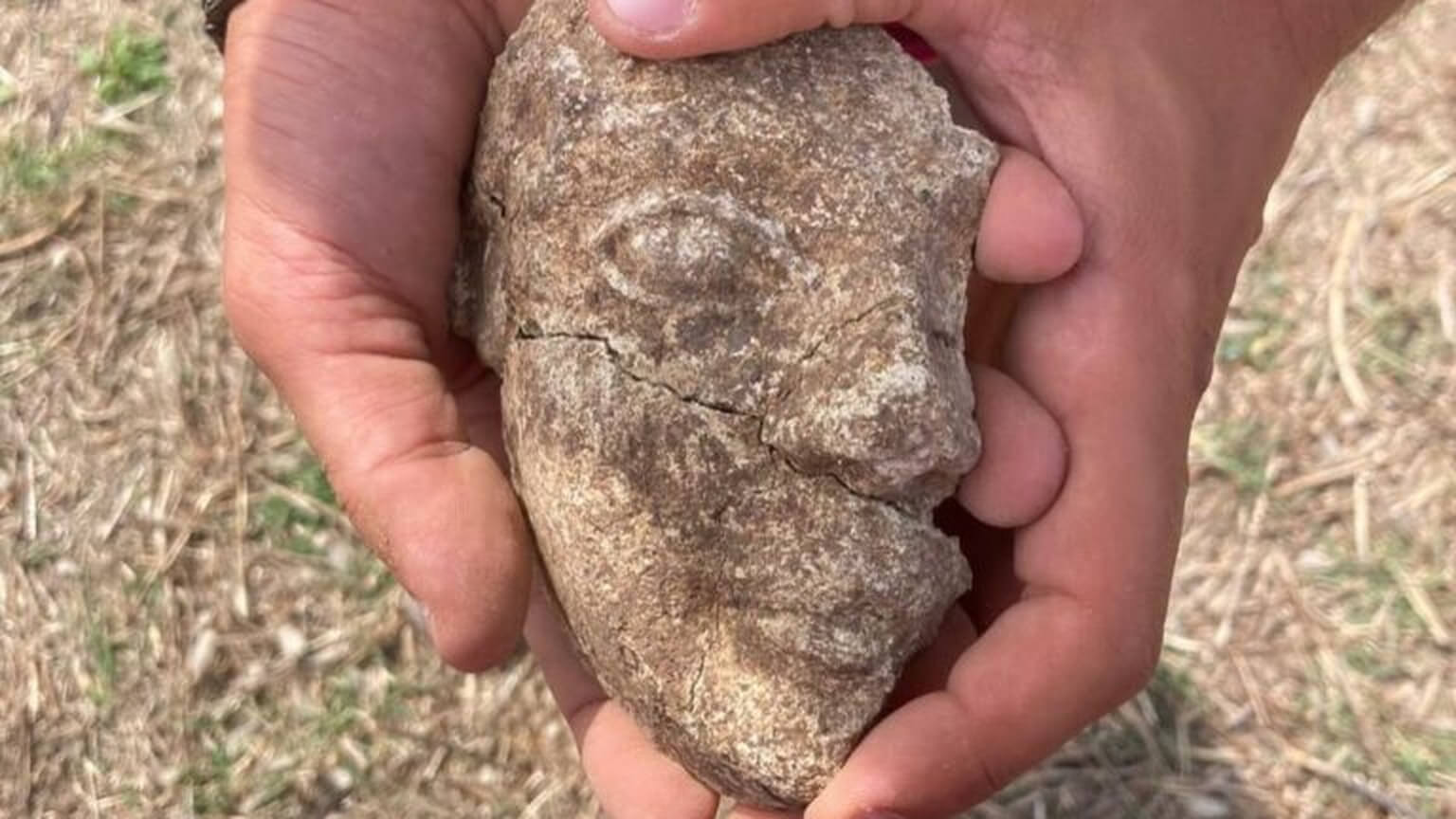
A terracotta fragment depicting the face of the Etruscan goddess Uni has been unearthed at Pyrgi, an ancient sanctuary on Italy’s Tyrrhenian coast. The discovery was made in the area of Temple B, a sacred building dedicated to the same goddess more than 2,500 years ago.
Archaeologists from Sapienza University of Rome recovered the fragment during their 2026 excavation campaign. Its significance lies not only in the image it preserves but also in its location: the temple’s dedication to Uni is recorded on three gold tablets discovered at Pyrgi in 1964, providing an exceptional link between the newly recovered object and the sanctuary’s ancient history.
The face of Uni returns to Pyrgi
Sapienza announced the discovery in a Facebook post, writing, “This morning, at Pyrgi, Uni returned to look at us.”
The object is part of an antefix, a decorative architectural element used to cover the exposed ends of roof tiles. Etruscan temples frequently featured elaborate terracotta decorations, including human faces, mythological figures and images of deities.
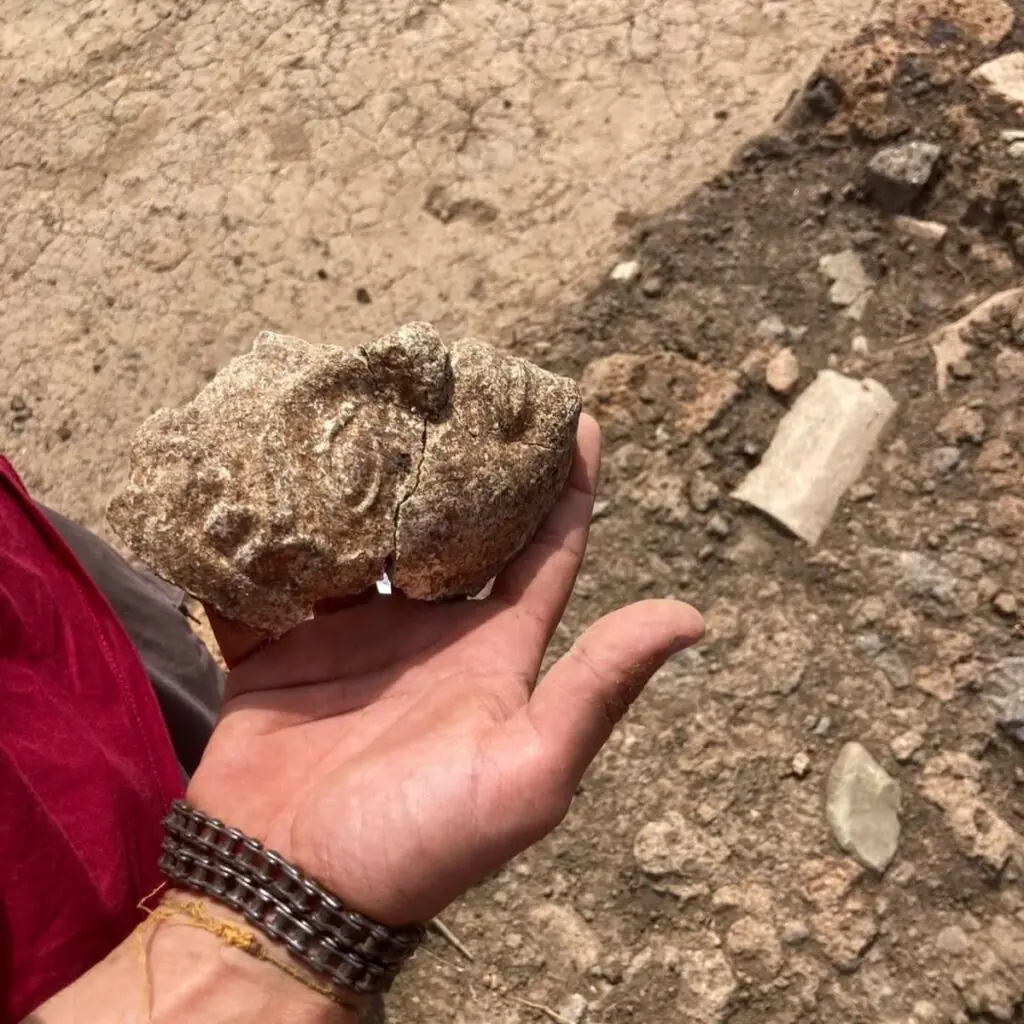
The newly discovered fragment preserves part of Uni’s face. Although it adds to the archaeological record of Temple B, it is not the first representation of the goddess recovered from the sanctuary. Earlier excavations have yielded similar architectural terracottas, including a previously documented antefix depicting Uni.
Uni was one of the principal goddesses of the Etruscan pantheon. Closely associated with the Roman Juno and Greek Hera, she was linked to marriage, political authority and the protection of communities.
At Pyrgi, her worship also reflected the sanctuary’s connections with the wider Mediterranean. The Etruscans identified Uni with the Phoenician goddess Astarte, a relationship documented in the inscriptions that once adorned her temple.
Gold tablets reveal who built the temple
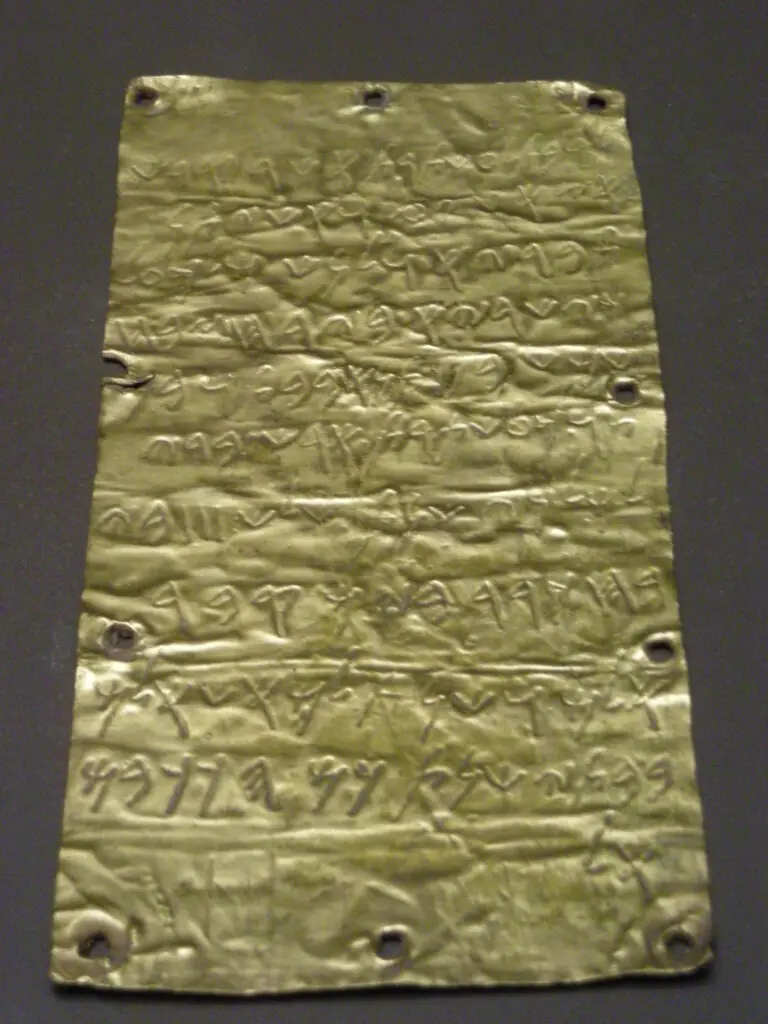
The connection between Uni and Temple B became clear on July 8, 1964, when archaeologists discovered three thin gold tablets buried near the building.
Two tablets carry inscriptions in Etruscan, while the third is written in Phoenician. Their texts record a dedication by Thefarie Velianas, the ruler of Caere, a powerful Etruscan city corresponding to modern Cerveteri.
The inscriptions identify the goddess as Uni in Etruscan and Astarte in Phoenician. According to the National Etruscan Museum of Villa Giulia, the tablets were originally attached to the doorway of Temple B, which dates to approximately 510 BC.
Today, the originals are preserved at Villa Giulia in Rome. They remain among the most important surviving documents from pre-Roman Italy, offering evidence of Etruscan religious practices, political authority and relations with the Phoenician world.
The texts have also helped scholars improve their understanding of the Etruscan language, although the Etruscan and Phoenician inscriptions are not identical translations.
An ancient sanctuary on Italy’s coast
Pyrgi stood near present-day Santa Severa, north of Rome, and served as one of the principal ports of Caere. Its coastal position connected the Etruscans with trading communities across the Mediterranean, particularly the Phoenicians and Greeks.
Archaeological excavations have revealed a major religious complex containing two monumental temples, known as Temple A and Temple B, alongside other sacred structures. Temple B, built toward the end of the sixth century BC, was the earlier of the two principal buildings.
The latest fragment provides another piece of evidence for the architectural decoration of Uni’s temple. Its precise original position has not yet been established in Sapienza’s announcement, but its discovery within the Temple B area adds to the material associated with the goddess’s worship at Pyrgi.
More than 2,500 years after Thefarie Velianas dedicated the sanctuary to Uni, archaeologists have recovered another surviving image of the deity from the place where she was once worshipped.
Cover Image: The newly discovered terracotta antefix depicting the face of the Etruscan goddess Uni, recovered from Temple B at Pyrgi, Italy. Credit: Sapienza Università di Roma.