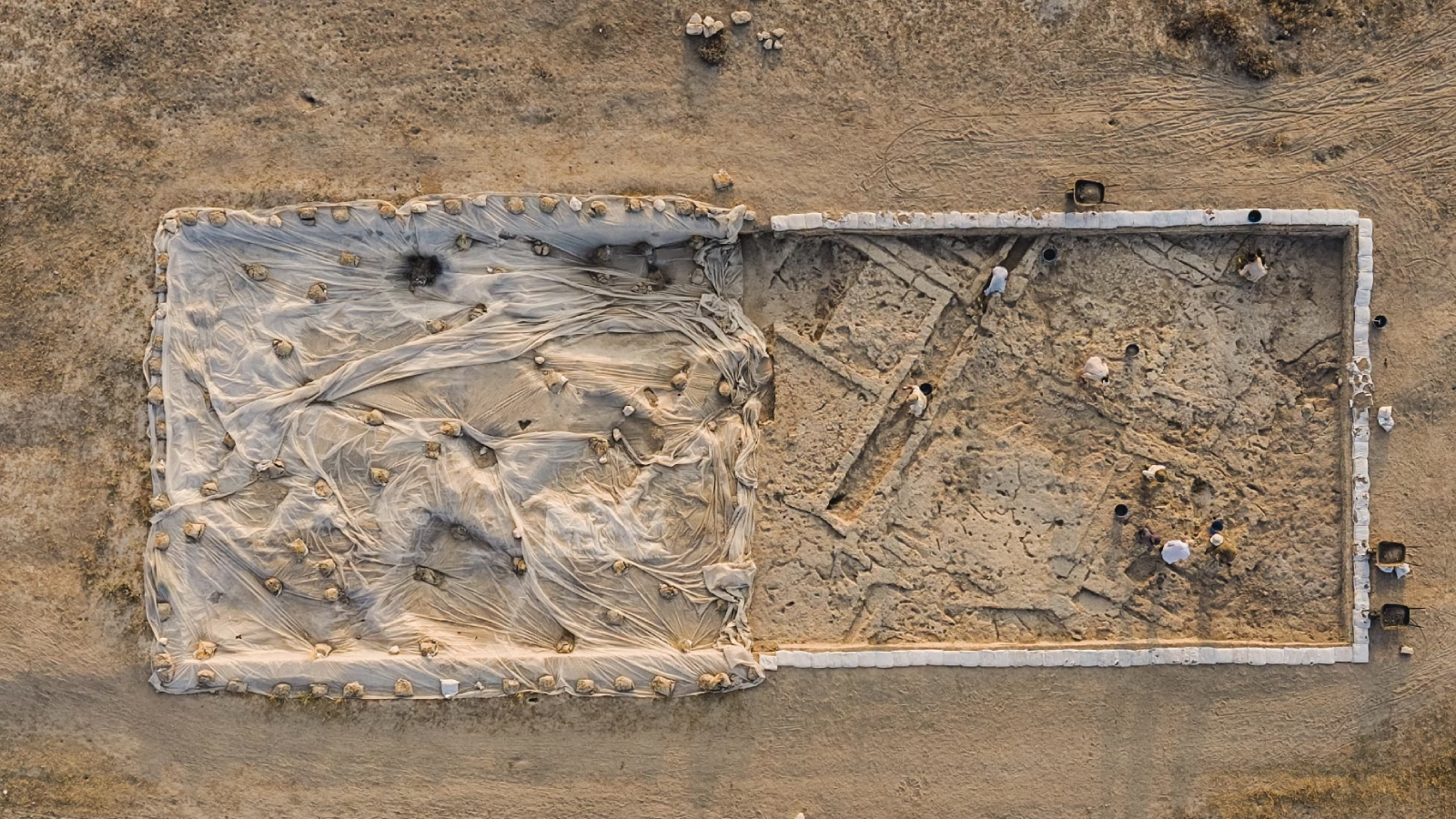
Archaeologists in Central Türkiye have uncovered a feature that may rewrite the origins of organized living: a 9,750-year-old passageway at Canhasan 3 Höyük in Karaman province. This space between two Neolithic houses—possibly among the earliest streets in human history—predates the famed site of Çatalhöyük by roughly 750 years, offering a fresh perspective on early settlement design.
Unlike the densely packed homes of Çatalhöyük, where people moved across rooftops, Canhasan 3 demonstrates deliberate planning. Researchers suggest the narrow gap might have functioned as a passageway, livestock corridor, or even a communal street—a concept rarely seen in the Pre-Pottery Neolithic period.
“This is a striking deviation from what we expected,” said excavation director Assoc. Prof. Adnan Baysal of Ankara University. “We’re witnessing an early architectural approach that values spacing and access. It’s an extremely rare glimpse into the diversity of Neolithic life.”
Why This Discovery Matters
Streets are more than functional spaces; they symbolize social complexity and planned urbanization. Uncovering such an element in a settlement dating back nearly 10,000 years challenges the notion that these ideas emerged much later.
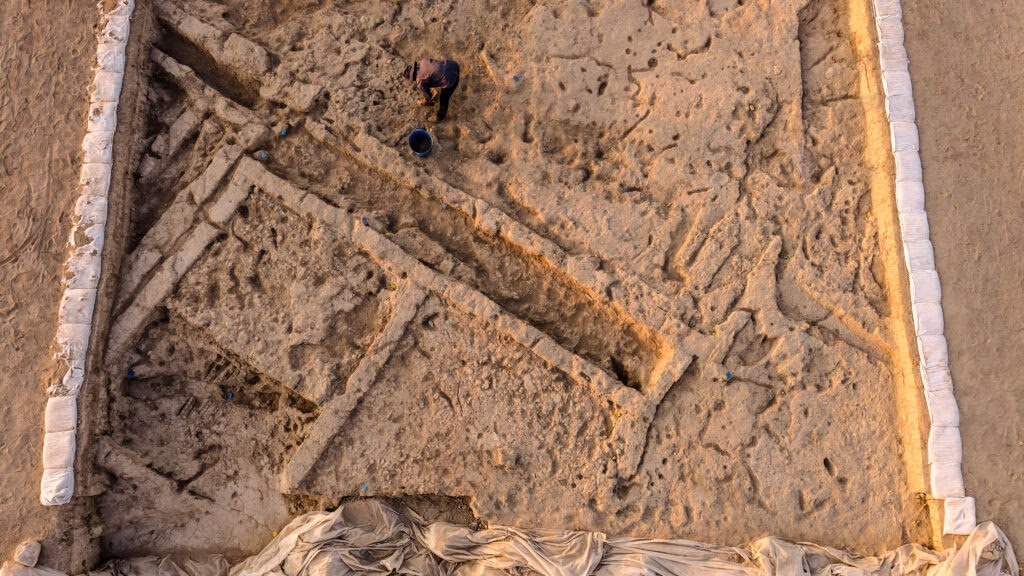
The find also highlights regional diversity in early Anatolia: while some communities embraced clustered living, others—like those at Canhasan—experimented with spatial organization far earlier than expected.
A Long-Lived Settlement
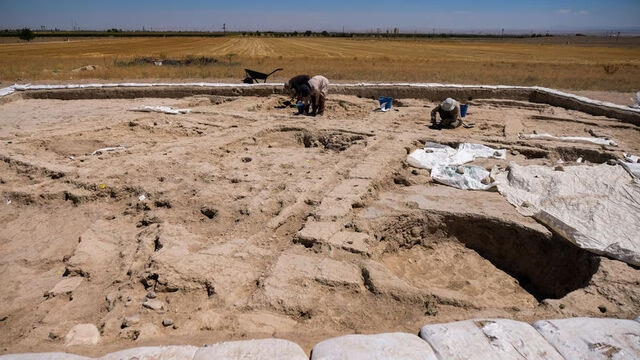
Canhasan is a multi-phase site comprising three mounds, reflecting continuous human presence from the Pre-Pottery Neolithic to the Iron Age. Excavations have revealed animal remains, including aurochs and waterfowl, as well as hearths arranged differently from those at Çatalhöyük—indicating cultural variation across Central Anatolia.
Researchers believe the settlement thrived thanks to fertile wetlands and abundant water sources, which supported both farming and herding in the early stages of agriculture.
Global Implications
Canhasan 3 offers more than an archaeological curiosity; it provides a rare data point in humanity’s architectural evolution. Evidence of early planning, long-term settlement, and cultural adaptation makes the site crucial for understanding the beginnings of communal living.
As Baysal concludes:
“This discovery pushes the limits of what we thought was possible in the Neolithic. Canhasan 3 shows us that the roots of urban thinking go deeper than we imagined.”