
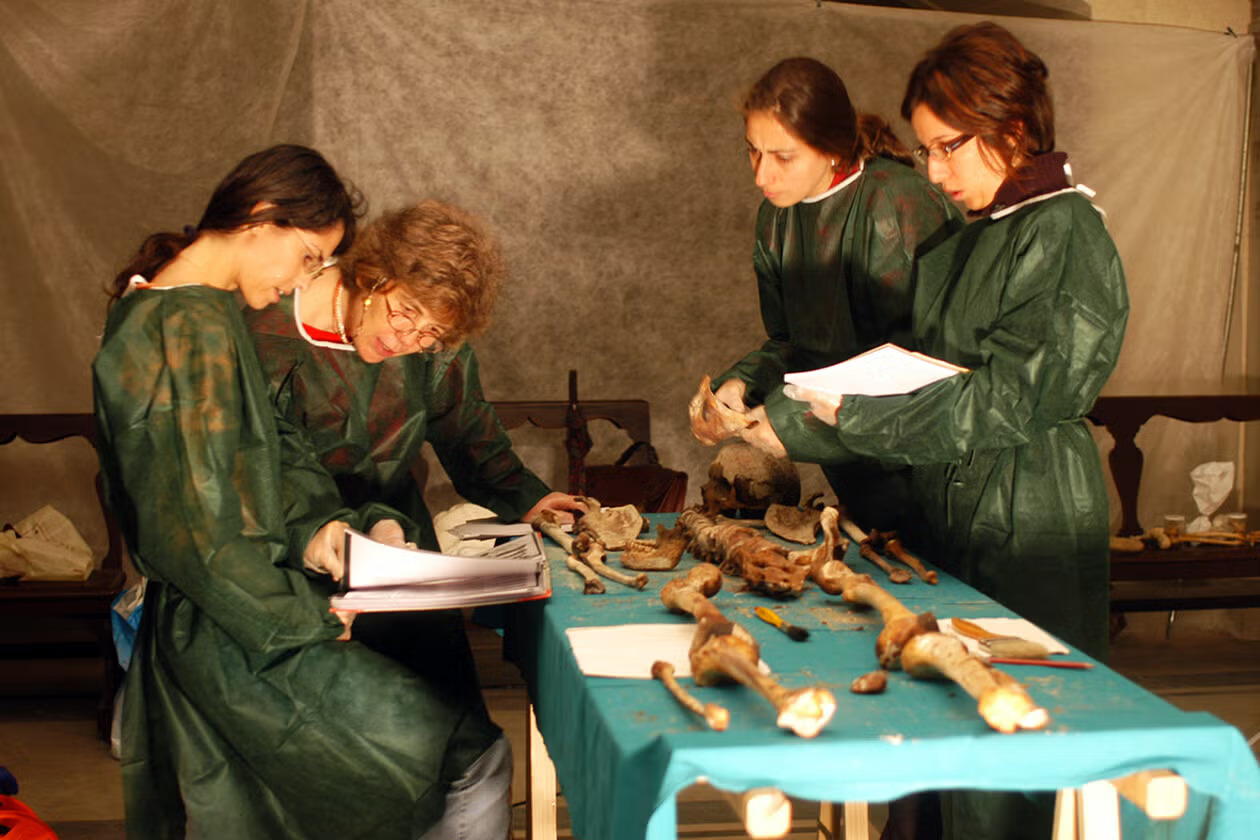
Ancient DNA recovered from the remains of two Medici brothers has provided the strongest genetic evidence yet that both men were infected with malaria when they died—and further weakened a centuries-old claim that Grand Duke Francesco I de’ Medici was poisoned.
Researchers from Yale University and the University of Pisa detected malaria parasite DNA in rib samples belonging to Cardinal Giovanni de’ Medici, who died in 1562, and his older brother Francesco, who died in 1587.
The study, published in iScience, also identified a previously unrecorded genetic variant of Plasmodium falciparum, the parasite responsible for the deadliest form of human malaria.
Malaria DNA Found in Medici Rib Bones
The researchers extracted DNA from four rib samples: three from Francesco and one from Giovanni. Both brothers are buried in the Medici Chapels inside Florence’s Basilica di San Lorenzo.
Giovanni’s remains contained genetic material from P. falciparum, including two mutations not previously documented in ancient malaria samples. The researchers suggest that these changes may have emerged as the parasite expanded through European populations.
Francesco’s samples produced traces of both P. falciparum and Plasmodium malariae. Similar evidence for more than one malaria species has been found in individuals from the same period in Belgium, although the authors said further sequencing is needed to determine whether the two parasites were present in Francesco at the same time.
The results support earlier immunological tests conducted by the University of Pisa team, which had already indicated P. falciparum infection in both brothers. The new study is the first to confirm those findings through genetic analysis of their skeletal remains.
Why Francesco de’ Medici Was Suspected of Being Poisoned
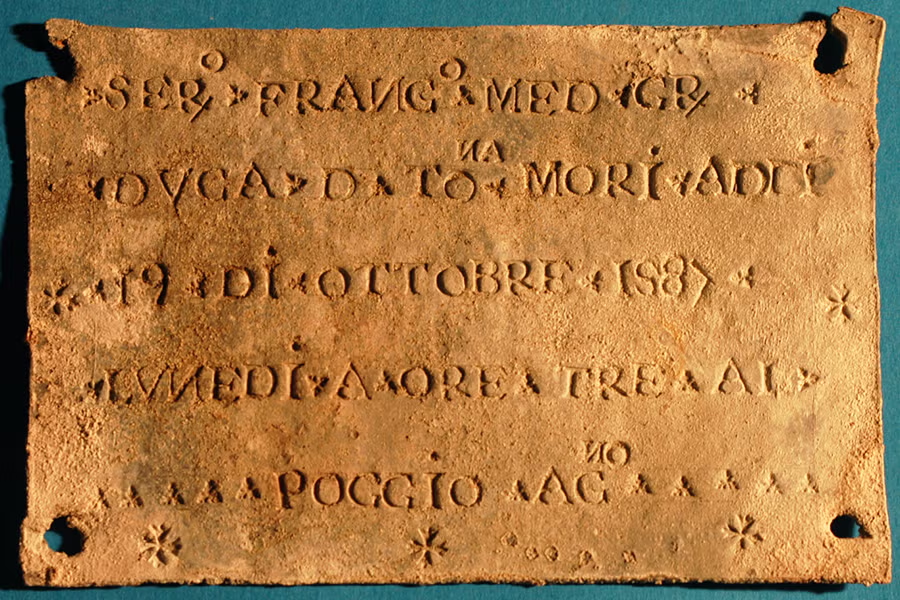
Francesco and his wife, Bianca Cappello, became ill in October 1587 while staying at the Medici villa at Poggio a Caiano, an area then surrounded by marshes and rice fields where mosquitoes thrived.
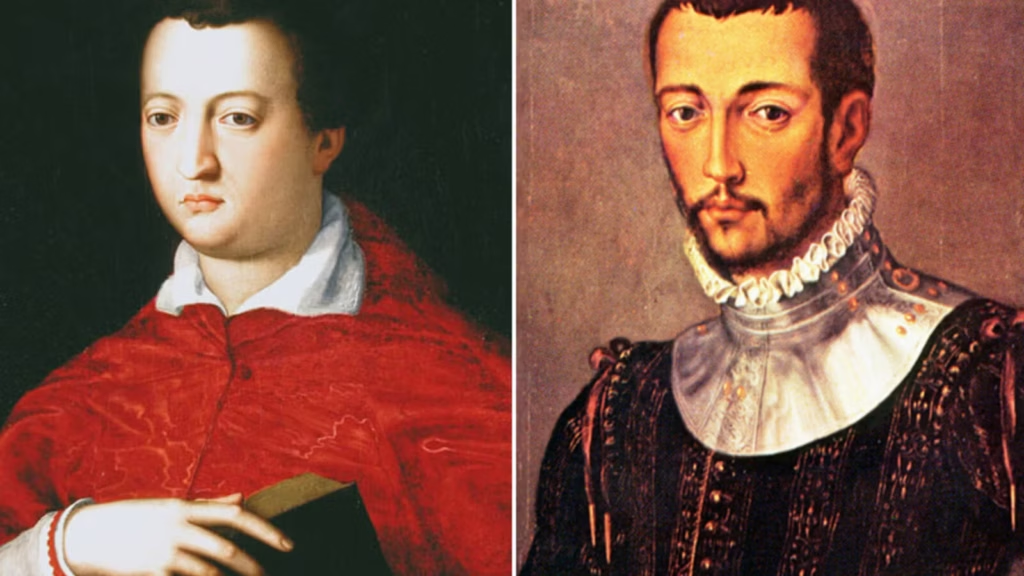
Both developed recurring fevers and died on consecutive days. Their rapid deaths encouraged rumors that Francesco’s younger brother and political rival, Cardinal Ferdinando de’ Medici, had poisoned them with arsenic. Ferdinando succeeded Francesco as grand duke, giving later versions of the story an apparent motive.
Contemporary court physicians, however, described intermittent fevers consistent with malaria, then widely known in Central Italy as febbre terzana, or tertian fever.
The newly detected parasite DNA does not constitute a direct arsenic test, but it closely matches the historical medical accounts and earlier laboratory evidence. Taken together, the findings make malaria the best-supported explanation for Francesco’s final illness.
Giovanni’s Fatal Journey to the Tuscan Coast
Giovanni’s death followed a separate outbreak within the Medici family.
In 1562, the 19-year-old cardinal travelled to the Tuscan coast with his mother, Eleonora of Toledo, and his younger brother Garzia. The coastal marshes were well known as malaria zones.
All three developed recurring fevers and died within about a month. Historical reports also describe treatments including bloodletting, a common practice that may have further weakened already ill patients.
Malaria remained endemic in parts of Central Italy from antiquity until eradication campaigns eliminated local transmission in the 20th century.
A Previously Unrecorded Renaissance Malaria Variant
Ancient malaria DNA is difficult to recover because the parasite normally circulates in blood and soft tissue, which decay rapidly after death. Small fragments can occasionally survive in bones or teeth, allowing researchers to compare ancient parasites with later populations.
The genetic material from Giovanni adds a rare data point to the limited record of malaria in Renaissance Europe. Rather than representing a complete reconstructed genome, it preserves a previously uncharacterized haplotype—a distinct genetic pattern within P. falciparum.
According to the researchers, such evidence can help trace how malaria populations spread, diversified and adapted before the disease disappeared from much of Europe.
The Medici remains therefore preserve two kinds of evidence: a genetic record of malaria in 16th-century Tuscany and a scientific challenge to one of the dynasty’s longest-running poisoning stories.
Cover Image: Researchers examined the remains of Giovanni and Francesco de Medici, brothers from the powerful dynasty that ruled Renaissance Tuscany. Credit: Valentina Giuffra, University of Pisa