
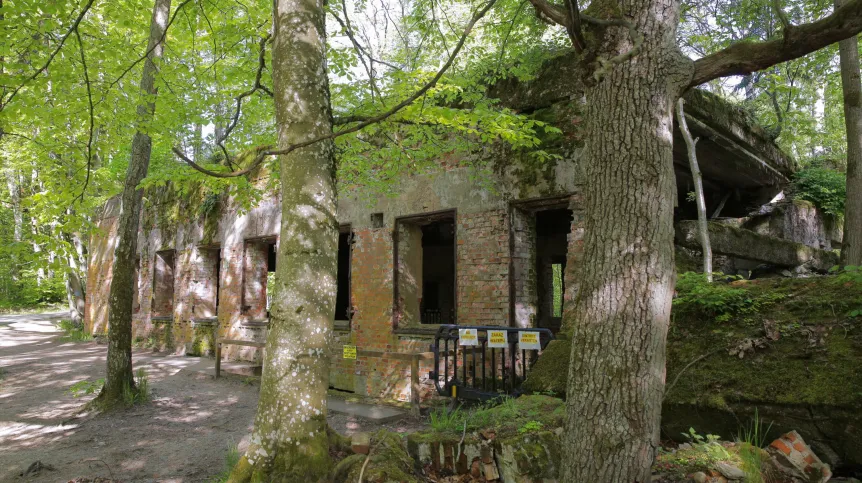
Archaeologists have begun a new excavation inside Hermann Göring’s former house at Hitler’s Wolf’s Lair in northeastern Poland, where six unidentified human skeletons—including those of children—were discovered beneath the building in 2024.
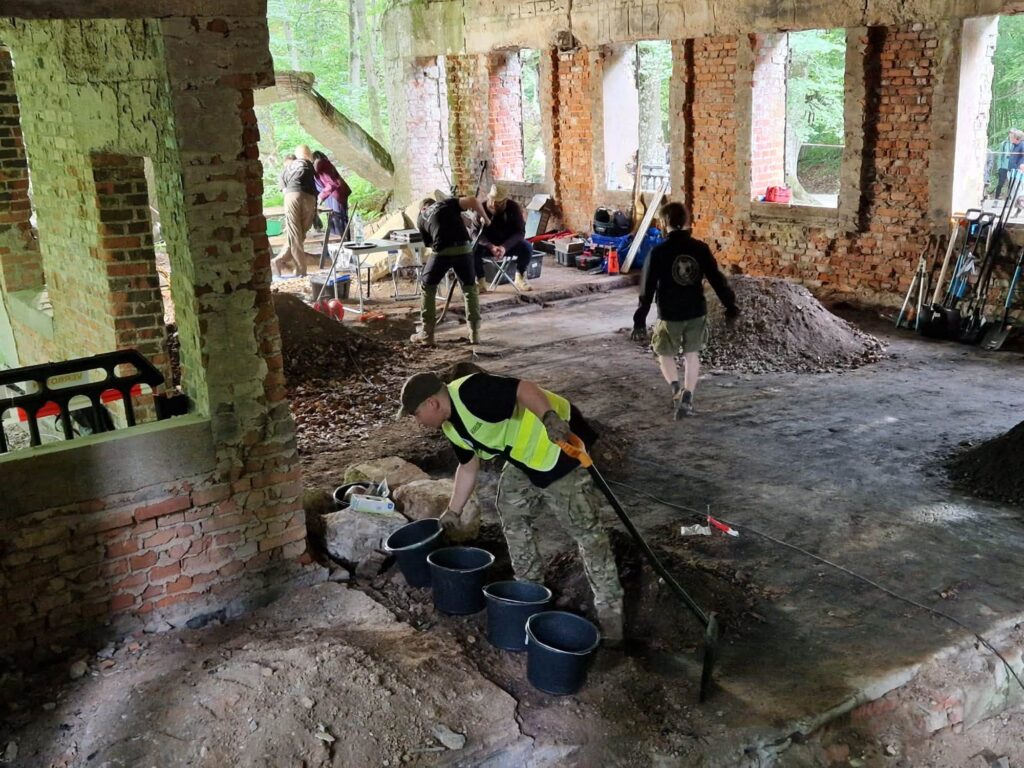
The three-week excavation is intended to determine whether further remains or missing skeletal elements survive at the site and to clarify when the burials were made in relation to the construction of the house. Researchers will also examine any objects that may help explain who the dead were and how they came to be buried inside one of Nazi Germany’s most important wartime command complexes.
The work is being led by Polish Academy of Sciences archaeologists Jakub M. Niebylski and Bartłomiej Sz. Szmoniewski, with members of the Latebra Foundation.
Six unidentified people buried beneath the building
Members of the Latebra Foundation found the first human remains in 2024 while investigating a section of the residence that had no basement.
The skeletons had been placed in shallow ground, about 20 centimeters below the surface. Early reports referred to five individuals, but later examination established that the remains belonged to six people. The group included both adults and children.
None of the skeletons had hands or feet.
Despite an investigation by prosecutors, the identities of the dead could not be established. Investigators were also unable to determine when they died, how they died or why they were buried at this location. The case was eventually closed without an explanation for the unusual burial.
The new excavation will look for missing parts of the previously recovered skeletons as well as possible additional bodies or graves elsewhere inside the building.
Were the graves older than Göring’s house?
One of the main objectives is to establish whether the burials predate the residence or were made after it had been constructed.
Niebylski told the Polish Press Agency that the team would study how the graves were positioned in relation to the walls, foundations and cardinal directions. The archaeologists will also examine the building’s construction layers and determine how its foundations were laid.
The relationship between the graves and the foundations may provide the clearest indication of chronology. Burials sealed beneath undisturbed construction levels would point to an earlier date, while graves cutting through layers associated with the building would indicate that they were created later.
The researchers have initially opened trenches in another part of the structure and will gradually move toward the area where the skeletons were found. Excavated soil is being sifted, while successive floor and ground layers are being recorded in detail.
So far, the team has recovered small objects connected with everyday use of the house, including nails. Their positions may help archaeologists reconstruct changes to the building and distinguish its original construction from later disturbance.
The excavation is being conducted with permits issued by the relevant heritage authorities.
A civilian residence inside a military headquarters
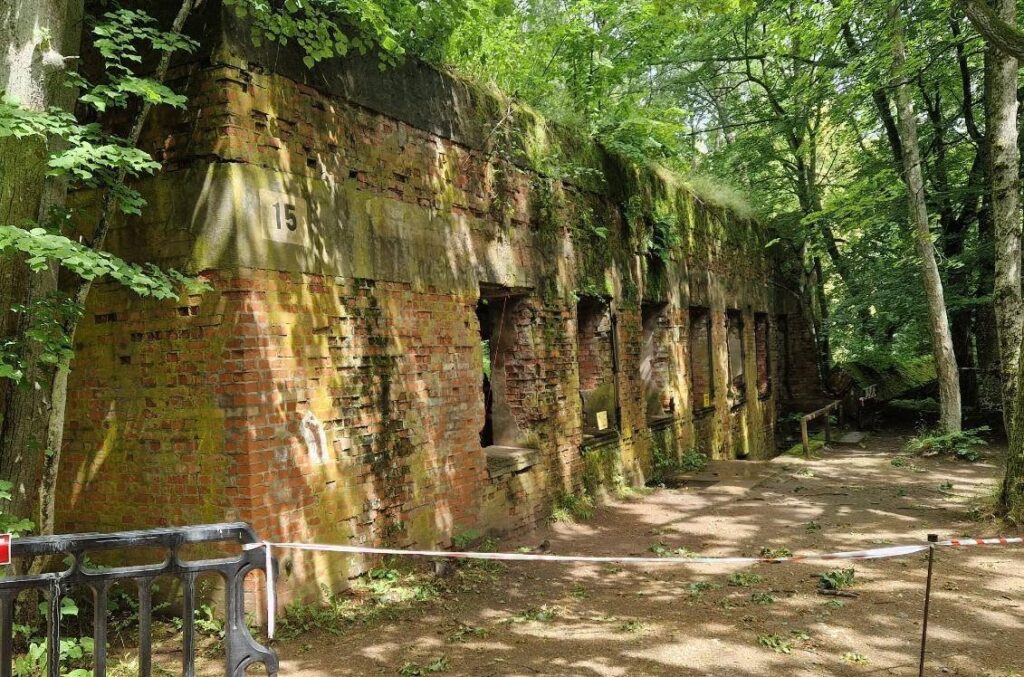
Göring’s house was a residential building located within the heavily fortified Wolf’s Lair complex. It had wooden walls protected by an external shell of brick and reinforced concrete.
Two neighboring structures at the site were associated with Göring: the residence in which he stayed and a separate bunker. His house was among the more substantial living quarters in the compound, reflecting his senior position within the Nazi regime.
The Wolf’s Lair, known in German as the Wolfsschanze, was constructed in what was then East Prussia as Adolf Hitler’s principal headquarters for Operation Barbarossa, the German invasion of the Soviet Union launched in June 1941.
Hidden in forest near the present-day town of Kętrzyn in northeastern Poland, the complex contained bunkers, command buildings, living quarters and defensive installations. Hitler spent more than 800 days there during the Second World War.
The site is also known for the failed assassination attempt of July 20, 1944, when German army officer Claus von Stauffenberg placed a bomb inside a conference building during a meeting attended by Hitler.
German forces abandoned the Wolf’s Lair in early 1945 and attempted to destroy its principal structures before the advancing Soviet army reached the area. Many of its massive bunkers survived as shattered ruins.
Excavation may extend beyond the house
The current investigation is limited to the interior of Göring’s former residence, but archaeologists and forestry officials are considering whether later work could include the surrounding ground.
For now, the central questions remain unresolved. The six individuals have not been identified, their date of burial remains unknown, and no evidence has yet connected their deaths directly with Göring or the wartime use of the Wolf’s Lair.
By documenting the graves in relation to the house and its foundations, archaeologists may be able to establish whether the bodies were already in the ground when the residence was built—or whether they were buried there during a later phase in the site’s history.