
A battered land grant, a royal name carved over another and an inscription on a silver vessel made for beer have led researchers to three rulers missing from the accepted history of ancient Assyria.
The proposed kings—Tiglath-pileser, Shalmaneser and Ashur-uballit—each appear to have held power for less than two years. All were excluded from the Assyrian King List, the document that has shaped the accepted order of Neo-Assyrian rulers for more than a century.
Alexander Johannes Edmonds of the University of Münster and Eckart Frahm of Yale University argue that these were not simply princes who failed to seize power. Each seems to have been enthroned at Ashur, Assyria’s religious capital, and recognized by at least part of the kingdom before being defeated or deposed.
Their study, published in the Journal of Cuneiform Studies, presents three cases of differing strength. The evidence for a rebel Tiglath-pileser is the clearest. The proposed reigns of Shalmaneser and Ashur-uballit depend on several damaged, altered and chronologically awkward records being read together.
An Official History with Missing Rulers
Assyria began as a city-state centered on Ashur, in present-day Iraq, and eventually grew into an empire that controlled much of Western Asia. Its history stretched from the early second millennium BCE until the final collapse of Assyrian resistance in 609 BCE.
The Assyrian King List survives in three well-preserved copies and several fragments. Its first-millennium sequence presents a remarkably orderly monarchy in which the crown often passes directly from father to son.
Other Assyrian sources tell a rougher story. They record revolts, civil wars and disputed accessions that barely disturb the king list’s smooth succession.
Edmonds and Frahm propose that the list was not intended to record every person who reached the throne. It functioned more like a royal canon, preserving rulers whose power was later accepted while removing short-lived kings and unsuccessful rivals.
The first missing ruler appears on a clay tablet that scholars have known about since the 19th century.
A Rebel King Rose During a Solar Eclipse
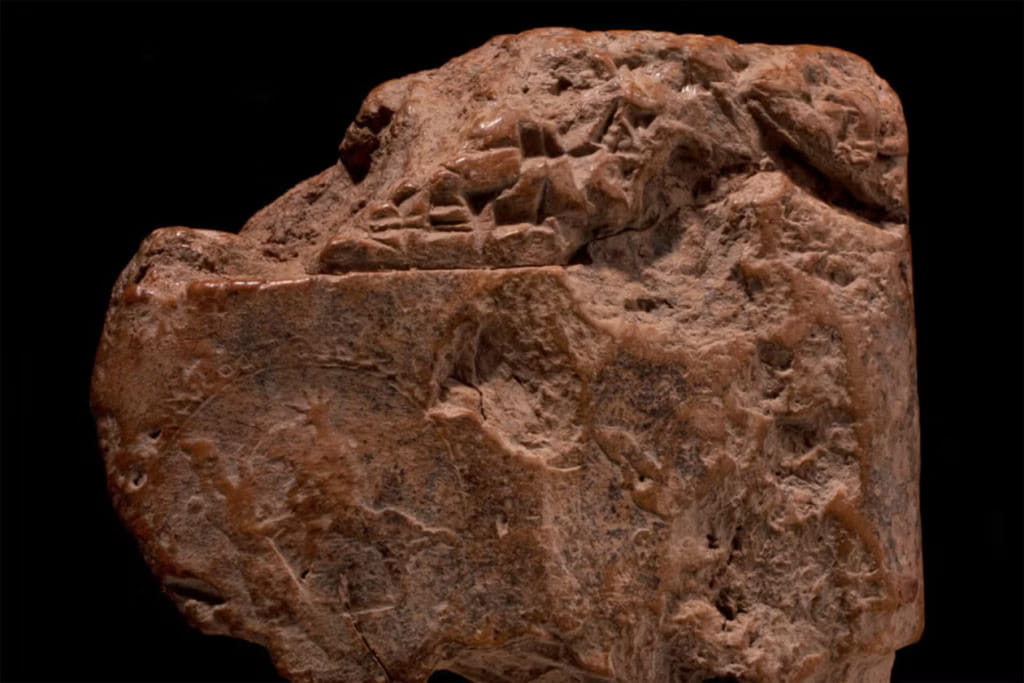
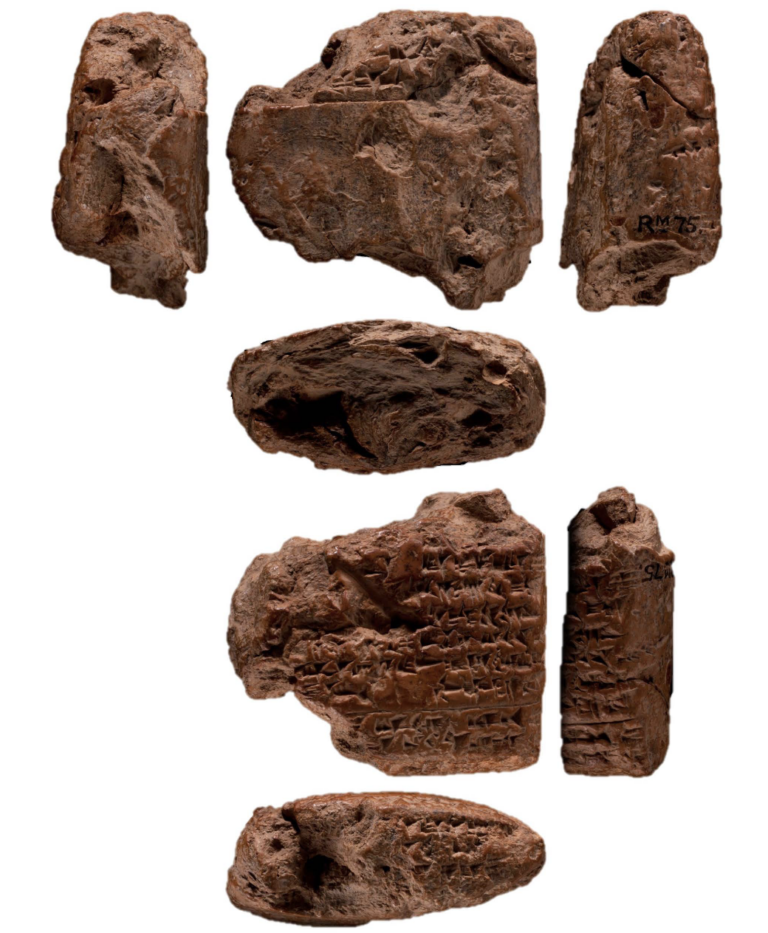
The tablet, known as Rm 75, was found at Nineveh and is now housed at the British Museum. It records a royal grant dated to 762 BCE.
Earlier editions attributed the document to Adad-narari III, although he had died in 783 BCE. The text also mentioned a Tiglath-pileser who was identified as Tiglath-pileser III, a king who did not take power until 745 BCE.
The dates could not be reconciled.
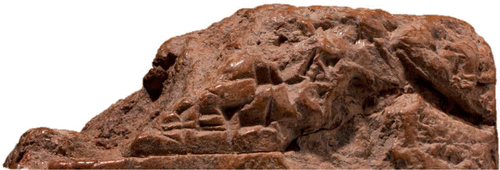
A new reading of the damaged opening suggests that the grant was issued by an otherwise unknown Tiglath-pileser, apparently a son of Shamshi-Adad V and an uncle of the reigning king, Ashur-dan III.
The tablet carries impressions of the Assyrian royal seal, showing the ruler fighting a lion. Its invocation of Ashur and Ishtar of Ashur indicates that the grant was probably issued in the city of Ashur, the traditional site of Assyrian coronations.
The Assyrian Eponym Chronicle records a rebellion at Ashur in both 763 and 762 BCE. It also records a total solar eclipse in 763 BCE.
An eclipse could be interpreted in Assyria as a deadly omen for the reigning monarch. One astrological tradition associated such an event with the king’s death and a son of the royal family taking the throne. The researchers suggest that the prince may have used the eclipse and the surrounding unrest to challenge his nephew.
A horizontal line appears immediately before the chronicle’s entry for 763 BCE. Similar lines elsewhere mark the beginning of a reign. Edmonds and Frahm interpret it as a possible remnant of an earlier version that explicitly recorded Tiglath-pileser’s accession before his name was removed.
The rebellion at Ashur was suppressed by late 762 BCE. If the eclipse helped trigger the uprising, the new king could have held power for no more than 20 or 21 months. Whether he was killed, captured or continued the revolt elsewhere is unknown.
Shalmaneser’s Name Was Carved Away
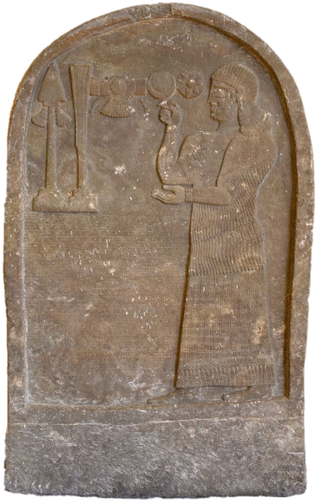
The second case centers on a stone stela discovered at Tell Abta in Iraq in 1894.
The monument belonged to Bel-Harran-belu-usur, a senior palace official who founded a settlement in the desert and secured tax exemptions for it. Its inscription originally named the reigning king as Shalmaneser.
That name was later overwritten with Tiglath-pileser.
None of the established kings named Shalmaneser fits the stela’s likely mid-eighth-century date without creating other historical problems. Edmonds and Frahm propose that an unknown Shalmaneser succeeded Ashur-narari V in late 747 BCE and ruled until Tiglath-pileser III seized the throne in 745 BCE.
Several chronological irregularities support the reconstruction. Surviving copies of Assyria’s annual eponym records place the beginning of Tiglath-pileser III’s reign at different points between 746 and 743 BCE. His own inscriptions credit him with 19 full regnal years, while later sources give him only 18.
That missing year may conceal Shalmaneser’s brief reign.
A later Greek source known as the Ptolemaic Canon adds another clue. Some versions claim that the Babylonian king Nabonassar, who took power in 747 BCE, was also called Shalmaneser.
The researchers suggest that the passage may preserve a corrupted memory of two kings—Nabonassar in Babylonia and Shalmaneser in Assyria—taking their thrones in the same year. Later copyists could have mistaken the synchronism for a second name belonging to Nabonassar.
This case remains more circumstantial than the evidence for Tiglath-pileser. No surviving text plainly states that Shalmaneser ruled Assyria from 747 to 745 BCE. The overwritten stela, missing regnal year and confused chronological markers nevertheless converge on the same narrow period.
A King Preserved by a Vessel for Beer
The third ruler may have lived more than a century earlier.
His name appears in a text concerning a silver vessel used to pour high-quality beer for the god Ashur. The vessel was originally made by Tukulti-Ninurta I in the 13th century BCE. It later became worn and was repaired by someone named Ashur-uballit, who added silver to it. Tukulti-Ninurta II restored it again during the ninth century BCE.
No known king named Ashur-uballit fits between those two reigns.
Ashur-uballit I lived before the vessel was made. The ruler conventionally known as Ashur-uballit II belonged to the final years of Assyria, centuries after Tukulti-Ninurta II.
The inscription asks future rulers to preserve the names of the “kings, my forefathers” connected with the vessel. That wording makes it difficult to dismiss the unidentified Ashur-uballit as an ordinary private individual.
Edmonds and Frahm propose that he briefly succeeded Ashur-dan II around 913 or 912 BCE before being overthrown by Adad-narari II, possibly his brother.
Evidence that Adad-narari’s accession was irregular includes a defaced royal statue that was decapitated, stripped of its insignia and reused as an official monument. The statue cannot be securely identified as Ashur-uballit, but its destruction fits a wider pattern of dynastic conflict and an attempt to replace the memory of an earlier ruler.
The inscription on the beer vessel may have survived because removing Ashur-uballit’s contribution would have disrupted its record of repairs and the precise quantities of silver added. His royal title could be omitted, but his role in the object’s history could not easily be erased.
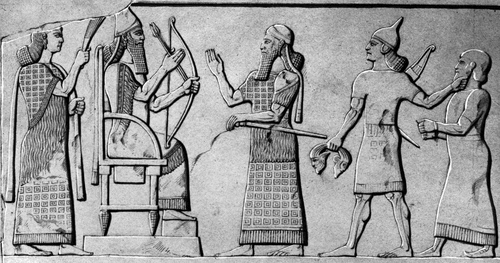
Three Cases, Three Levels of Evidence
The study does not claim that every proposed detail is equally secure.
Rm 75 provides direct evidence that a previously unknown Tiglath-pileser issued a royal grant in 762 BCE. The chronology of his rebellion is supported by contemporary records from Ashur.
The new Shalmaneser is reconstructed from an overwritten royal name, disagreements in annual records and a missing year in Tiglath-pileser III’s reign. Ashur-uballit rests on the ritual vessel inscription combined with evidence of an irregular accession under Adad-narari II.
The findings do not require the established Assyrian chronology after 911 BCE to be rewritten. That period is supported by an unbroken sequence of annual eponym records. The implications are greater for earlier centuries, where the Assyrian King List sometimes stands without comparable year-by-year documentation.
The document remains central to Assyrian history, but it can no longer be treated as a complete register of everyone who held royal power. Its orderly succession may reflect the needs of victorious dynasties rather than the political realities of the throne.
Assyria’s rise to empire was not a continuous march led by an uncontested line of kings. Behind that official account were rebellions, epidemics, rival princes and rulers whose names survived only because damaged clay, altered stone and a silver beer vessel retained what the king list did not.
Edmonds, A. J., & Frahm, E. (2026). Three new kings of Assyria. Journal of Cuneiform Studies, 78, 27–59. https://doi.org/10.1086/741239
Cover Image Credit: British Museum and the Cuneiform Digital Library Initiative