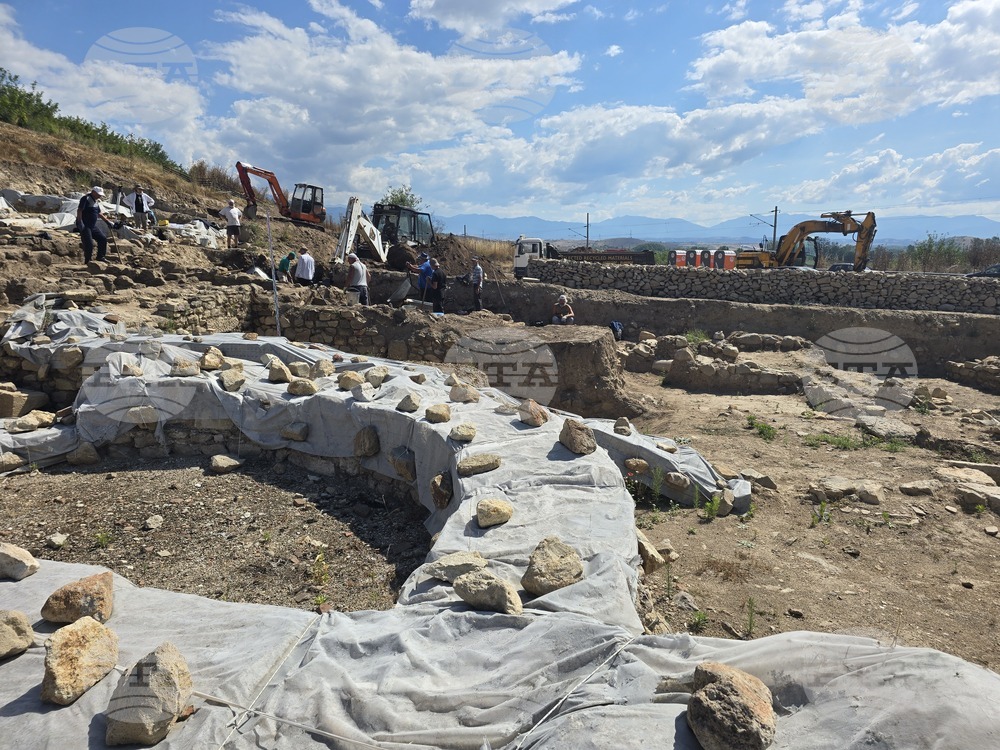
Archaeologists excavating the ancient city of Heraclea Sintica in southwestern Bulgaria have uncovered a second inscription naming Heracles Kynagidas, or “Heracles the Hunter,” only days after a similar dedication was deciphered nearby.
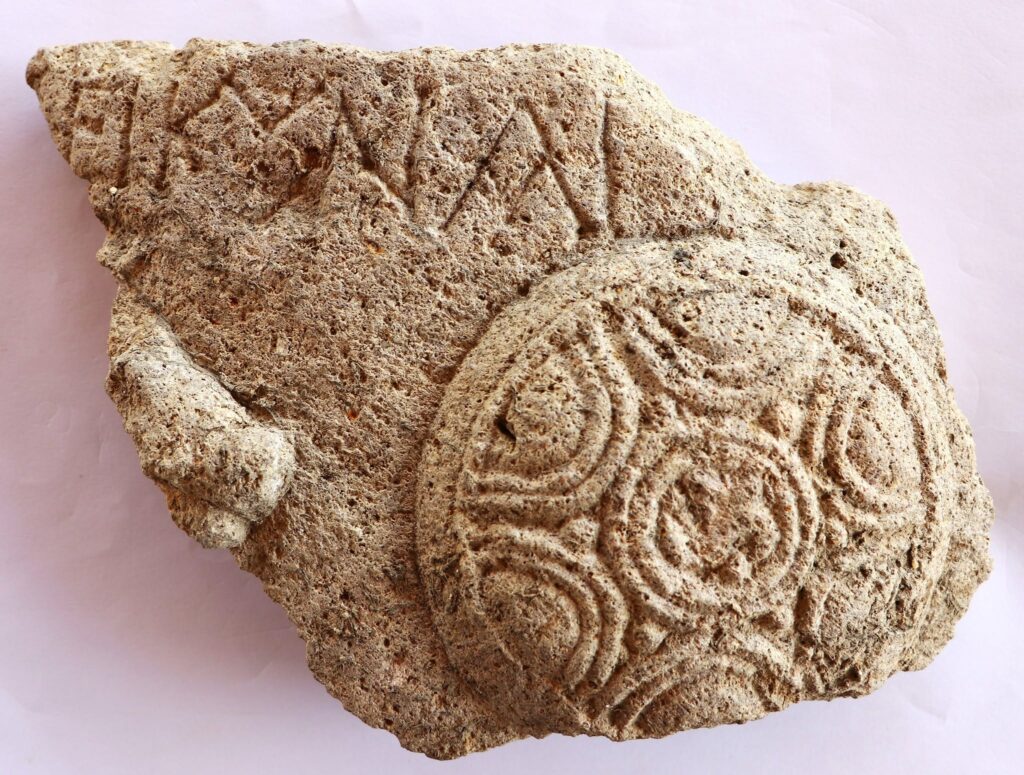
The new find was made during excavations led by Prof. Ludmil Vagalinski of the National Archaeological Institute with Museum at the Bulgarian Academy of Sciences (NAIM–BAS). According to the Bulgarian News Agency (BTA), the inscription was discovered on Friday and is engraved on a large stone cup that has survived only in part.
A stone cup with Heracles’ name
Although the vessel is not fully preserved, enough of the inscription remains legible for archaeologists to identify a dedication linked to Heracles in his hunter aspect. The epithet Kynagidas means “the Hunter,” a form of the hero that appears to have held special importance at Heraclea Sintica.
Below the text, archaeologists identified a relief image of a Macedonian-type shield. Vagalinski said the motif is familiar from ancient Macedonian iconography, including coins and other artifacts. On the opposite side of the cup, part of another figure can also be seen. It may be the head of a horse or a boar.
The details make the object more than a simple inscribed vessel. It appears to have belonged to a ritual setting where Heracles was honored not only as a mythological hero, but in a specific local form connected with hunting.
Found near an altar
The stone cup was discovered close to an altar where archaeologists had recently read another inscription: “Antigon, to Heracles Kynagidas…” The excavation team believes the two finds are contemporary and probably belonged to the same ritual area.
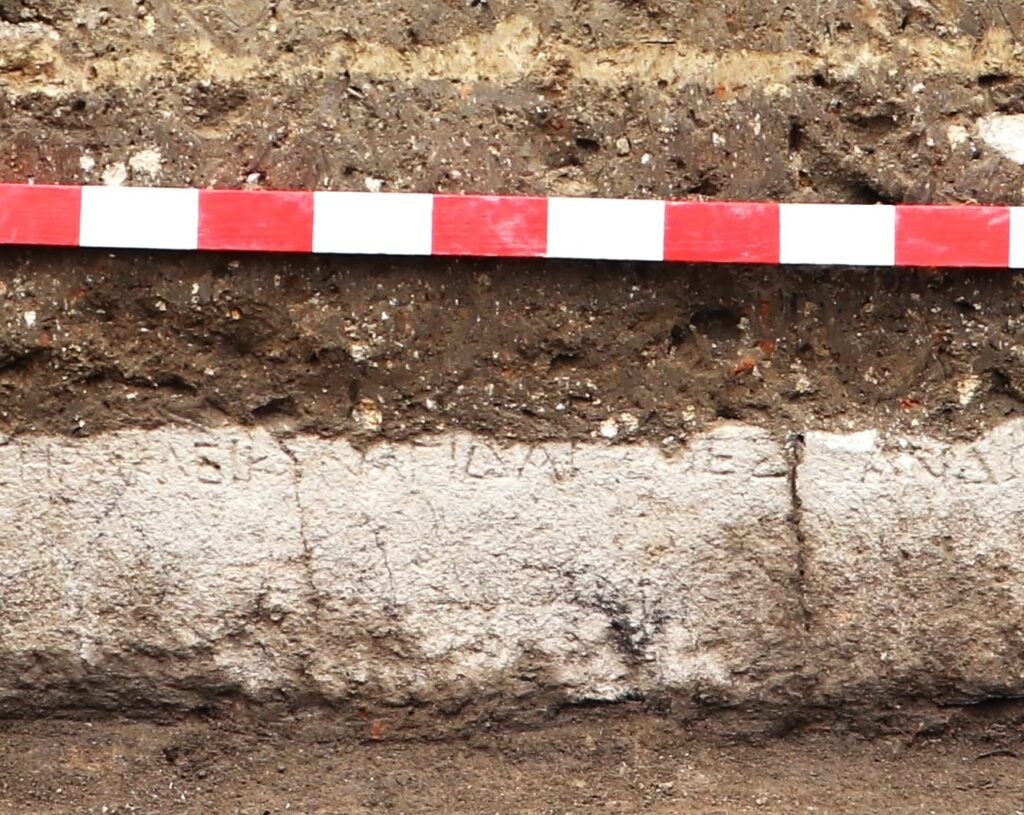
That close connection is the strongest part of the discovery. A single inscription can mark a dedication. Two related inscriptions found near the same altar point to repeated cult activity at the site.
The cup may have been used in rituals dedicated to Heracles Kynagidas. Archaeologists have also recovered a fragment from the base of a similar stone vessel. Petrographic analysis will now test whether the pieces came from the same object or from different vessels made of similar stone.
Heraclea Sintica and its Macedonian world
Heraclea Sintica lies near the modern town of Petrich, close to Bulgaria’s borders with Greece and North Macedonia. The city flourished in a region where Greek, Macedonian and local Thracian traditions met.
The shield relief on the newly found cup fits that cultural setting. Macedonian symbols were widely used in the region, and their appearance on a ritual vessel gives archaeologists another clue about how identity and worship overlapped in the ancient city.
Heraclea Sintica has produced a growing number of important finds in recent years, helping researchers reconstruct the urban and religious life of a city once located on a key route through the Struma Valley.
A clearer view of an ancient cult
The discovery is now the second epigraphic monument related to Heracles Kynagidas found in the current excavation season. Together, the inscriptions suggest that this form of Heracles was not a minor or isolated reference at Heraclea Sintica.
The continuing excavation will focus on the context around the altar, the stone cup and the associated architectural remains. More precise dating may help clarify when the ritual area was active and how long the cult of Heracles the Hunter was practiced there.
Cover Image: The Heraclea Sintica archaeological excavation site. Credit: Denitsa Kyuchukova/BTA