A groundbreaking isotopic study of Neolithic teeth unearthed in Syria has revealed how the world’s first farming villagers formed stable, inclusive communities more than 10,000 years ago—showing that women often moved between settlements while men stayed rooted in their birthplace.
Archaeologists analyzing the chemical composition of 71 human teeth from five Neolithic sites across modern-day Syria have uncovered previously invisible patterns of mobility and social organization in the world’s earliest farming societies.
By studying strontium and oxygen isotopes preserved in tooth enamel—natural markers that record where a person grew up—the researchers were able to determine whether individuals were local or had migrated from elsewhere. The remains date from 11,600 to 7,500 years ago, spanning the full transition from mobile hunter-gatherers to settled agricultural communities.
Once permanent villages emerged, most individuals appear to have remained within their birth communities, reinforcing strong local ties. However, isotope data show that towards the end of the Neolithic period, women were far more likely than men to move between villages—a pattern consistent with patrilocal traditions, where women joined their husbands’ households while men stayed in their native settlements.
This mobility pattern may have helped early communities prevent inbreeding while maintaining social cohesion.
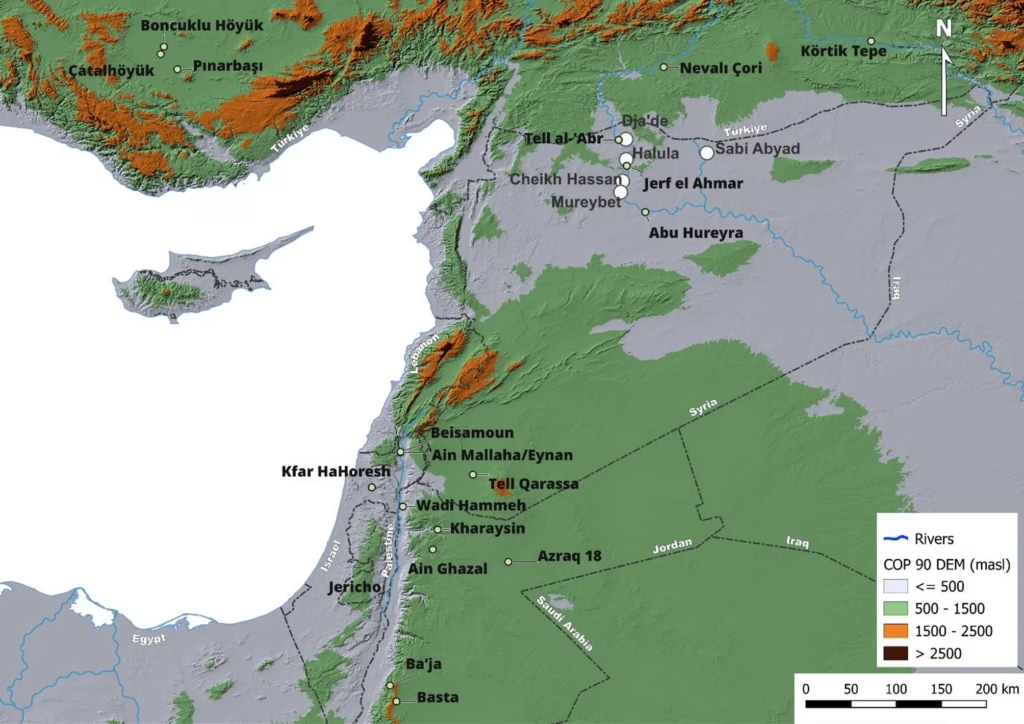
At sites such as Tell Halula, researchers found that both local and non-local individuals were buried together beneath house floors—often in multiple layers—and received identical funerary treatments. In some cemeteries, foreigners were laid to rest alongside locals with equally elaborate burial goods and similar post-mortem arrangements, such as being interred in seated positions.
These findings challenge the notion of isolated prehistoric villages, instead revealing that Neolithic societies were remarkably inclusive, integrating newcomers into their daily life and even honoring them equally in death.
The research, funded by The Leverhulme Trust, was published in Nature Scientific Reports and adds vital new evidence to the story of humanity’s first farmers—people who built not only the foundations of agriculture but also the earliest socially open communities.
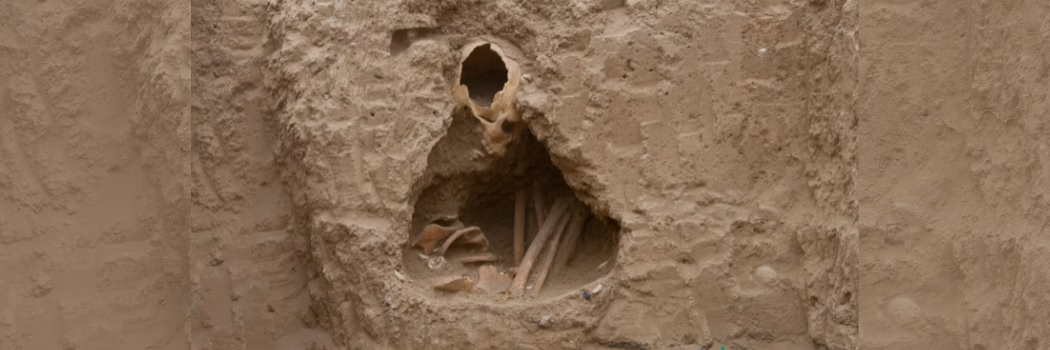
Cover Image: Main image shows one of the burials found at the Neolithic site of Tell Halula in Syria. Credit: Grup de Recerca en Arqueologia del Mediterrani i del Proxim Orient (GRAMPO), Seminari d’Arqueologia Prehistòrica del Pròxim Orient (SAPPO).