
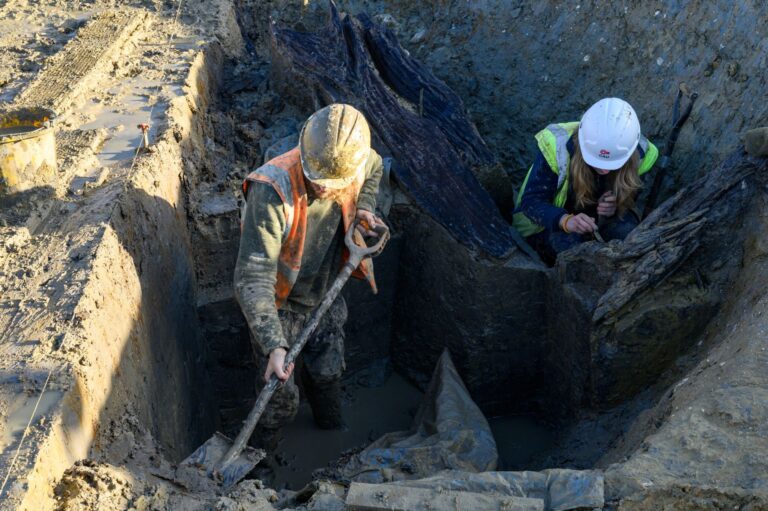
Archaeologists working at West Cambourne in Cambridgeshire, England, have uncovered a rare late Iron Age wooden ladder preserved in a large watering hole. The surviving length of the log ladder measures more than 3 metres, making it, according to Cambridge Archaeological Unit, the longest example of its kind currently known from Britain.
The find was made during excavations at the Burghley Green and Chivers Rise development areas in West Cambourne. Cambridge Archaeological Unit investigated around 5 hectares of land and recorded more than 150 archaeological features dating to the Iron Age and early Roman periods.
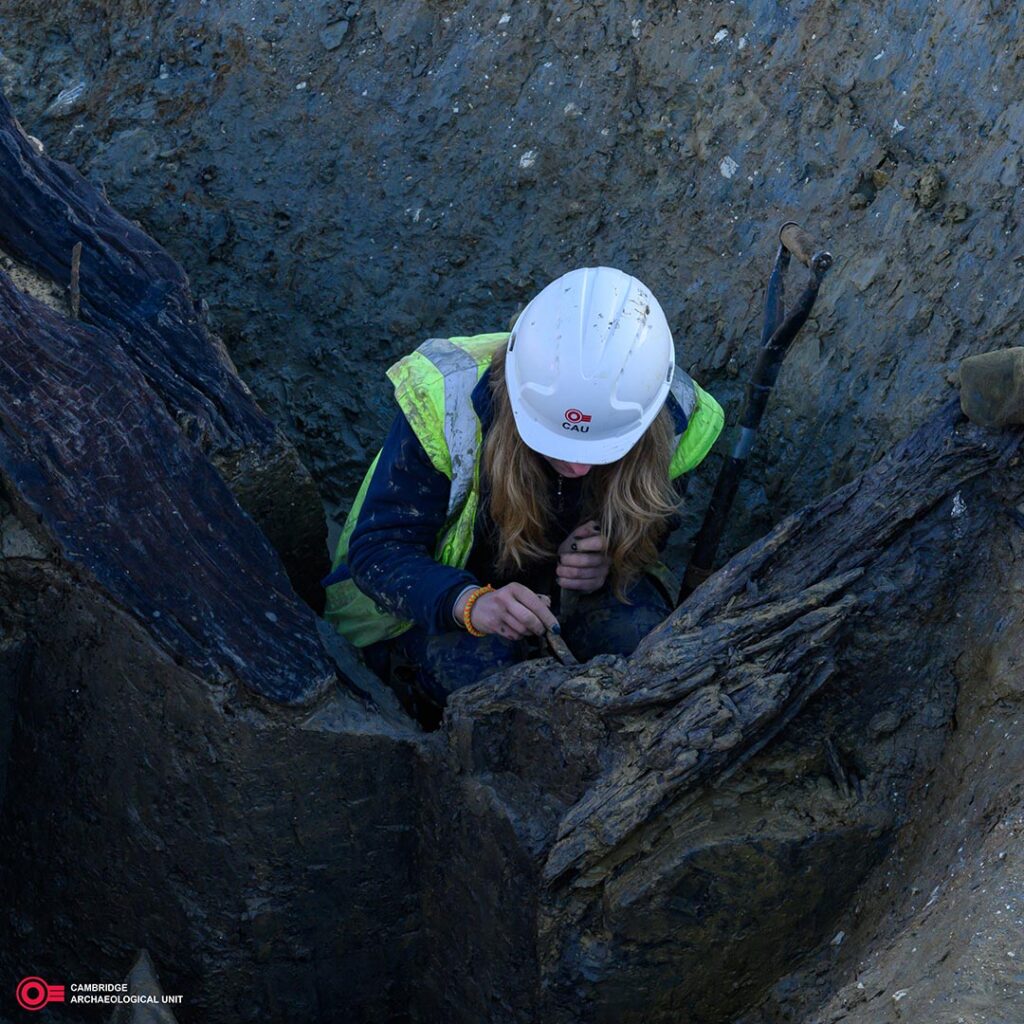
The features included ditches, pits, animal bones, burnt stones, pottery fragments and water-related structures. Among them, the wooden ladder is notable because large organic objects from prehistoric Britain rarely survive in this condition.
A 3-Metre Ladder Preserved in a Watering Hole
The ladder was found in a large watering hole measuring about 25 metres long and 14 metres wide. Contextual evidence suggests the structure dates to the late Iron Age.
The waterlogged deposit helped preserve the timber by limiting oxygen exposure. In ordinary soil, an object like this would usually decay before entering the archaeological record in any recognisable form.
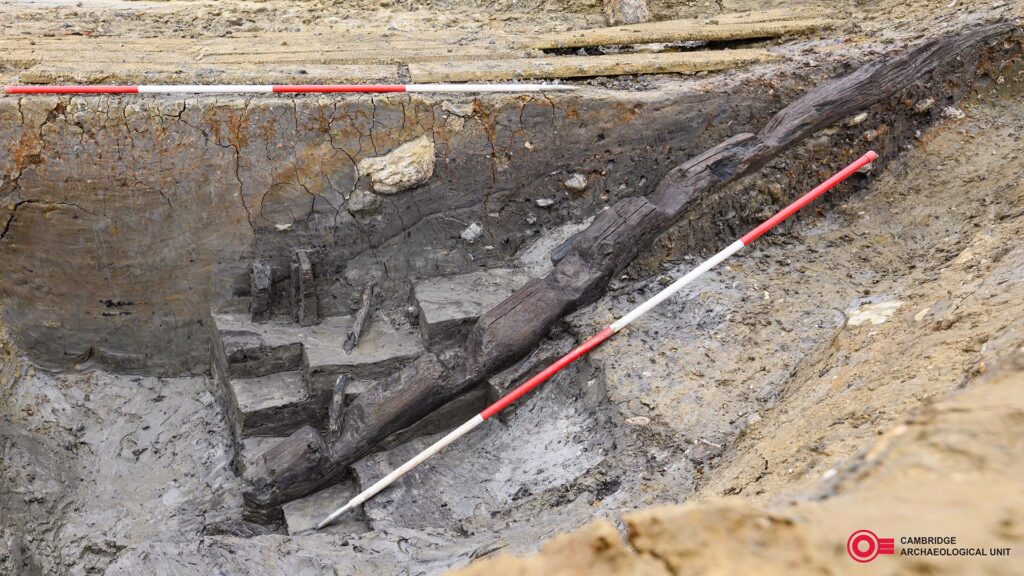
The ladder was probably used to reach water, descend into the deeper part of the feature, or carry out maintenance while the watering hole was still active. Its form points to a practical object linked to rural water use rather than display or ritual.
Iron Age and Roman Activity at West Cambourne
The ladder was not an isolated find. Excavators also recorded a circular enclosure about 24 metres in diameter, along with ditches, pits, burnt stone, animal bone and pottery.
Such enclosed areas are often associated with livestock management or other rural activity. The burnt stone, animal bone and pottery suggest regular use of the area rather than a single event.
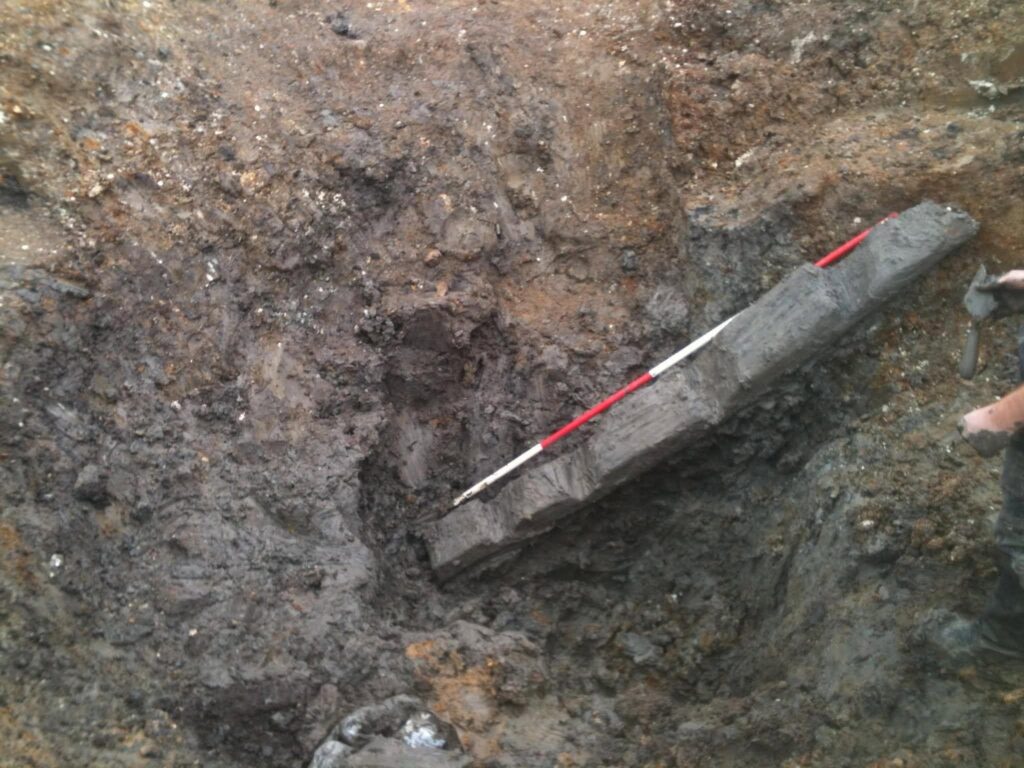
Early Roman material was also found at the site, including more than 780 pottery fragments. The evidence suggests that activity at West Cambourne continued after the Iron Age, as part of a rural landscape west of Cambridge.
Previous archaeological work around Cambourne has already shown long-term settlement and land use in the area, from the Iron Age through the Roman and Saxon periods. The newly reported ladder adds a rare wooden object to that record.
For archaeologists, the main value of the West Cambourne ladder lies in its survival. Large wooden objects from Iron Age Britain are uncommon, and this example provides direct evidence for how timber was used around water-management features more than 2,000 years ago.
Cover Image Credit: Cambridge Archaeological Unit/David Matzliach