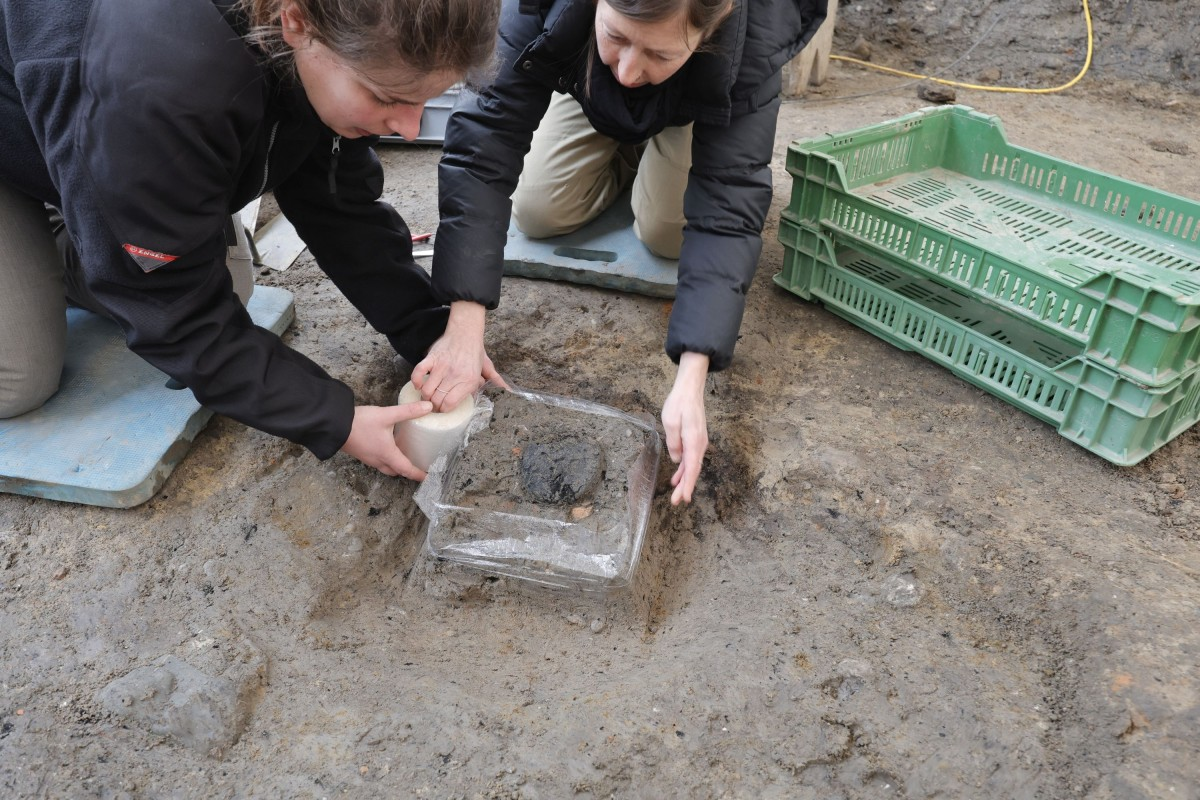
Beneath a modern construction site in northern Switzerland, archaeologists noticed a small blackened object in the soil. It was not a stone, nor an ordinary piece of charcoal. Early analysis suggests it was bread, burned nearly 2,000 years ago inside the Roman military world of Vindonissa.
The rare find was uncovered in Windisch, in the canton of Aargau, during a rescue excavation at Vindonissa, once a major Roman legionary camp. According to cantonal archaeologists, the object is believed to be the first Roman bread ever found in Switzerland, a discovery that brings an unusually human detail to one of the country’s most important Roman sites.
A small flatbread preserved by fire
The object was found during excavation work near Zürcherstrasse and Scheuergasse, where archaeologists have been documenting ancient remains ahead of a planned residential development. The project began in August 2025 and has revealed traces of early Roman military activity at the southwestern edge of the known legionary camp.
The bread-like object drew attention because of its rounded shape and fully charred surface. Rather than removing it directly from the ground, specialists lifted it together with the surrounding soil and transferred the block to the restoration laboratory of the cantonal archaeology service.
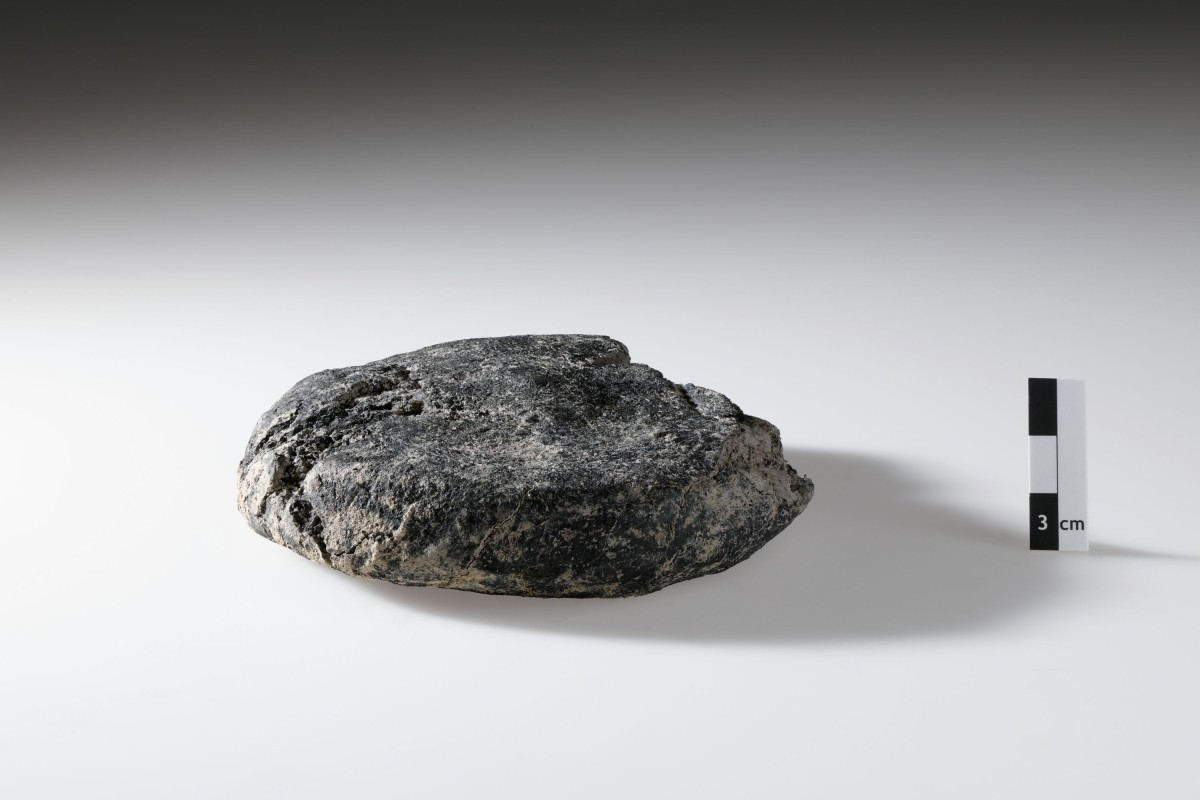
A first examination by an archaeobotanist from the University of Basel indicated that the object is, with high probability, a carbonized Roman bread. It measures about 10 centimeters in diameter and roughly 3 centimeters thick, making it similar to a small flatbread. Further scientific analysis is planned in Vienna to determine its composition and possibly identify the grains used to make it.
Why Roman bread almost never survives
Bread is one of the most ordinary foods in human history, but archaeologically it is extremely fragile. Most ancient loaves disappear quickly because organic material decays unless special conditions prevent it. Fire can destroy food, but in rare cases it also preserves it. When bread is carbonized, its structure may survive for centuries or even millennia.
That is why the Vindonissa find is so unusual. The preservation recalls famous carbonized loaves from Pompeii, where bread survived after the eruption of Mount Vesuvius in 79 AD. Switzerland, however, had not produced a documented Roman bread until this discovery.
The importance of the find lies not only in its age. It brings the Roman camp down to the scale of daily life. Walls, weapons, and roads explain how the military site functioned. A burned piece of bread suggests something more intimate: food prepared, handled, forgotten, or lost by someone living inside the Roman frontier system.
Vindonissa was more than a military base
Vindonissa was one of the most significant Roman military sites north of the Alps. Located in present-day Windisch, it served as Switzerland’s only known Roman legionary camp and occupied a strategic position near major routes and river systems.
The current excavation has expanded that story. Archaeologists identified evidence of an earlier military camp beneath or beside later Roman structures. Two parallel ditches and postholes point to a timber-and-earth defensive wall. A nearby V-shaped ditch has helped researchers estimate the scale of this early camp, which may have extended nearly 400 meters from north to south.
This matters because the early development of Vindonissa remains a major archaeological question. The new evidence may help clarify when the site changed from a temporary military installation into a permanent legionary base, possibly during the reign of Emperor Augustus or shortly after, under Tiberius.
Food, craft, and military life inside the camp
The excavation also revealed buildings and working areas that show Vindonissa was not only a place of discipline and defense. It was a structured environment where food preparation, craft production, and military logistics operated side by side.
Inside the older camp, archaeologists documented a building preserved beneath a later Roman road. Its layout included smaller chambers beside larger rooms with hearths. Elsewhere, they found metal tools, blacksmithing waste, spearheads, and projectile points, pointing to craft and military activity within the camp zone.
One of the most important related finds is a large clay oven built inside the perimeter of the older camp. Its position suggests that the area behind the fortification wall may already have been used for productive or commercial activities during Vindonissa’s early phase.
Seen beside that evidence, the charred bread is not an isolated curiosity. It belongs to a broader picture of Roman military life, where feeding soldiers was as essential as building defenses.
What the bread may reveal
The planned analysis could make the discovery even more valuable. If researchers can identify the bread’s ingredients, they may learn what kind of grain was used, how finely it was processed, and whether the loaf contained additional plant material. Such details could help reconstruct food supply and consumption inside the Roman camp.
For now, the object remains cautiously described as a probable Roman bread. That caution is important. But even at this stage, the find has already changed the way Vindonissa can be read. The camp is no longer represented only by military architecture and equipment. It also preserves a trace of ordinary food, burned by accident or circumstance and left in the soil for nearly two millennia.
In archaeology, the smallest objects sometimes carry the most direct human signal. At Vindonissa, that signal may be a blackened Roman flatbread, small enough to fit in one hand, but rare enough to stand alone in Swiss archaeological history.