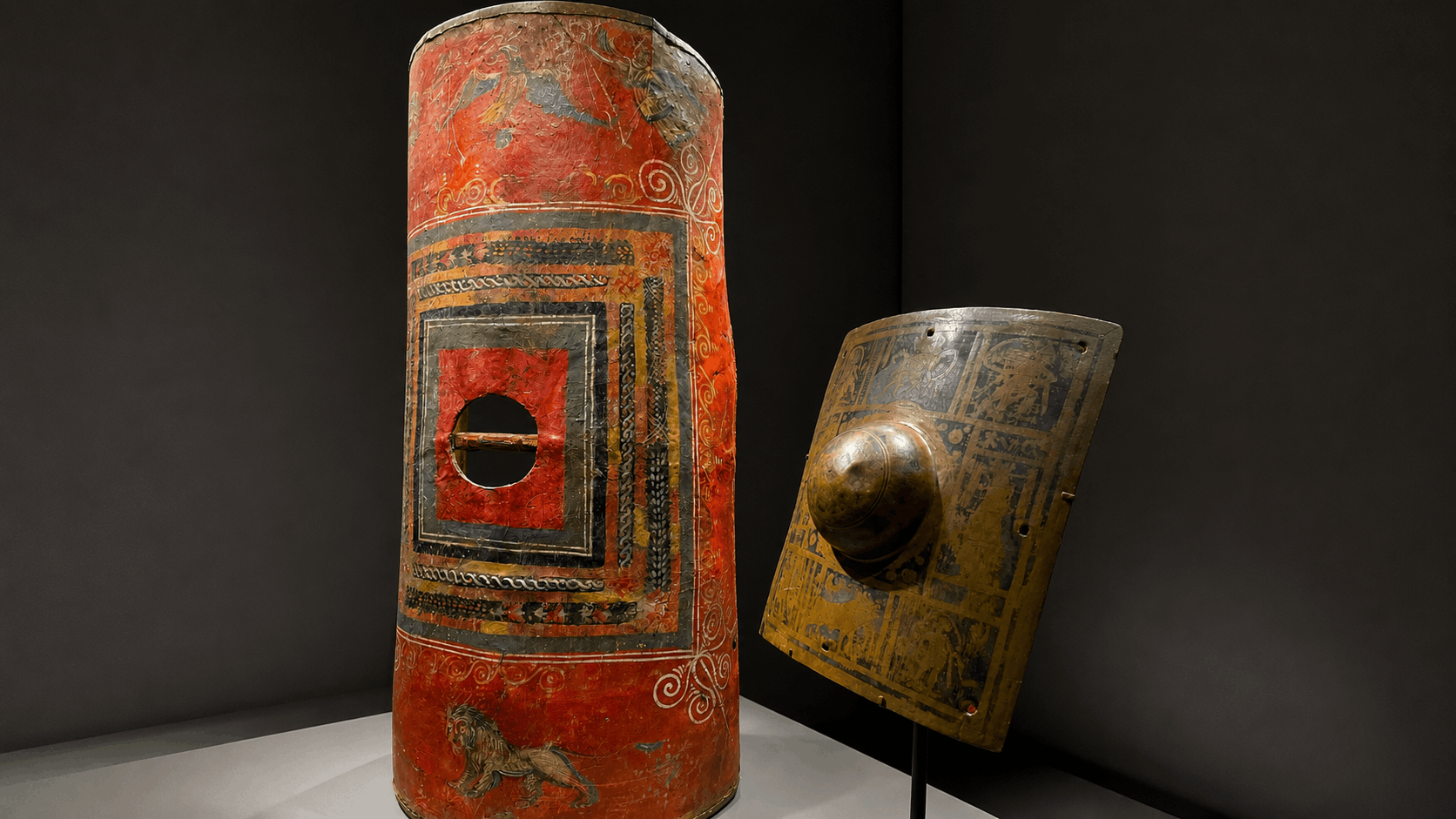
A shield once carried by a Roman legionary on the empire’s eastern frontier is now studied as one of the rarest surviving examples of ancient military equipment. Found at Dura-Europos in present-day Syria, the painted Roman scutum is not only a preserved weapon of defense. It is also a remarkable archaeological document of Roman frontier warfare, military symbolism, and the fragile survival of organic materials in the archaeological record.
Now kept in the collection of the Yale University Art Gallery, the shield dates to the mid-3rd century AD, most likely around AD 256, when Dura-Europos faced Sasanian attacks. It is not a new discovery. The object was uncovered during excavations at Dura-Europos in the 1930s. Yet its state of preservation and painted decoration continue to make it one of the most important organic finds in Roman military archaeology.
A military object from the Roman-Sasanian frontier
Dura-Europos stood on the Euphrates River, in a strategic frontier zone between the Roman Empire and the Sasanian world. In the mid-3rd century AD, the city experienced siege conditions, defensive preparations, and eventual abandonment. This created exceptional archaeological conditions.
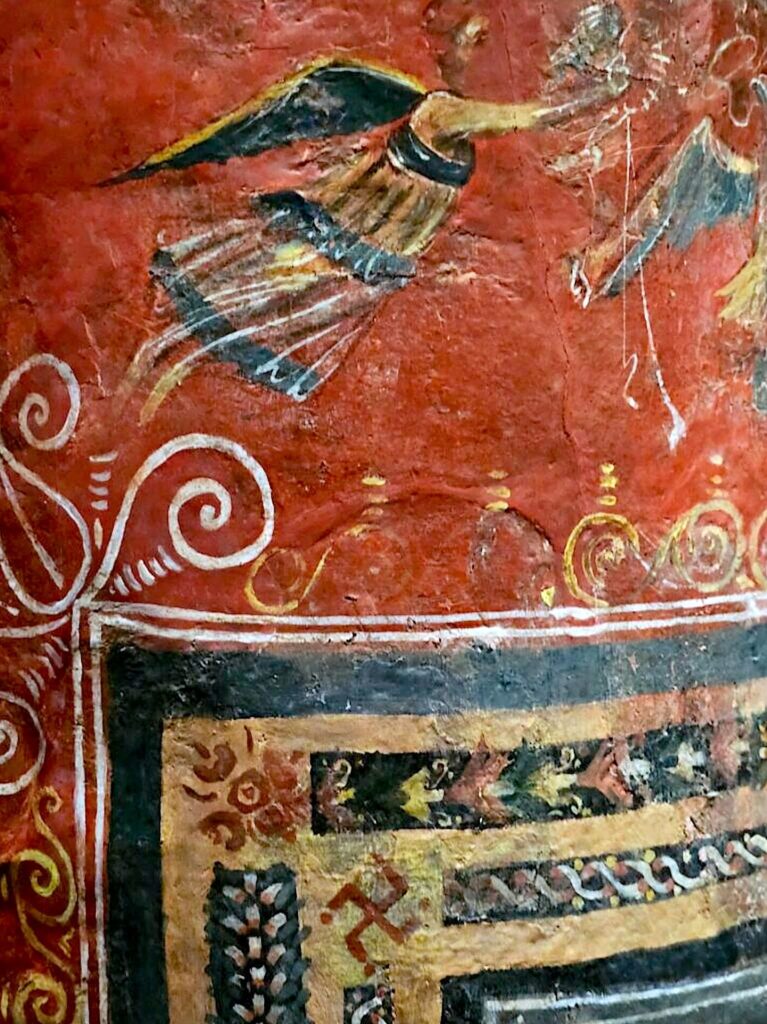
Materials such as wood, leather, and painted surfaces normally disappear quickly. At Dura-Europos, the dry climate and the circumstances of the city’s abandonment helped preserve objects that rarely survive elsewhere. For that reason, the shield is not simply a museum object. It is a rare piece of direct evidence for military life on Rome’s eastern frontier.
Yale and academic records identify the shield as coming from Tower 19 at Dura-Europos. It measures about 105.5 centimeters high and 41 centimeters wide. Its main body was made of wood, strengthened with rawhide or a similar organic covering, and decorated with painted designs.
More than a defensive tool
The Roman scutum was designed to protect the body of a legionary. Its curved form gave soldiers broad protection, especially when fighting in close formation. Alongside the gladius, the scutum became one of the most recognizable pieces of Roman military equipment.
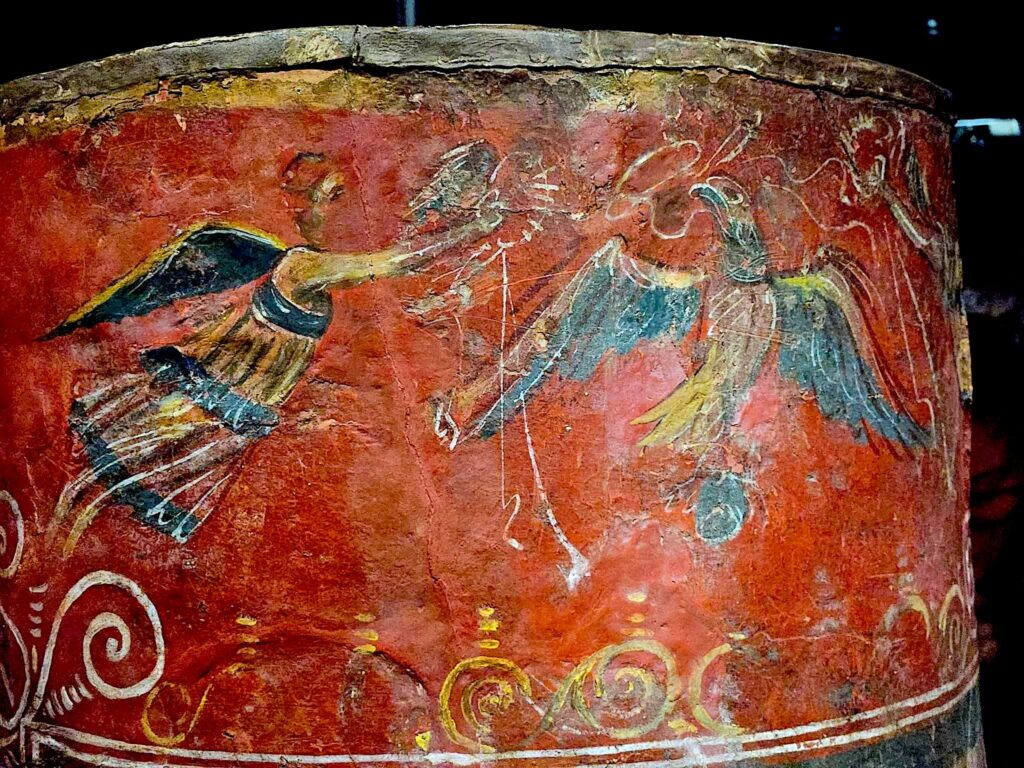
The Dura-Europos scutum is especially important because examples of this kind almost never survive. Roman shields are usually known from reliefs, written sources, sculptures, and visual representations. In this case, researchers are dealing with an actual military object, complete with its layered wooden structure, painted surface, missing central fitting, and preserved form.
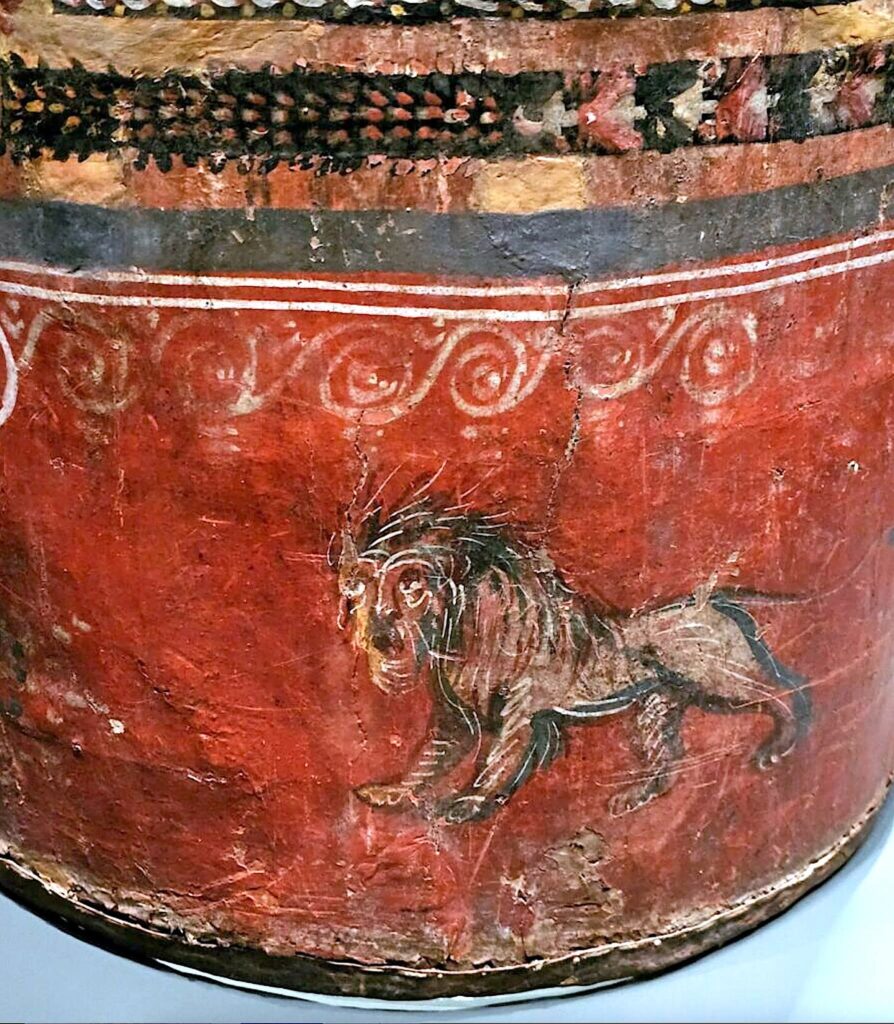
The metal boss at the center of the shield, known as the umbo, is now lost. Even so, the painted decoration on the front remains legible. The imagery includes an eagle, a laurel wreath, winged Victory figures, and a lion. These details show that the shield was not only practical military equipment. It also carried the visual language of Roman power, victory, and imperial authority.
The painted face of Roman military identity
The eagle was closely associated with legionary identity and imperial strength. The laurel wreath signaled victory, while the winged Victory figures reflected the Roman military idea of success and divine favor. The lion added another visual marker of force and aggression.
Together, these symbols show that legionary equipment was not purely functional. The Roman army projected authority through discipline, engineering, tactics, and imagery. The Dura-Europos shield is one of the rare cases where that relationship survives on an organic military object.
Its importance lies precisely in that survival. A shield that may once have been used by a Roman soldier can still be studied nearly 1,800 years later, with its form, paint, and iconography partly intact. For Roman military archaeology, that is highly unusual.
A key find from Dura-Europos
Dura-Europos is one of the most important archaeological sites for understanding the Roman-Sasanian frontier. Military equipment, inscriptions, religious buildings, and everyday objects from the city help reveal the complex life of a Roman border community.
The painted scutum holds a special place among these finds. It shows not only how a Roman legionary was protected in battle, but also how he was visually represented. Its curved body reflects military design. Its painted figures reflect Rome’s ideas of victory and authority.
Today, the shield remains one of the strongest surviving objects linked to Rome’s military presence on the eastern frontier. Its wood, paint, and surviving decoration turn the siege-era world of Dura-Europos into direct archaeological evidence.