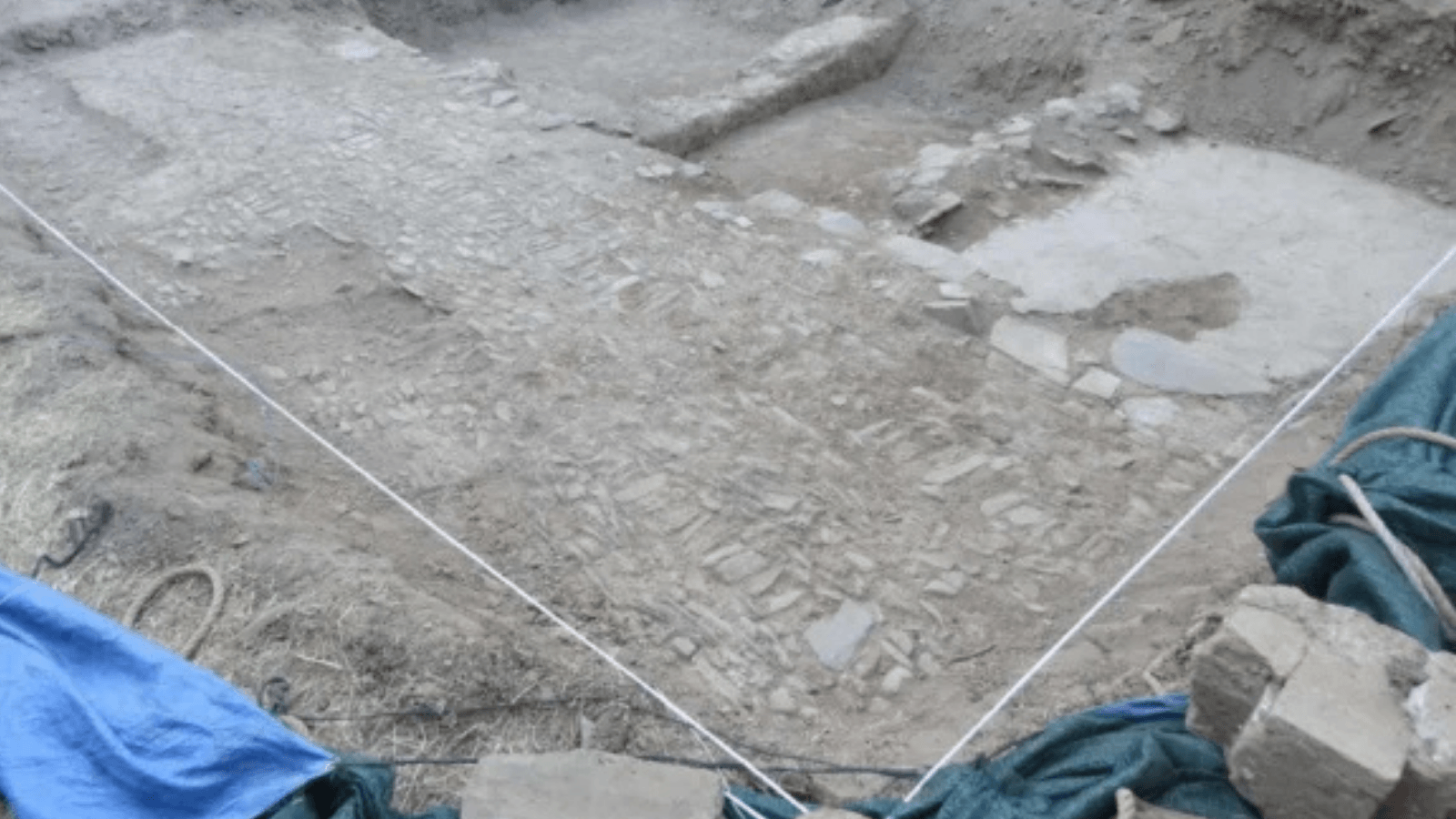
Archaeologists working at the Royal Monastery of Santa María de Guadalupe in western Spain have uncovered remains of a lost royal guesthouse that disappeared in the 19th century, allowing researchers to begin reconstructing a building long known mainly through historical plans and drawings.
The excavation revealed foundation trenches, part of a patterned floor and structural evidence from the cloister arcade of the lost Hospedería de los Reyes Católicos. Together, the remains are helping researchers determine the original footprint of the 15th-century guesthouse.
A team of architects and archaeologists coordinated by Juan Saumell of the University of Extremadura carried out the archaeological test excavation in July 2026 in the western courtyard of the monastery. The investigation focused on an area where earlier research suggested the cloister of the vanished building once stood.
The structure should not be confused with the Hospedería del Real Monasterio operating at Guadalupe today. The excavated remains belong to an earlier complex associated with the Hospedería de los Reyes Católicos.
Foundations emerge on the first day
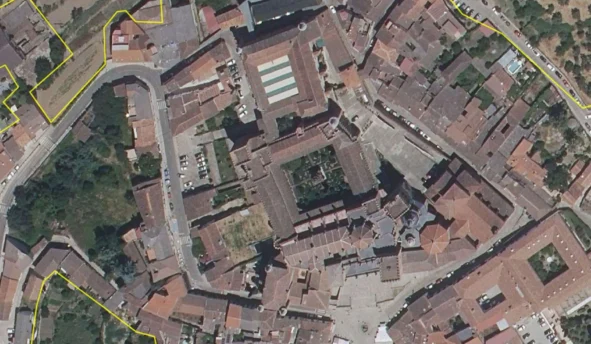
Researchers encountered two continuous foundation trenches on the first day of excavation. They also uncovered part of the pavement from the covered cloister corridor.
The flooring was arranged in a distinctive herringbone-like pattern, providing physical evidence that could be compared with earlier documentary and architectural studies of the site.
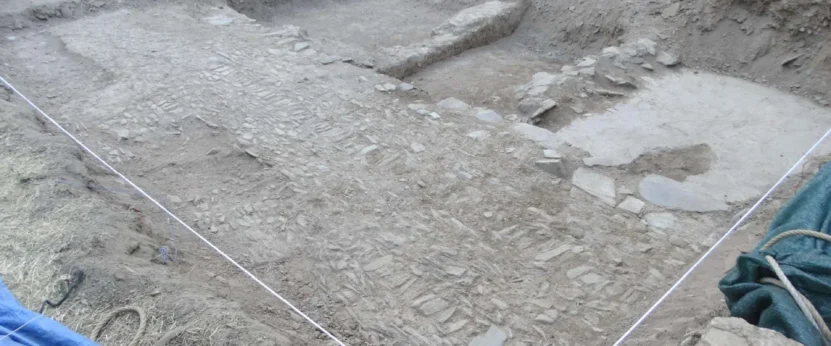
The excavation also revealed the module, or repeating structural unit, of the cloister arcade.
This measurement can now be compared with the number of pilasters and openings shown in the original 15th-century design, helping researchers estimate the perimeter and internal organization of a building that has been absent for generations.
A lost building preserved in historical plans
The excavation follows years of research into written records, architectural drawings and historical views of the hospedería.
Among the documents examined are records concerning the Hieronymite community’s decision to build the guesthouse and a late 15th-century project prepared by architect Juan Guas, also known as Jean Goas, for Queen Isabella.
Researchers have also studied 16th-century views produced by Anton van den Wyngaerde for Philip II, providing another visual record of the complex before its disappearance.
A plan drawn in 1839 by Francisco Yznardo still shows the fortified complex at Guadalupe. Another document uncovered during the research is a demolition order dated to 1854.
That evidence complicates the long-repeated idea that the building disappeared during road construction in 1925. Researchers now have documentary reasons to consider whether substantial parts of the hospedería had already been dismantled decades earlier.
Excavating at a UNESCO World Heritage monastery
The Royal Monastery of Santa María de Guadalupe, in the province of Cáceres in Extremadura, is one of Spain’s major historic monastic complexes.
Founded in the 14th century, it developed strong connections with the Catholic Monarchs and became closely associated with the political and religious world of late medieval Spain. UNESCO inscribed the monastery on the World Heritage List in 1993.
The lost hospedería formed part of that wider historical landscape, making the newly uncovered foundations important for understanding how the monastery and its surrounding buildings developed during the late 15th century.
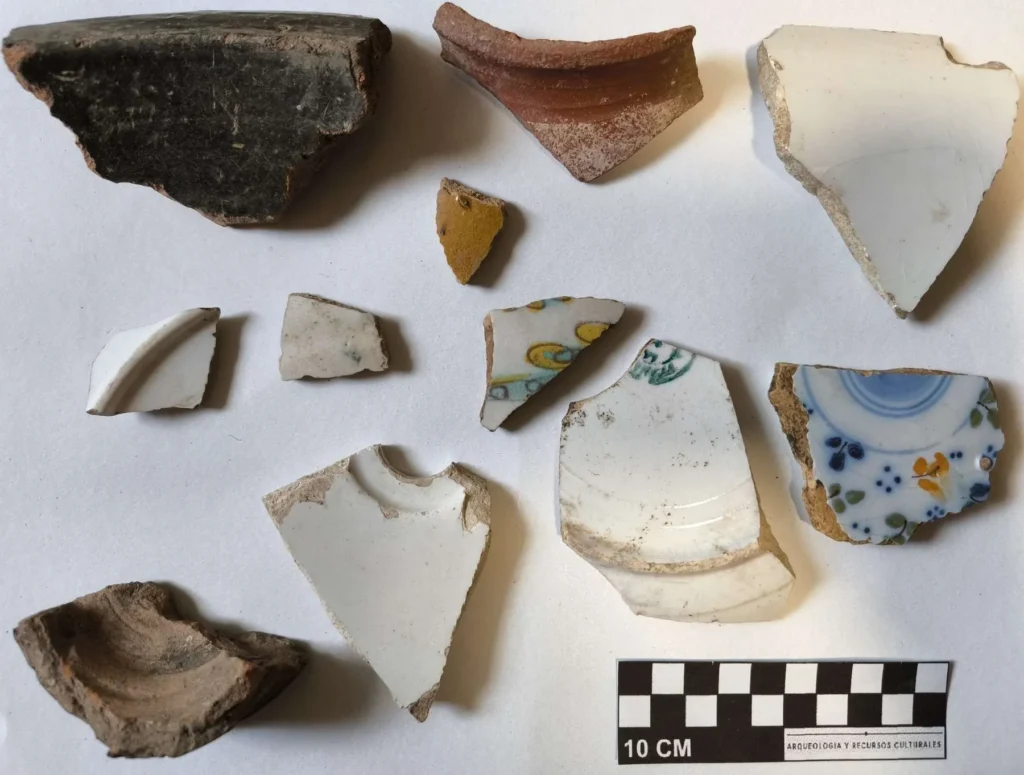
The trench also produced common ware, honey-glazed pottery and fragments of white and decorated ceramics, although the excavated deposits contained material from different periods and origins.
The July excavation was deliberately limited in scale. Once the remains had been documented, the exposed structures were protected and reburied so they can be identified and investigated again in future campaigns.
Researchers have prepared a preliminary report, while further studies are planned on both the archaeological remains and the reconstructed architectural layout of the Hospedería de los Reyes Católicos. Additional excavations may also take place in areas not occupied by modern buildings.
For now, two foundation trenches, a fragment of patterned flooring and the spacing of a vanished arcade have begun to return the lost 15th-century building to the map.
Cover Image: General view of the excavation at the Royal Monastery of Santa María de Guadalupe, where archaeologists uncovered foundations and paved surfaces belonging to the lost 15th-century royal guesthouse. Credit: University of Extremadura.